Jan 2027· International journal of technology in education and science· 0 citations
Mathematics Education and Teaching Techniques
TL;DR
The findings indicate a large overall effect size, suggesting that digital technologies significantly enhance academic achievement compared to traditional instructional methods, and that the impact of digital tools is contingent upon specific moderator variables.
Abstract
This study aims to assess the influence of digital technologies on undergraduate mathematics performance. A meta-analytic approach was employed, synthesized from 26 independent samples across 17 peer-reviewed articles (1990–2025), with a cumulative sample size of 2,010 participants. The findings indicate a large overall effect size (g=0.978), suggesting that digital technologies significantly enhance academic achievement compared to traditional instructional methods. Moderator analysis indicated that blended learning environments achieved the highest effect size; furthermore, the impact of digital technology integration on academic performance was most pronounced in the fields of Trigonometry and Calculus. Additionally, mathematics-specific software was found to exert a significant influence on the observed effect sizes. Furthermore, the use of standardized assessments yielded a smaller effect size compared to instructor-designed tests. Additionally, no significant differences were observed regarding student equivalence in terms of group composition. The study concludes that the impact of digital tools is contingent upon specific moderator variables; these factors should be integrated into instructional design to optimize learning outcomes in university mathematics.

Research on active learning environments increasingly examines how technology-rich learning spaces shape educational outcomes. However, evidence regarding Future Classroom Lab (FCL) settings, particularly their effects on pre-service teachers’ (PSTs) affective domains and mathematics achievement, remains limited. This...
Ana Isabel Montero-Izquierdo, Jin Su Jeong, D. González-Gómez· SAGE Open· 0 citations
Problem-based learning has been widely recognized as a learner-centered instructional approach for developing students' cognitive outcomes in chemistry education, but empirical findings on its effectiveness remain inconsistent, specifically in different regions, educational levels, and specific chemistry topics. In thi...
Jessa Mae N. Jimenez, Karen M. Napay· International journal of res...· 0 citations
This study conducted a meta-analysis of 23 empirical studies (k = 23) (during the period 2010-2025) to evaluate the effectiveness of game-based learning (GBL) on student learning outcomes in Mathematics. The pooled results indicate that GBL has a positive and significant impact compared to traditional teaching methods,...
D. Nguyen· International Journal of Ins...· 0 citations
Today, integrating technology into the instructional process has become an essential component of students’ learning experiences. However, research examining the pedagogical effects of Bloom’s Digital Taxonomy in education remains limited. This study aims to investigate the effect of mathematics instruction based on Bl...
Burak Ayçiçek, Gönül Çelebi· Cumhuriyet International Jou...· 0 citations
The shift toward new media—characterized by interactivity, visual elements, and adaptability—is a consequence of digital technology advancements that have simultaneously challenged the dominance of conventional media. Technology-based learning media now integrate sophisticated features, offering a learning experience d...
This study examined the influence of digital and practical-based instruction on students’ academic achievement in Technical and Biology Education among Technical Secondary School students in Katsina State, Nigeria. The study was guided by four objectives and corresponding research questions and hypotheses. A survey res...
Galadanchi Nuraddeen Yusuf, Aminu Buhari, Mustapha Muhammed· Federal University Gusau Fac...· 0 citations
Related blog posts
Microsoft Research Blog· microsoft.comNov 12, 2026
What's new in research at Microsoft? Host Anson Ho explores the latest, including AI-powered universal translation, a breakthrough in a 31-year-old mathematics challenge, and advances making AI coding agents faster and more efficient. The post Microsoft Research Focus – Edition #98 appeared first on Microsoft Research.
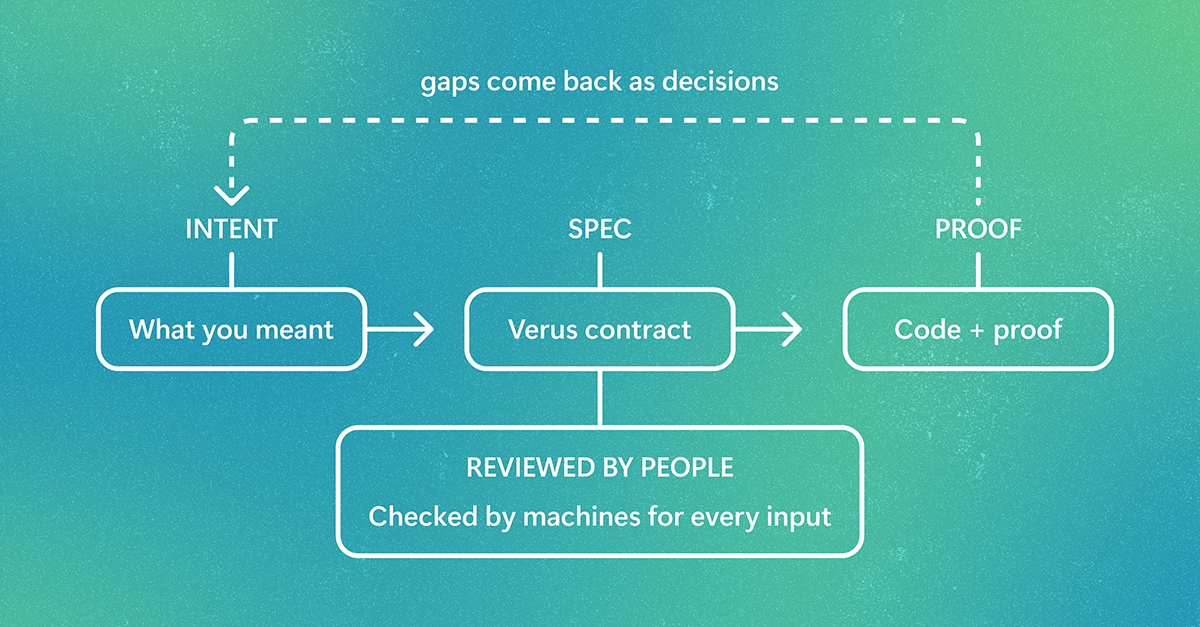
AI agents can generate code at a scale that’s hard for humans to review line-by-line. PDD Kit helps ensure the code is doing what the developer intended by creating formal specifications and testing against them. It converts developer intent into a Verus specification, proves AI-generated code meets it for every input, and uses tests where proofs aren't practical. Developers review intent, not every line. The post Formally verifying agent-written full-stack web apps with PDD Kit appeared first o…