Nov 2026· IEEE Transactions on Computer-Aided Design of Integrated Circuits and Systems· Vol 45, pp. 5863-5867· 4 citations· 16 references
Abstract
The rising demand for energy- and resource-efficient edge-AI platforms calls for compute engines that balance throughput, flexibility, and run-time efficiency under tight bandwidth constraints. This brief presents ULTRA-MACE, a unified low-bit transprecision reconfigurable multiply-accumulate compute engine (MACE) that supports FP4 (E2M1), FP8 (E4M3), Posit-(8, 2), and Posit-(16, 3) through a six-stage vectorized pipeline with 128-bit quire accumulation. ULTRA-MACE employs a high-precision split mantissa multiplication scheme and an integrated gated bypass for ReLU, achieving <inline-formula> <tex-math notation="LaTeX">$4\times $ </tex-math></inline-formula>/<inline-formula> <tex-math notation="LaTeX">$2\times $ </tex-math></inline-formula>/<inline-formula> <tex-math notation="LaTeX">$2\times $ </tex-math></inline-formula>/<inline-formula> <tex-math notation="LaTeX">$1\times $ </tex-math></inline-formula> throughput (FP4/FP8/Posit-8/Posit-16) without increasing bandwidth demand. Postroute results in 28 nm CMOS demonstrate a peak energy efficiency of 12.8 TFLOPS/W at 0.9 V and a compute density of 8.2 TFLOPS/mm<sup>2</sup>. Integrated into the TREA accelerator with 64 MACE, the FPGA prototype achieves 89% of theoretical peak performance and maintains practical accuracy with only 1.5% degradation relative to the FP32 baseline. Overall, these results demonstrate an efficient transprecision compute engine for edge-AI acceleration.

Multiprecision multiply-accumulate (MAC) units from INT2 to FP32 are increasingly needed on field-programmable gate arrays (FPGAs). However, the existing processing element (PE) designs mostly follow application-specific integrated circuit (ASIC)-oriented composition strategies. Their alignment and selection networks m...
Hao-Tian Liu, Xi-Cheng Lu, Ke Li et al.· IEEE Transactions on Very La...· 0 citations
This work proposes a Precision-Reconfigurable Zero-Skipping SRAM-CIM (PRZS-CIM) architecture that combines bit-serial exact multiply-accumulate decomposition, 4/6/8-bit precision control, row-level zero gating, and all-zero bit-plane suppression.
Bitla Prabhakar T. Satyanarayana, Dr. Malothu Amru, Dr. Somala Rama Kishore· International Journal of Adv...· 0 citations
Posit arithmetic offers a compelling alternative to the IEEE 754 floating-point standard, providing enhanced accuracy. Its fused multiply-accumulate operations avoid intermediate rounding, ensuring exact numerical reproducibility through the quire, a wide fixed-point accumulator spanning the format's full dynamic range...
M. Alonso, Miguel A. Sacristán, G. Botella et al.· 0 citations
FlexSpIM, a digital CIM architecture supporting arbitrary operand resolution and shape within a unified storage for weights and neuron states, is introduced, enabling a layer-level hybrid weight- and output-stationary dataflow, maximizing operand reuse and reducing costly on- and off-chip data movement during SNN execu...
Nicolas Chauvaux, Adrian Kneip, Charlotte Frenkel· 0 citations
Exponentiation is a critical computational operation used across domains such as scientific computation, cryptography, biomedical signal processing, climate modeling, and embedded AI. In software environments, repeated evaluation of \(x^n\) often incurs significant execution latency and energy costs. To mitigate these...
D. Sutar, Nitesh B. Guinde, Shubham Chipkar et al.· Boletim da Sociedade Paranae...· 0 citations
The continued scaling of deep neural networks (DNNs) is driving accelerator architectures toward chiplet-based integration. However, conventional fixed and workload-level optimized topologies do not track fine-grained, time-varying communication during DNN inference, resulting in multi-hop latency and link congestion....
Xun Nie, Hua-Xi Gu, Rui-Zhen Pan et al.· Journal of Lightwave Technol...· 0 citations
Related blog posts
Microsoft Research Blog· microsoft.comOct 29, 2026
Host Sowbhagya Suresh shares some of the latest news and cutting-edge research from across Microsoft—from understanding the challenges facing coding agents to uncovering how people use AI at work and improving extended-range weather forecasting. The post Microsoft Research Focus – Edition #97 appeared first on Microsoft Research.
MIT News · Artificial Intelligence· news.mit.eduOct 28, 2026
Professor Paris Smaragdis develops computers with superhuman hearing for applications like speech recognition, music understanding, and environmental monitoring.
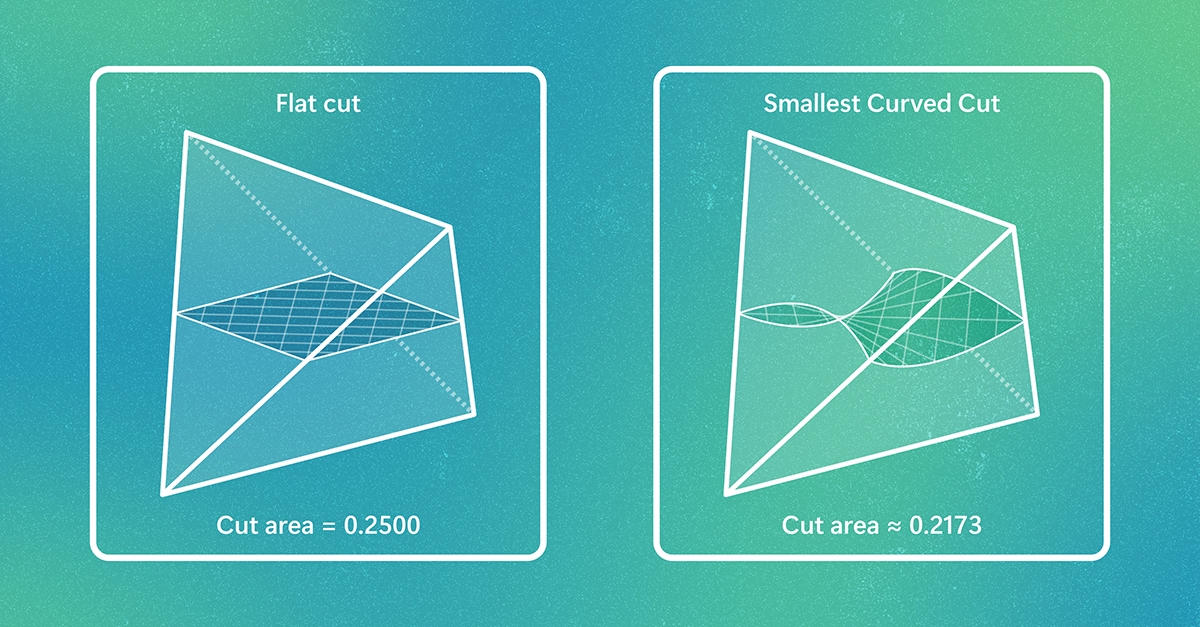
For decades, a fundamental question about the difficulty of computing in high-dimensional spaces has resisted proof. New research resolves this question, removing a major theoretical obstacle to understanding the efficiency of randomized algorithms used across science and computing. The Kannan–Lovász–Simonovits (KLS) conjecture was proposed in 1995. It asks whether, for a broad class of high-dimensional […] The post Solving a 31-year-old grand challenge in mathematics – the KLS conjecture appear…
We use cookies to run the site and, with your consent, for analytics and to show ads.
See our Cookie Policy.