With a continuous spectrum of incident neutron wavelengths, quasi-Laue diffraction records many Bragg reflections from a stationary crystal, each satisfying the diffraction condition at a particular wavelength. Because the wavelength of each reflection is not measured, the crystal orientation must be determined from the scattering directions alone. At the new IMAGINE-X instrument, instant-readout detectors and many short exposures per experiment require this indexing to run automatically, yet for a protein crystal at the full 2-10 Angstrom band a single peak can have approximately $10^4$ candidate reflections, and a random orientation indexes a large fraction of the observed peaks. We describe an algorithm that indexes such patterns for a known unit cell and wavelength band. Differential evolution searches uniformly sampled rotations, matching observed directions to band-limited shells of candidate directions, and each solution is tested against the indexing expected for a random orientation. In a benchmark search, a k-d tree and a persistent pool of 32 worker processes reduce the wall time 270-fold relative to a serial scan of all candidates. The algorithm is first validated on the time-of-flight diffractometer MANDI, where the measured wavelengths give a reference solution by standard indexing. With the wavelengths discarded, every indexed reflection from 93 rare-earth garnet patterns agrees up to harmonic order. The algorithm then reliably indexes the natural mineral mesolite, measured on the original image plate at IMAGINE before the upgrade, and the protein T4 lysozyme, measured on the new IMAGINE-X instrument over the full band.
The comparison of adopter and non-adopter sample reveals three potential adoption inhibitor, security, data privacy, and portability, which underlines the importance of the technical and security perspectives for research investigating the adoption of technology.
Nattakarn Phaphoom, Xiaofeng Wang, S. Samuel et al.· Journal of Systems and Softw...· 111 citations· ⚡8
This study investigates how Lean internal startup facilitates software product innovation in large companies and identifies its enablers and inhibitors, and shows the potential of the method-in-action framework to investigate the Lean startup approach in non-startup context.
Henry Edison, Nina M. Smørsgård, Xiaofeng Wang et al.· Journal of Systems and Softw...· 78 citations· ⚡6
This paper highlights the challenges to conduct proper affect-related studies with psychology, provides a comprehensive literature review in affect theory, and proposes guidelines for conducting psychoempirical software engineering.
D. Graziotin, Xiaofeng Wang, P. Abrahamsson· SSE@SIGSOFT FSE· 56 citations· ⚡4
This study conducts a multiple case study on twenty European software startups and proposes a prototype-centric learning model in early stage software startups, and identifies factors that occur as barriers but also facilitators for prototyping in earlystage software startups.
Anh Nguyen-Duc, Xiaofeng Wang, P. Abrahamsson· International Conference on...· 44 citations· ⚡5
It is demonstrated that linker-free PROTACs can outperform traditional designs, marking a paradigm shift in PROTAC development for targeted protein degradation.
Pinal, a 16-billion-parameter foundation model that produces protein candidates from natural-language functional descriptions, supports natural language as a high-level interface for candidate generation in protein design, enabling programmable exploration with reduced reliance on manually specified structural or seque...
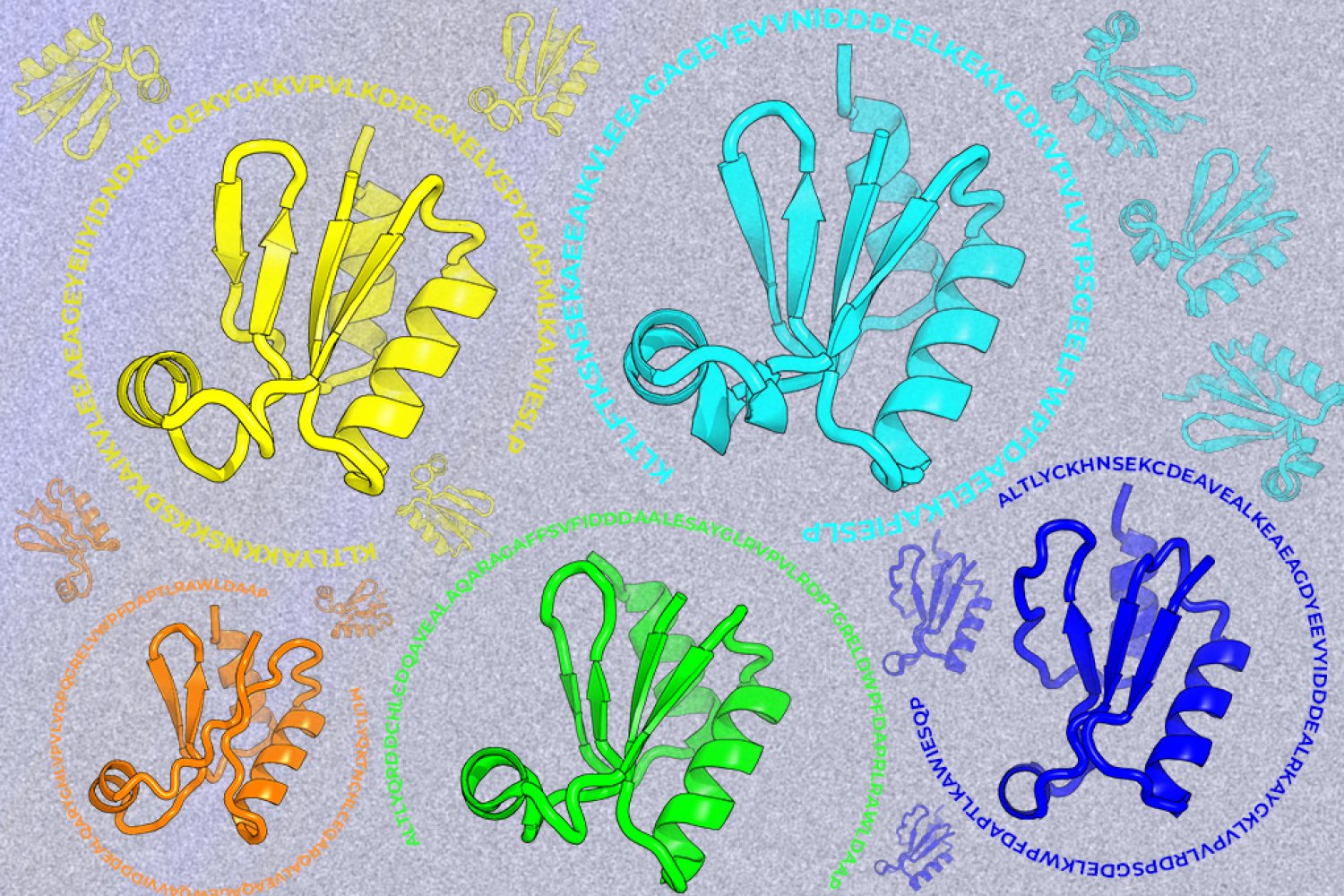
A new machine-learning framework aims to improve the success rate of computational protein design while moving away from results that reproduce sequences found in nature.