Nov 2026· IEEE Transactions on Biometrics Behavior and Identity Science· Vol 8, pp. 1035-1047· 1 citation· 56 references
Abstract
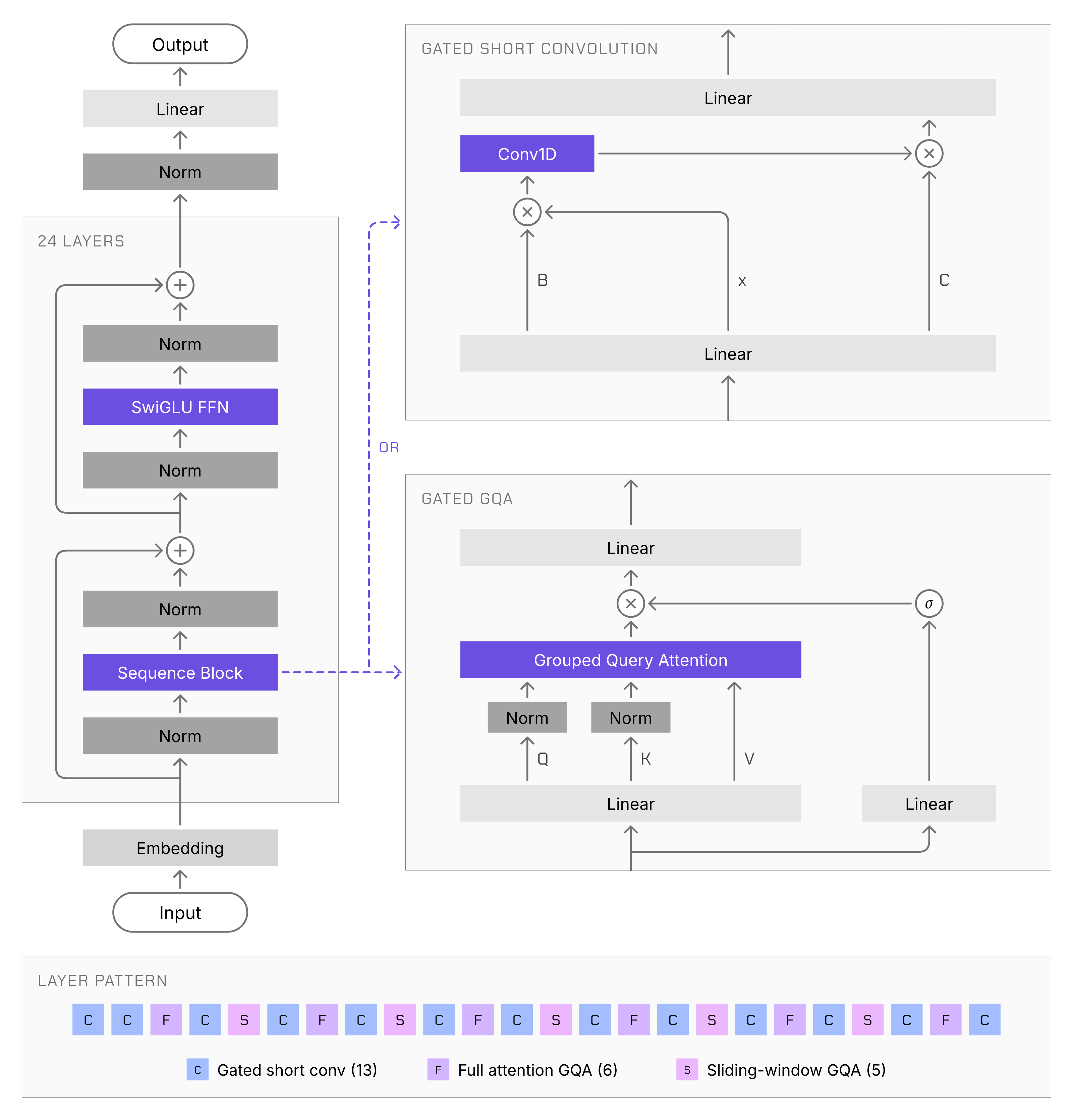
Deepfake detection is a critical task today in multimedia forensics due to its unethical exploitation and serious consequences. Currently several deepfake detection techniques exist which involve synthetic human facial video detection, and most of which operate in the spatial domain While these methods are often very accurate (particularly, with respect to “in-dataset” analysis), none of them is foolproof, and are often susceptible to the sophistication of state-of-the-art deepfake generators. Very often, deepfakes generated by GANs, VAEs, or diffusion models are spatio-temporally coherent, but show prominent inconsistencies in the spectral domain. In this paper we propose <sc>Kol-3-Freq</sc>, a set of three neural deepfake detectors that detect frequency domain inconsistencies to classify real and synthetic videos. <sc>Kol-3-Freq</sc> models built on the novel Kolmogorov-Arnold Network, which makes the model architecture (<inline-formula> <tex-math notation="LaTeX">$\approx 2.181$ </tex-math></inline-formula> times) <italic>lightweight</italic> and more <italic>interpretable</italic> compared to the state-of-the-art, besides achieving a competitive performance improvement (<inline-formula> <tex-math notation="LaTeX">$\approx 1.4106\%$ </tex-math></inline-formula>) to its primitives when evaluated on standard deepfake datasets. <sc>Kol-3-Freq</sc> is further extended to four tiers–<sc>Light</sc>, <sc>Base</sc>, <sc>Large</sc>, and <sc>Huge</sc>, based on handling input-feature dimensionality of the underlying Kolmogorov-Arnold Network, making them <italic>adaptive</italic> and <italic>robust</italic>.
The results are packaged in the Greenfield Startup Model (GSM), which explains the priority of startups to release the product as quickly as possible, and the need to shorten time-to-market, by speeding up the development through low-precision engineering activities.
Carmine Giardino, Nicolò Paternoster, M. Unterkalmsteiner et al.· IEEE Transactions on Softwar...· 178 citations· ⚡14
Software startup companies develop innovative, software-intensive products within limited timeframes and with few resources, searching for sustainable and scalable business models.
M. Unterkalmsteiner, P. Abrahamsson, Xiaofeng Wang et al.· e-Informatica Software Engin...· 157 citations· ⚡17
This study conducts a case survey study based on the secondary data of the major pivots happened in 49 software startups, and demonstrates that customer need pivot is the most common among all pivot types.
Sohaib Shahid Bajwa, Xiaofeng Wang, Anh Nguyen-Duc et al.· Empirical Software Engineeri...· 127 citations· ⚡15
The comparison of adopter and non-adopter sample reveals three potential adoption inhibitor, security, data privacy, and portability, which underlines the importance of the technical and security perspectives for research investigating the adoption of technology.
Nattakarn Phaphoom, Xiaofeng Wang, S. Samuel et al.· Journal of Systems and Softw...· 111 citations· ⚡8
Objective There is dearth of information on the timeliness of antenatal care (ANC) uptake. This study aimed to determine the timely ANC uptake by a medically trained provider (MTP) as per the World Health Organization (WHO) recommendations and the country guideline. Methods Cross-sectional survey was done with 2,731 wo...
B. Sarker, Musfikur Rahman, T. Rahman et al.· PLoS ONE· 89 citations· ⚡7
This study investigates how Lean internal startup facilitates software product innovation in large companies and identifies its enablers and inhibitors, and shows the potential of the method-in-action framework to investigate the Lean startup approach in non-startup context.
Henry Edison, Nina M. Smørsgård, Xiaofeng Wang et al.· Journal of Systems and Softw...· 78 citations· ⚡6