Skip to content

Data Quality, Feature Engineering, and Model Reliability in Large-Scale AI Multi-Agentic Systems

Jan 2021 · European journal of computer science and information technology · 0 citations

TL;DR

A conceptual framework linking data quality assurance, feature engineering, model training and reliability testing, and deployment to an agent population is proposed, closed by a cross-agent monitoring and feedback loop.

Abstract

Large-scale artificial intelligence (AI) systems increasingly operate not as a single monolithic model but as a population of interacting, specialized agents separate models or decision-making components responsible for functions such as pricing, fraud detection, ranking, routing, and customer support that share underlying data infrastructure and, in many cases, influence one another's inputs and outputs. This article synthesizes peer-reviewed literature on data quality assurance, feature engineering, and model reliability to examine how these three concerns interact once an AI system is decomposed into multiple cooperating agents operating at scale. Seventeen primary sources are reviewed, spanning foundational work on technical debt in machine learning systems, multi-dimensional data quality frameworks, scalable and automated data quality verification, data lifecycle management, empirically grounded data-management taxonomies, production-readiness testing rubrics, scalable and automated feature engineering, hyperparameter optimization, organizational workflow studies, a production-scale ML platform, concept drift, large-scale academic surveys of ML testing, systematic reviews of industrial ML challenges, and fault-tolerant cooperative control of multi-agent systems. Drawing on this literature, the article proposes a conceptual framework linking data quality assurance, feature engineering, model training and reliability testing, and deployment to an agent population, closed by a cross-agent monitoring and feedback loop. The review finds that data quality problems and model reliability failures do not remain confined to the agent in which they originate: because agents in a large-scale AI system typically share upstream data sources, feature pipelines, or downstream state, a defect introduced at the data or feature layer of one agent can propagate through the interactions between agents, producing system-level reliability failures that are not visible from the perspective of any single agent's test suite. Ensuring reliability in such systems therefore requires treating data quality, feature engineering, and testing as cross-cutting, system-wide concerns rather than as properties to be verified independently within each agent


Read PDF

Similar papers

Review Open access Oct 2026

From Model Accuracy toWorkflow Reliability: A Practical Framework for Enterprise AI Systems

The predictive or generative capacity of a model isn’t enough for enterprise AI applications. Several factors can affect whether a user’s task succeeds: retrieval, enterprise data, orchestration, external tools, human approvals, and infrastructure. While a number of these dependencies are acknowledged in current standa...

Krunal Panchal, Nixalkumar Patel · 0 citations

Reliability Engineering for AI Systems: Challenges, Methods, and Directions

AI reliability concerns whether an AI system performs its intended function dependably over a stated period and under stated operating conditions, with clear evidence. As these systems become more autonomous, this function should include more than only a correct output. Retrieval, memory, tool use, permissions, human o...

Rong Pan, Yi-Li Hong, Min Xie · 0 citations
Open access Sep 2026

MARSAD: Multi-Agent Requirements System for Anomaly Detection in Software Engineering

The results demonstrate the feasibility of automated requirements anomaly detection and correction, while highlighting both the benefits of specialized multi-agent architectures and the challenges in achieving high precision across diverse anomaly types.

K. Hamdan, Mohammed Mediani, Abdelhadi Hireche · 0 citations
Open access Aug 2026

Software quality assurance in the era of Agentic AI: a systematic mapping study

Examination of Agentic AI integration in SQA examines Agentic AI integration in SQA, analyzing application distribution, agent characteristics, and supported stakeholder roles to identify coverage, trends, benefits, limitations, and gaps.

Randa Ouaarous, Imane Hilal, Abdellatif Mezrioui · 0 citations
#small language model Open access Oct 2026

Agentic AI-Driven Data Engineering: A Framework for Self-Directed Enterprise Data Pipelines

Enterprise data pipelines have grown in scale and interdependency faster than the operational practices used to maintain them. Pipeline failures are still predominantly diagnosed and remediated by human engineers reading logs, tracing lineage, and applying tacit knowledge, which produces long mean-time-to-recovery and...

A. Kolla, Ameya Kokate · 0 citations
Review Sep 2026

Improving service efficiency without sacrificing quality: a multi-agent AI system for hospitality email response automation

Drawing on a deployment across 200 properties and 25,000 emails, this research provides empirical evidence that architectural design, specifically agent-specific validation mechanisms and coordinated workflows, drives reliability in production service environments without requiring multiple foundation models, offering...

Nitin Kumar, Vipin Kataria · 0 citations

Related blog posts

Microsoft Research Blog Nov 16, 2026

TokenEconomizer: Learning from Experience to Make AI Coding Agents More Efficient

AI coding agents are increasingly help developers fix bugs and build features largely on their own, but every interaction with their models consumes tokens. In each session, an agent sends instructions, tool descriptions, and session history to its model. Most efforts to reduce this cost focus on individual tasks. Yet developers return to the same […] The post TokenEconomizer: Learning from Experience to Make AI Coding Agents More Efficient appeared first on Microsoft Research.

MIT News · Artificial Intelligence Oct 23, 2026

Q&A: How AI came to model the “messy” human mind

Assistant Professor Benjamin Lindquist studies how engineers deliberately injected randomness into early AI, giving rise to deep-learning models that sometimes hallucinate.

Microsoft Research Blog Oct 12, 2026

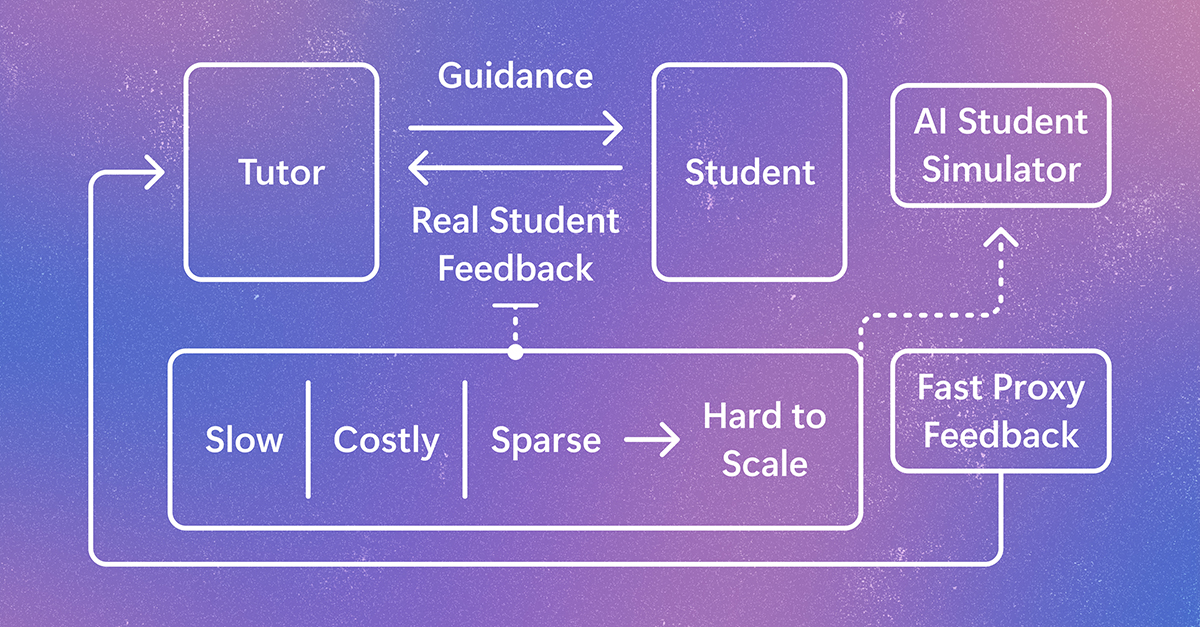
Simulating student learning for better AI tutoring

StudentSim is a research system for evaluating and improving AI tutoring tools before they are tested with learners. It models how individuals may engage with tutors, giving feedback to improve tutor performance across subjects like chess, writing, and mathematics. The post Simulating student learning for better AI tutoring appeared first on Microsoft Research.

We use cookies to run the site and, with your consent, for analytics and to show ads. See our Cookie Policy.