Skip to content
#large language models Book Open access

WAIT-A-SEC: A Human-Centered Design Approach to Privacy Communication for Social Media Oversharing

Oct 2026 · Proceedings of the 44th ACM International Conference on Design of Communication · 0 citations · 18 references
Privacy, Security, and Data Protection

Abstract

Social media platforms often operate on extractive security logics that prioritize frictionless data sharing, leaving users disempowered and prone to oversharing sensitive information, without fully recognizing the associated privacy implications. We present WAIT-A-SEC (Warnings About Information Transfer And Sharing: Encouraging Caution), hereafter referred to as WAITASEC, an interactive proof-of-concept prototype that delivers real-time privacy alerts while users compose posts to minimize instances of oversharing. Leveraging a synthetic dataset of 90 annotated examples of realistic user-generated content, our evaluations compare three separate models 1) a rule-based regular expressions (regex) and named entity recognition (NER) through spaCy, 2) a large language model (LLM) and 3) a hybrid model that combines the previous two models as well as incorporates a knowledge graph (KG) and retrieval augmented generation (RAG) to provide context. In this hybrid approach, regex and NER yield candidate classifications, which are then validated and expanded by the LLM, utilizing RAG to retrieve relevant context from the KG before sending feedback back to the user. This classifier achieves optimal performance (Macro-F1 = 0.897; Micro-F1 = 0.834), significantly reducing critical false negatives. Grounded in Technical and Professional Communication (TPC) and active learning principles, we advocate for a warning-first design that introduces intentional pedagogical friction. This tactical approach promotes user reflection and fosters enduring privacy literacy, restoring user agency rather than relying on passive, automated redaction. This paper concludes with deployment considerations and next steps for user studies.

Read PDF

Similar papers

#computer vision Open access Jun 2016

Software Development in Startup Companies: The Greenfield Startup Model

The results are packaged in the Greenfield Startup Model (GSM), which explains the priority of startups to release the product as quickly as possible, and the need to shorten time-to-market, by speeding up the development through low-precision engineering activities.

Carmine Giardino, Nicolò Paternoster, M. Unterkalmsteiner et al. · 178 citations · ⚡14
#computer vision Open access Oct 2016

Software Startups - A Research Agenda

Software startup companies develop innovative, software-intensive products within limited timeframes and with few resources, searching for sustainable and scalable business models.

M. Unterkalmsteiner, P. Abrahamsson, Xiaofeng Wang et al. · 157 citations · ⚡17
#machine learning Review Open access Oct 2016

“Failures” to be celebrated: an analysis of major pivots of software startups

This study conducts a case survey study based on the secondary data of the major pivots happened in 49 software startups, and demonstrates that customer need pivot is the most common among all pivot types.

Sohaib Shahid Bajwa, Xiaofeng Wang, Anh Nguyen-Duc et al. · 127 citations · ⚡15
#computer vision Review Open access May 2015

A survey study on major technical barriers affecting the decision to adopt cloud services

The comparison of adopter and non-adopter sample reveals three potential adoption inhibitor, security, data privacy, and portability, which underlines the importance of the technical and security perspectives for research investigating the adoption of technology.

Nattakarn Phaphoom, Xiaofeng Wang, S. Samuel et al. · 111 citations · ⚡8
#computer vision Conference Open access Dec 2013

Affordable and Energy-Efficient Cloud Computing Clusters: The Bolzano Raspberry Pi Cloud Cluster Experiment

The ongoing work building a Raspberry Pi cluster consisting of 300 nodes is presented, with potential use cases being an inexpensive and green test bed for cloud computing research and a robust and mobile data center for operating in adverse environments.

P. Abrahamsson, S. Helmer, Nattakarn Phaphoom et al. · 110 citations · ⚡7
#large language models Review Open access Nov 2020

Status of the WHO recommended timing and frequency of antenatal care visits in Northern Bangladesh

Objective There is dearth of information on the timeliness of antenatal care (ANC) uptake. This study aimed to determine the timely ANC uptake by a medically trained provider (MTP) as per the World Health Organization (WHO) recommendations and the country guideline. Methods Cross-sectional survey was done with 2,731 wo...

B. Sarker, Musfikur Rahman, T. Rahman et al. · 89 citations · ⚡7

Related blog posts

Microsoft Research Blog Nov 16, 2026

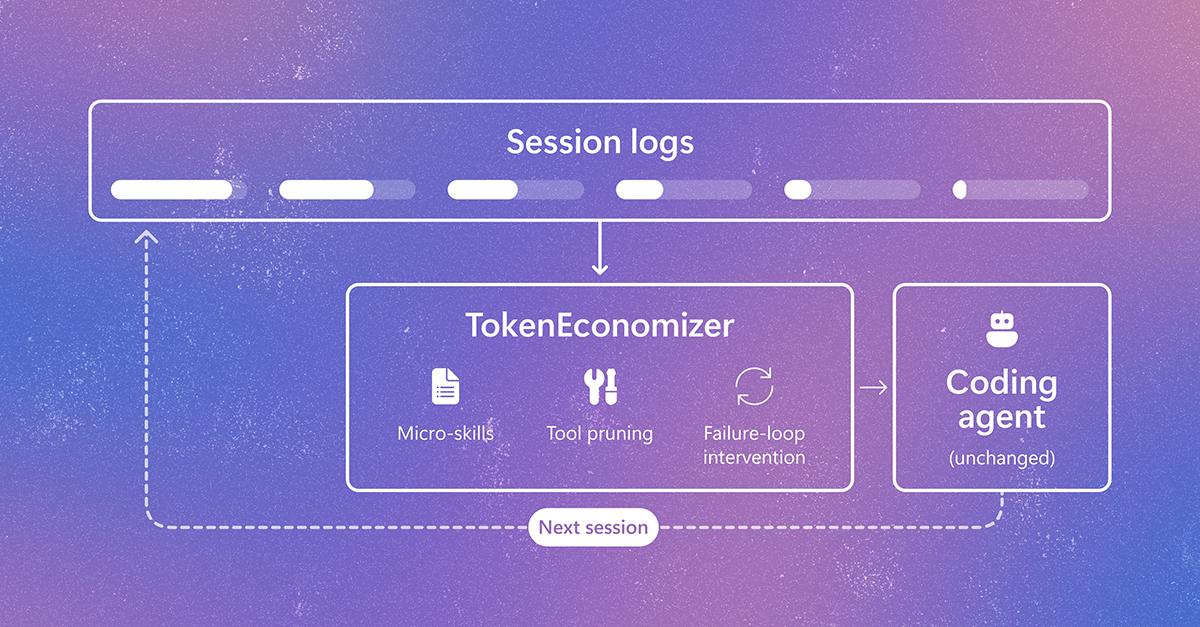
TokenEconomizer: Learning from Experience to Make AI Coding Agents More Efficient

AI coding agents are increasingly help developers fix bugs and build features largely on their own, but every interaction with their models consumes tokens. In each session, an agent sends instructions, tool descriptions, and session history to its model. Most efforts to reduce this cost focus on individual tasks. Yet developers return to the same […] The post TokenEconomizer: Learning from Experience to Make AI Coding Agents More Efficient appeared first on Microsoft Research.

We use cookies to run the site and, with your consent, for analytics and to show ads. See our Cookie Policy.