SWE-Nexus enables task construction from validated behavior beyond individual historical changes, a fully automated pipeline that constructs repository-level implementation tasks from test execution from test execution.
Abstract
Historical code changes provide convenient task boundaries, but do not identify which production functions selected tests exercise or support composing validated behaviors beyond a single change. We present SWE-Nexus, a fully automated pipeline that constructs repository-level implementation tasks from test execution. Four construction agents select tests, adapt tracing and evaluation protocols to each repository, and generate behavioral specifications. For each selected test file, tracing records an observed execution footprint of production function bodies. A scope is retained only if all expected scoring points pass in the original repository and masking the traced bodies causes at least one failure or error. Compatible scopes are composed deterministically, with shared functions counted once and every constituent test file revalidated under the complete combined mask. The benchmark contains 600 tasks from 105 repositories across six programming languages, including 116 atomic and 484 composite tasks. We evaluate 12 models under three agent scaffolds. The best configuration resolves 37.8% of tasks in one attempt, and scope-weighted scoring measures partial recovery. SWE-Nexus enables task construction from validated behavior beyond individual historical changes.

E2E-SWE is introduced, a benchmark for evaluating whether coding agents can build complete, functional software repositories end to end and finds substantial variation in end-to-end repository generation ability, providing strong model differentiation while leaving considerable headroom for future progress.
Hantian Ding, Chloe Bi, Jia-Cheng Zhu et al.· 0 citations
Can coding agents restore software that no longer runs while preserving its underlying methods, and reconstruct industrial software engines from open specifications? Here we introduce ReviveBench, a benchmark with two task families evaluated by hidden verifiers calibrated against native execution environments, establis...
Tian-Yu Liu, Ding-Yuan Dai, Yu-Fan Du et al.· 0 citations
Mocking is a foundational practice in unit testing, enabling developers to isolate the code under test by replacing real dependencies with simulated alternatives. Automating the generation of mock objects, stubs, and mock assertions has been a long-standing research goal. However, capture-and-replay approaches rely on...
Hao Ning, Jia-Hui Dong, Zhen Yang et al.· 0 citations
SWE Refactor Bench is introduced, a benchmark comprising 20 whole-repository migrations, covering 4 kinds of technical debt, and SWE Refactor Bench is positioned as a rigorous testbed for developing coding agents for reliable whole-repository migrations.
De-Yao Hong, Yi-Zhe Chi, Wen-Yi Li et al.· 4 citations· ⚡2
Large language models (LLMs) are increasingly used in software pipelines, raising concerns about harmful behaviors in security-critical domains. Existing safety evaluations predominantly probe models with single prompts or short interactions, and therefore do not capture how safety behaves under multi-step workflows wh...
Lu Yan, Zhuo Zhang, Xiang-Zhe Xu et al.· Proceedings of the ACM on So...· 0 citations
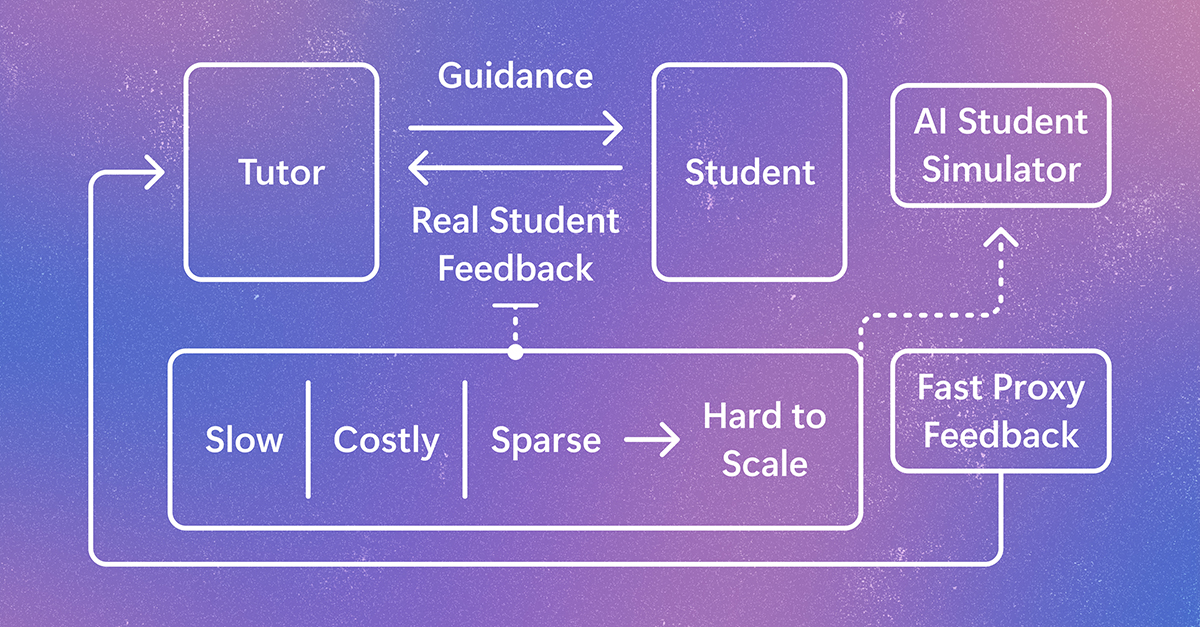
StudentSim is a research system for evaluating and improving AI tutoring tools before they are tested with learners. It models how individuals may engage with tutors, giving feedback to improve tutor performance across subjects like chess, writing, and mathematics. The post Simulating student learning for better AI tutoring appeared first on Microsoft Research.
MIT News · Artificial Intelligence· news.mit.eduOct 6, 2026
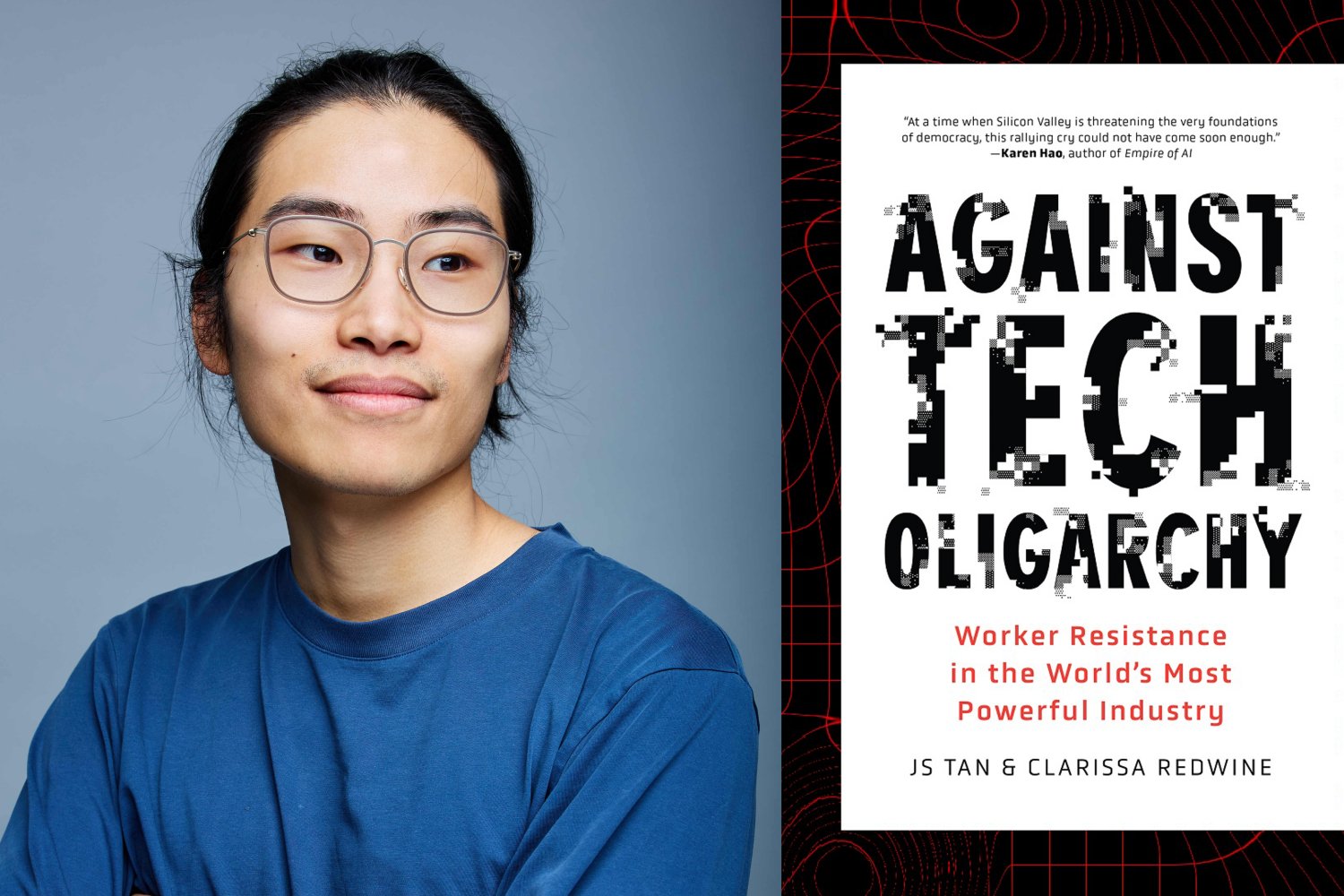
Writing as a participant and researcher, PhD student JS Tan SM ’22 has co-authored a new book about the rise of tech worker protests and the employer backlash that followed.
We use cookies to run the site and, with your consent, for analytics and to show ads.
See our Cookie Policy.