Skip to content

LIME: Learning Intent-aware Camera Motion from Egocentric Video

Jul 2026 · arXiv.org · Vol abs/2607.02417 · 3 citations · 77 references
Computer Science

TL;DR

LIME is proposed, a vision-language camera-motion generator that combines an autoregressive observation-gain output with a continuous flow-matching pose head that learns intent-conditioned camera motion from passive egocentric video, turning ordinary human recordings into supervision for a reusable active-perception primitive that supports general-purpose viewpoint selection, manipulation, embodied question answering, and mid-distance navigation.

Abstract

Autonomous robots often need to move their camera before they can act: to inspect an object, reveal an occluded region, or obtain a view that responds to a user's intent. While vision-language navigation translates instructions to base motion and vision-language-action policies map instructions to manipulation actions, vision-language conditioned camera motion remains comparatively underexplored as a first-class action. We formulate vision-language conditioned camera motion generation: given a current RGB observation and a free-form natural-language intent, predict a relative target camera pose for the next observation. The challenge is that useful viewpoint changes depend on latent perceptual intent, ranging from coarse spatial moves to fine-grained inspection or occlusion revealing. To model this structure, we mine multi-intent camera-motion supervision from egocentric video via hindsight labeling, pairing each relative SE(3) target pose with plausible intents and observation-gain descriptions inferred from the reached view. We propose LIME, a vision-language camera-motion generator that combines an autoregressive observation-gain output with a continuous flow-matching pose head. This design lets the model jointly predict what the next view should reveal while representing multi-hypothesis target views. Across viewpoint-prediction experiments and downstream robotic tasks, we show that LIME learns intent-conditioned camera motion from passive egocentric video, turning ordinary human recordings into supervision for a reusable active-perception primitive that supports general-purpose viewpoint selection, manipulation, embodied question answering, and mid-distance navigation.
View source

Similar papers

#computer vision Review Sep 2017

Agile Software Development Methods: Review and Analysis

This publication proposes a definition and a classification of agile software development approaches and analyses ten software development methods that can be characterized as being "agile" against the defined criterion.

P. Abrahamsson, O. Salo, Jussi Ronkainen et al. · 727 citations · ⚡54
#computer vision Jun 2008

The impact of agile practices on communication in software development

The study shows that agile practices improve both informal and formal communication, but indicates that, in larger development situations involving multiple external stakeholders, a mismatch of adequate communication mechanisms can sometimes even hinder the communication.

M. Pikkarainen, Jukka Haikara, O. Salo et al. · 401 citations · ⚡48
#machine learning Review Open access Oct 2014

Software development in startup companies: A systematic mapping study

The results indicate that software engineering work practices are chosen opportunistically, adapted and configured to provide value under the constrains imposed by the startup context.

Nicolò Paternoster, Carmine Giardino, M. Unterkalmsteiner et al. · 394 citations · ⚡54

Diffusion models as plug-and-play priors

The possibility of inferring high-dimensional data inference in a model that consists of a prior and an auxiliary differentiable constraint given some additional information is considered, thereby allowing a range of potential applications in adapting models to new domains and tasks.

Alexandros Graikos, Esmeralda S. Whitammer, N. Jojic et al. · 316 citations · ⚡15

Trajectory Balance: Improved Credit Assignment in GFlowNets

It is proved that any global minimizer of the trajectory balance objective can define a policy that samples exactly from the target distribution, and empirically demonstrate the benefits of the trajectories balance objective for GFlowNet convergence, diversity of generated samples, and robustness to long action sequenc...

Esmeralda S. Whitammer, Moksh Jain, Emmanuel Bengio et al. · 302 citations · ⚡60

Related blog posts

Microsoft Research Blog Aug 11, 2026

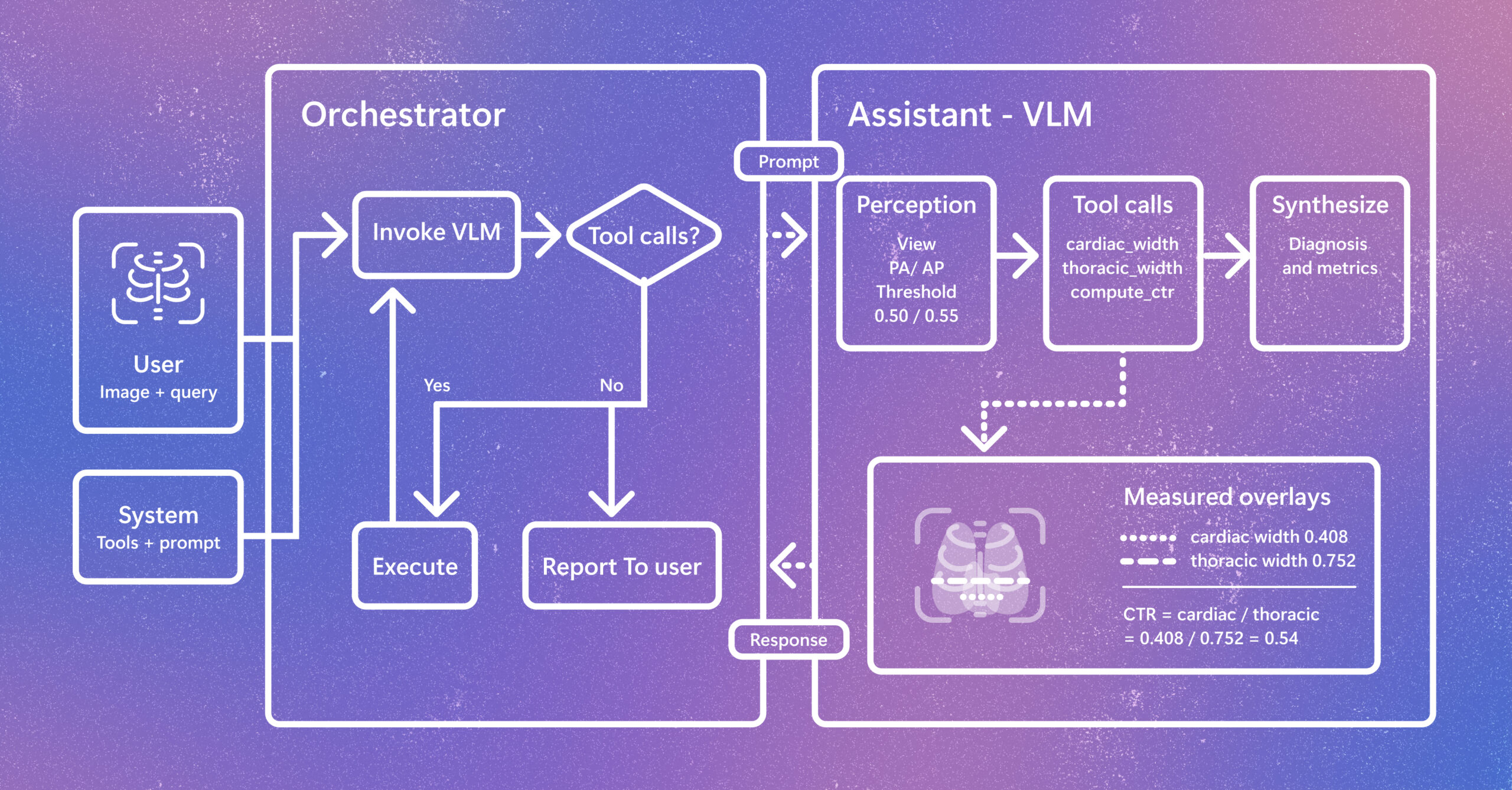
Introducing CARE-X: Towards Clinically Useful Radiology VLMs with Auxiliary Supervision, Reward-Aligned Learning, and Tool-Augmented Measurement

Radiology AI is evolving beyond report generation. CARE-X explores a unified approach that combines flexible reasoning, calibrated predictions, and measurement-based tools for chest X-ray interpretation. The post Introducing CARE-X: Towards Clinically Useful Radiology VLMs with Auxiliary Supervision, Reward-Aligned Learning, and Tool-Augmented Measurement appeared first on Microsoft Research.

We use cookies to run the site and, with your consent, for analytics and to show ads. See our Cookie Policy.