Skip to content

Federated Learning in the Era of Large Models: Core Challenges, Representative Solutions, and Emerging Directions

Oct 2026 · Applied and Computational Engineering
Privacy-Preserving Technologies in Data

Abstract

With the rapid advancement of the Internet and the emergence and popularity of large language models, the demands for high-quality data, communication capacity and security and privacy have increased significantly. However, a large amount of data is distributed across different devices, and cannot be collected legally because of security and privacy constraints. Thus, Federated Learning was proposed to address these issues. Federated Learning enables multiple clients to train model collaboratively without uploading raw data. Federated Learning serves as a key role in tackling data problems in the era of large language models. According to this condition, it is important to understand the state-of-the-art of Federated Learning. Using literature review and comparative analysis, this paper examines three core challenges in Federated Learning: heterogeneity, communication overhead and security and privacy risks. It also reviews representative solutions based on drift correction, meta-learning and homomorphic encryption, etc., to these three problems. The analysis shows that these methods generally improve one or two objectives. Heterogeneity alleviation may increase model complexity, and privacy mechanisms may introduce additional computation and communication costs. Moreover, large language models further intensify these trade-offs. Parameter-efficient fine-tuning improves the possibility of federated large model training via freezing the backbone weights and transferring a small subset of parameters. Consequently, Federated Learning is moving from full-parameter model collaboration to lightweight knowledge collaboration, with potential advancement toward multi-agent assignment coordination.

View source

Similar papers

#small language model Dataset Open access Oct 2026

Socratic guiding questions in synthetic arithmetic data: matched LoRA runs (revision v2)

Supporting data, adapters, predictions and code for the article *Low-Cost LoRA Fine-Tuning of Small Language Models for Multi-Step Arithmetic Reasoning* by Jake O'Grady, Asena Isik Gürhan, Chee Fong Ting and Effirul Ramlan (University of Galway). We generated 20,000 GSM8K-derived arithmetic problems with step-by-step s...

O'Grady, Jake, Gürhan, Asena Isik, Chee, Fong Ting et al. · 465 citations
#machine learning Review Open access Oct 2014

Software development in startup companies: A systematic mapping study

The results indicate that software engineering work practices are chosen opportunistically, adapted and configured to provide value under the constrains imposed by the startup context.

Nicolò Paternoster, Carmine Giardino, M. Unterkalmsteiner et al. · 394 citations · ⚡54
#computer vision Open access Jun 2016

Software Development in Startup Companies: The Greenfield Startup Model

The results are packaged in the Greenfield Startup Model (GSM), which explains the priority of startups to release the product as quickly as possible, and the need to shorten time-to-market, by speeding up the development through low-precision engineering activities.

Carmine Giardino, Nicolò Paternoster, M. Unterkalmsteiner et al. · 178 citations · ⚡14
#machine learning Review Open access Jun 2014

Why Early-Stage Software Startups Fail: A Behavioral Framework

This state-of-practice investigation was performed using a literature review followed by a multiple-case study approach and presents how inconsistency between managerial strategies and execution can lead to failure by means of a behavioral framework.

Carmine Giardino, Xiaofeng Wang, P. Abrahamsson · 175 citations · ⚡19
#computer vision Open access Oct 2016

Software Startups - A Research Agenda

Software startup companies develop innovative, software-intensive products within limited timeframes and with few resources, searching for sustainable and scalable business models.

M. Unterkalmsteiner, P. Abrahamsson, Xiaofeng Wang et al. · 157 citations · ⚡17
#machine learning Review Open access Oct 2016

“Failures” to be celebrated: an analysis of major pivots of software startups

This study conducts a case survey study based on the secondary data of the major pivots happened in 49 software startups, and demonstrates that customer need pivot is the most common among all pivot types.

Sohaib Shahid Bajwa, Xiaofeng Wang, Anh Nguyen-Duc et al. · 127 citations · ⚡15

Related blog posts

GPT-Lab Aug 28, 2026

We built an AI factory for HVAC control

What does it take to trust AI-driven HVAC optimization? Our AI Model Factory combines agents, machine learning, reinforcement learning and deterministic checks in a governed workflow designed for messy, real-world building data. The post We built an AI factory for HVAC control appeared first on GPT-Lab.

Microsoft Research Blog Jul 30, 2026

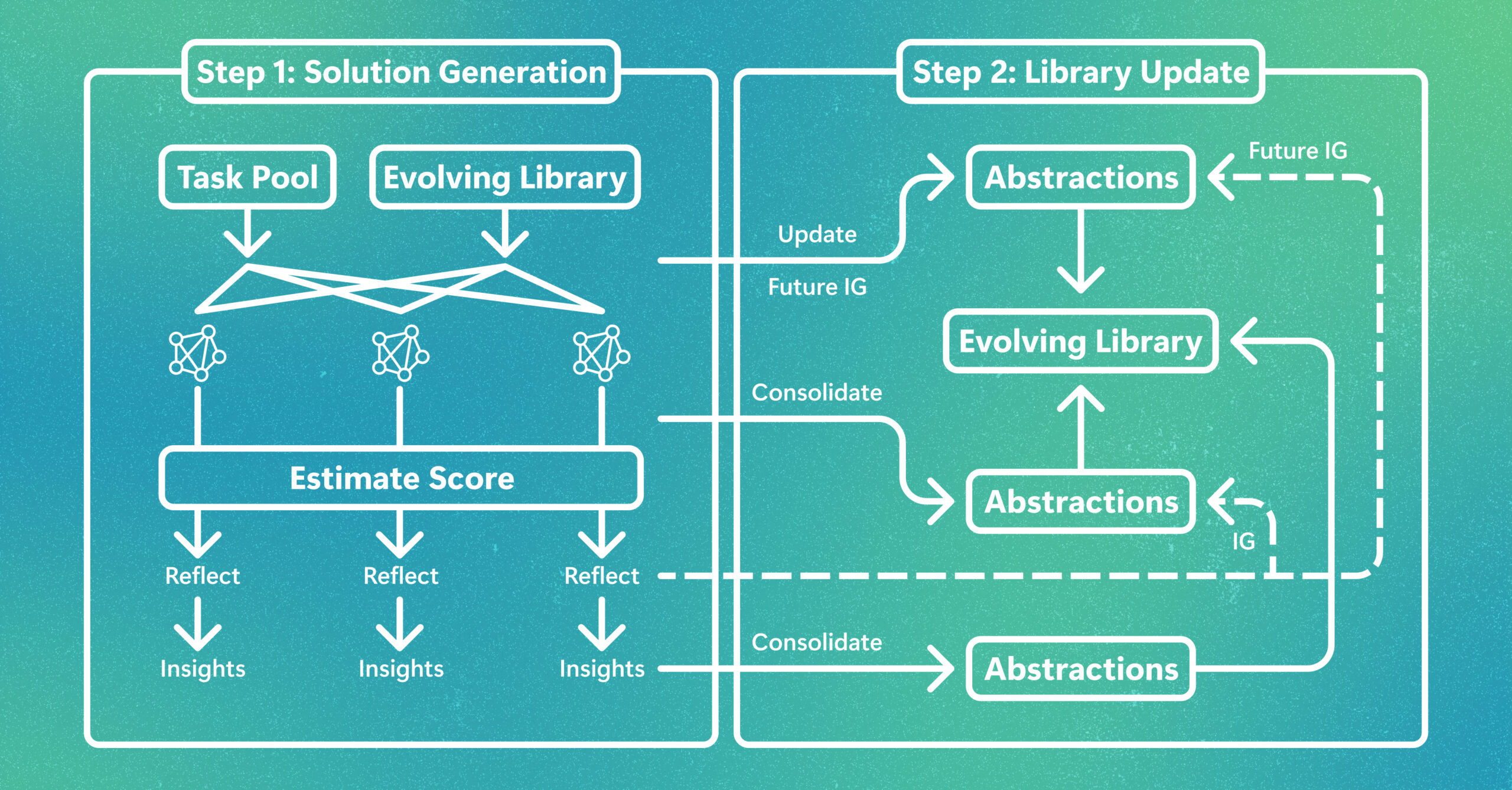
EvoLib: Turning experience into evolving knowledge

LLMs do not get smarter just by remembering more. EvoLib turns experience into evolving knowledge, taking reusable skills and insights that help models learn and adapt across tasks long after deployment. The post EvoLib: Turning experience into evolving knowledge appeared first on Microsoft Research.

We use cookies to run the site and, with your consent, for analytics and to show ads. See our Cookie Policy.