Oct 2026· International Journal for Research in Applied Science and Engineering Technology· 0 citations
Artificial Intelligence in Law
Abstract
Legal artificial intelligence (AI) systems increasingly draw on retrieval-augmented generation (RAG), transformerbased embeddings, multi-stage structured reasoning, and ensemble learning to support tasks such as legal question answering,
legal judgment prediction, and multilingual outcome prediction. Hallucination, limited domain grounding, and uneven
performance across languages and legal systems remain open problems. This survey synthesizes four recent peer-reviewed
studies used as core sources: a recursive-feedback retrieval-augmented generation framework for legal question answering (LQRAG); a four-stage large language model (LLM) framework for legal judgment prediction combining knowledge infusion, caselaw retrieval, multi-hop reasoning, and generative judgment synthesis (LegalReasoner); a retrieval-augmented generation
system evaluated across six embedding-LLM pairings on a small corpus of Indian statutory documents; and a stacked-ensemble
system for multilingual legal outcome prediction from case summaries in English, Telugu, Tamil, and Kannada. Rather than
treating these four studies as an exhaustive literature base, we use them as core studies and interpret their reported findings
critically against their own stated methodology, sample sizes, evaluation metrics, and self-identified limitations, supplementing
the discussion with the related work each study itself cites. Across the reviewed studies, we find scope-limited evidence that
retrieval grounding, fine-tuned or domain-adapted embeddings, and stacked ensembles improved reported performance relative
to the corresponding baselines evaluated within those studies; these improvements are dataset-, language-, and metric-specific
and should not be read as a general ranking across architectures or studies. We identify recurring gaps, including small or
proof-of-concept datasets, reliance on a proprietary LLM as an automated evaluator, absence of legal-domain-expert human
evaluation, narrow language and jurisdiction coverage, and the broader challenge of temporal drift in legal knowledge, and
we outline evidence-based directions for future work. This review is presented as a focused technical survey rather than a
systematic literature review, and its conclusions are bounded accordingly.

Supporting data, adapters, predictions and code for the article *Low-Cost LoRA Fine-Tuning of Small Language Models for Multi-Step Arithmetic Reasoning* by Jake O'Grady, Asena Isik Gürhan, Chee Fong Ting and Effirul Ramlan (University of Galway). We generated 20,000 GSM8K-derived arithmetic problems with step-by-step s...
O'Grady, Jake, Gürhan, Asena Isik, Chee, Fong Ting et al.· Zenodo (CERN European Organi...· 465 citations
The results are packaged in the Greenfield Startup Model (GSM), which explains the priority of startups to release the product as quickly as possible, and the need to shorten time-to-market, by speeding up the development through low-precision engineering activities.
Carmine Giardino, Nicolò Paternoster, M. Unterkalmsteiner et al.· IEEE Transactions on Softwar...· 178 citations· ⚡14
Software startup companies develop innovative, software-intensive products within limited timeframes and with few resources, searching for sustainable and scalable business models.
M. Unterkalmsteiner, P. Abrahamsson, Xiaofeng Wang et al.· e-Informatica Software Engin...· 157 citations· ⚡17
This study conducts a case survey study based on the secondary data of the major pivots happened in 49 software startups, and demonstrates that customer need pivot is the most common among all pivot types.
Sohaib Shahid Bajwa, Xiaofeng Wang, Anh Nguyen-Duc et al.· Empirical Software Engineeri...· 127 citations· ⚡15
The comparison of adopter and non-adopter sample reveals three potential adoption inhibitor, security, data privacy, and portability, which underlines the importance of the technical and security perspectives for research investigating the adoption of technology.
Nattakarn Phaphoom, Xiaofeng Wang, S. Samuel et al.· Journal of Systems and Softw...· 111 citations· ⚡8
This study investigates how Lean internal startup facilitates software product innovation in large companies and identifies its enablers and inhibitors, and shows the potential of the method-in-action framework to investigate the Lean startup approach in non-startup context.
Henry Edison, Nina M. Smørsgård, Xiaofeng Wang et al.· Journal of Systems and Softw...· 78 citations· ⚡6
Able to defeat top-ranked human players and more efficient than other models, the new system could help decision-makers in military maneuvers or business negotiations.
Microsoft Research Blog· microsoft.comSep 29, 2026
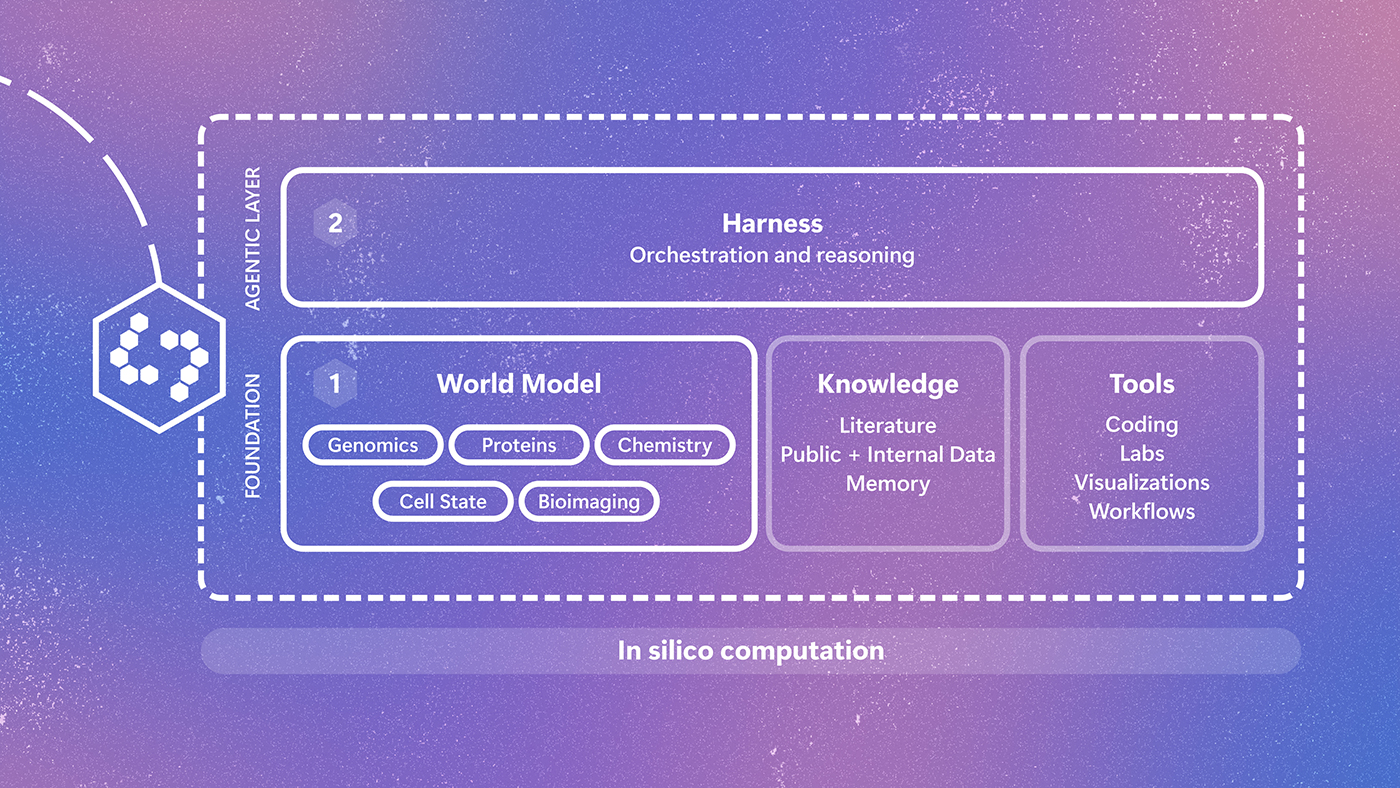
Biology doesn't operate in silos, and neither should the AI representation of it. Quine is an early-stage research effort to create a multimodal world model of biology. By connecting insights across biological scales and modalities, Quine helps scientists computationally search a space far larger than intuition allows and prioritize hypotheses before they reach the lab. Experimental results provide important feedback, helping researchers sharpen future research directions. The post Introducing Q…
We use cookies to run the site and, with your consent, for analytics and to show ads.
See our Cookie Policy.