Computational Drug Discovery MethodsArtificial Intelligence in Healthcare and Education
Abstract
The era of artificial intelligence (AI) in drug discovery and personalized medicine is bringing a new twist to the healthcare field, enhancing the ability to identify the target, develop drugs, and design personal treatment regimens when taking into account the profile of a particular patient. They allow for incorporation of complex multi-modes data like genomic, proteomic, and clinical data and predict new biomarkers and therapeutic targets based on AI models like convolutional neural networks (CNN), graph neural networks (GNN), and generative adversarial networks (GAN). These powerful AI models are created by training models in a decentralized manner but with data kept private (federated learning techniques) and may be employed to solve global health challenges. However, such promise is accompanied by issues in the broad clinical deployment of AI like model interpretability, regulatory hurdles, computational bottlenecks, and the need for in-the-field testing. Toward increased alignment of AI research and clinical practice by addressing GBE 2 through implementation of XAI techniques, deployment of models with continuous monitoring across RWD, and adherence to the international regulatory norms. Moreover, the potential of AI to battle global health inequity through democratization of cutting-edge healthcare technologies is necessary to embrace inclusive and diverse personalized medicine. In order to develop a means for facilitating fair AI usage by various demographics, incorporation of transparency and ethics into the data training, as well as data privacy, informed consent, and immunity from algorithmic bias is needed. Future and current projects seek to create this synergy that involves machine learning, biochemistry, and pharmacology and establish new regulatory norms, eventually leading to the creation of scalable, interpretable, generalizable models that will optimize drug development and patient care and healthcare disparities globally. One of these will be near to set AI on a new path of precise treatment and transfigurative health innovation.
The results indicate that software engineering work practices are chosen opportunistically, adapted and configured to provide value under the constrains imposed by the startup context.
Nicolò Paternoster, Carmine Giardino, M. Unterkalmsteiner et al.· Information and Software Tec...· 394 citations· ⚡54
This state-of-practice investigation was performed using a literature review followed by a multiple-case study approach and presents how inconsistency between managerial strategies and execution can lead to failure by means of a behavioral framework.
Carmine Giardino, Xiaofeng Wang, P. Abrahamsson· International Conference on...· 175 citations· ⚡19
This study conducts a case survey study based on the secondary data of the major pivots happened in 49 software startups, and demonstrates that customer need pivot is the most common among all pivot types.
Sohaib Shahid Bajwa, Xiaofeng Wang, Anh Nguyen-Duc et al.· Empirical Software Engineeri...· 127 citations· ⚡15
It is found that roles of MVPs in startups were not fully aware by entrepreneurs, and entrepreneurs should consider a systematic approach to fully explore the value of MVP, as a multiple facet product (MFP).
Anh Nguyen-Duc, P. Abrahamsson· International Conference on...· 93 citations· ⚡9
It is found that what perceived as biggest challenges by software startups do vary across different life cycle stages, even though its significance decreases when the learning focuses of the startups move from problem to solution and their products mature.
Xiaofeng Wang, Henry Edison, Sohaib Shahid Bajwa et al.· International Conference on...· 62 citations· ⚡6
Agile methods continue to gain popularity. In particular, the Scrum method appears to be on the verge of becoming a de-facto standard in the industry, leading the so called Agile movement. While there are success stories and recommendations, there is little scientifically valid evidence of the challenges in the adoptio...
A. Marchenko, P. Abrahamsson· Agile Conference· 59 citations· ⚡11
Related blog posts
Microsoft Research Blog· microsoft.comJul 13, 2026
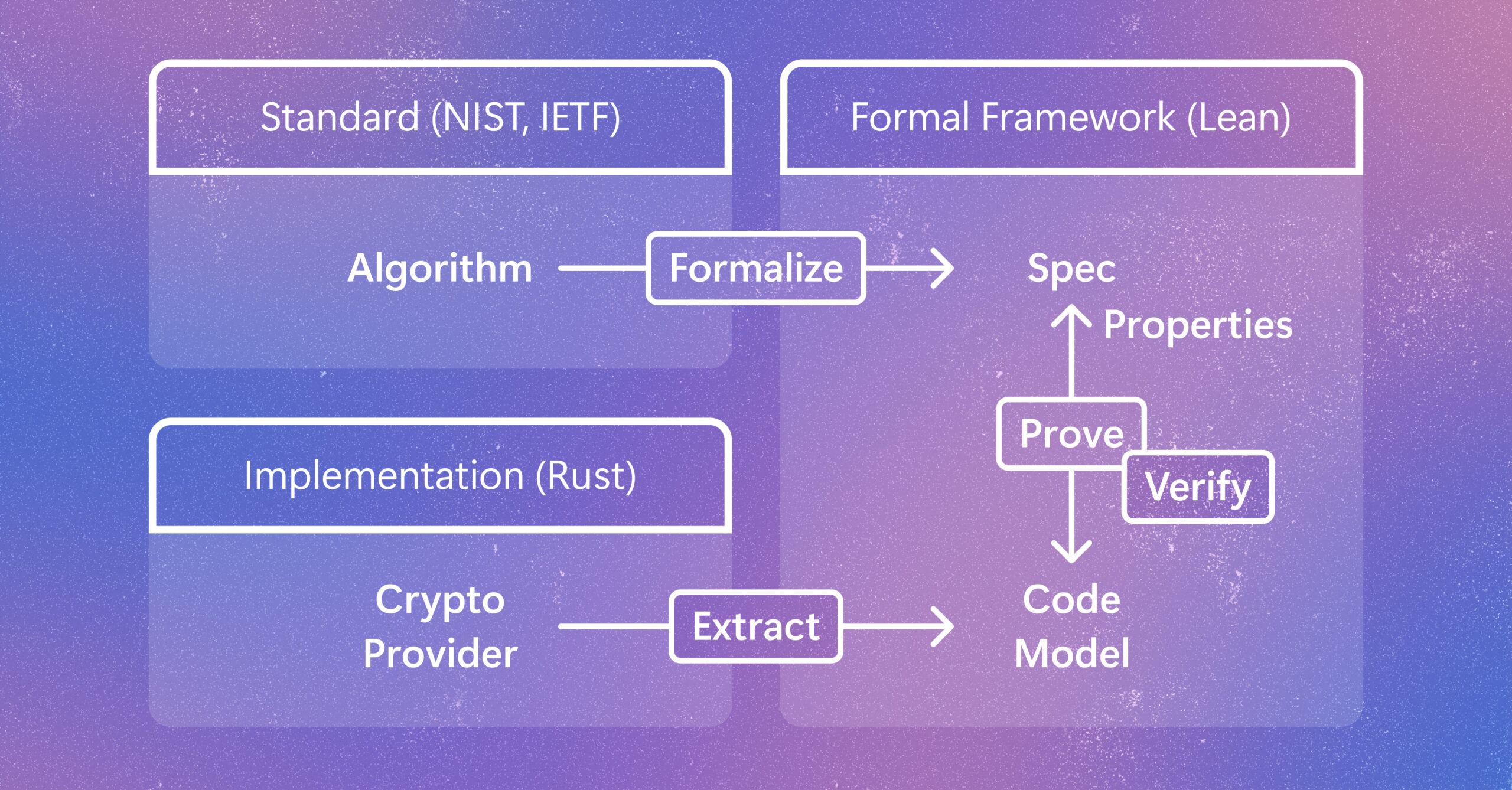
Cryptographic code supports vital protections in modern computing systems. Learn how a new method helps verify code as developers write it while preserving speed and adaptability as it gets implemented and evolves. The post Verifying Rust cryptography in SymCrypt, from standards to code appeared first on Microsoft Research.
Students in MIT’s Concourse program delve deeply into the human condition, debate challenging questions, and learn to develop judgment about issues that can’t be quantified.
Training AI agents with reinforcement learning can be challenging because their tools, context, and decision-making are managed by complex frameworks. Agent Lightning connects existing agents to RL training, making it easier to improve them without rebuilding them. The post Agent Lightning v1.0: A 3,500-Line Lightweight Agentic RL Framework for Training Agents with Real Harnesses appeared first on Microsoft Research.
We use cookies to run the site and, with your consent, for analytics and to show ads.
See our Cookie Policy.