Skip to content

Quality, safety, and readability of consumer-facing generative AI responses to end-of-life questions relevant to surrogate decision-makers for older adults: a benchmark evaluation

Oct 2026 · BMC Palliative Care
Palliative Care and End-of-Life Issues

Abstract

As the population ages and the prevalence of multiple coexisting conditions increases, end-of-life decision-making for older adults is becoming increasingly complex in clinical practice. limited access to relevant medical information and differences in medical knowledge between clinicians and surrogate decision-makers. Large language models (LLMs) are being widely used for accessing health information and facilitating doctor-patient communication, but their value and risks in end-of-life decision-making support for older adults have yet to be systematically evaluated. This study aimed to benchmark the safety, accuracy, observable empathetic communication, information quality, transparency indicators, and readability of responses generated by five publicly accessible consumer-facing generative AI systems to standardized end-of-life questions relevant to surrogate decision-makers for older adults. This study is a cross-sectional benchmark evaluation using a 30-question standardized question set covering six prespecified end-of-life domains. The question set was developed using an evidence-informed approach incorporating clinical guidelines, consensus statements, relevant literature, published qualitative studies involving surrogate decision-makers and family caregivers, and public search terminology. Each question was submitted once, in a new session, to five consumer-facing generative AI systems under their default web-interface conditions on June 14, 2026, yielding 150 paired system–question outputs. Two blinded clinical experts independently evaluated the outputs using predefined criteria for safety, accuracy, textual empathy, DISCERN, EQIP, JAMA transparency benchmarks, GQS, and six readability indices. Inter-rater reliability, paired overall comparisons, effect sizes, and post hoc comparisons with Benjamini–Hochberg correction were assessed. Safe-response rates ranged from 76.7% to 86.7% across systems, with no evidence of an overall between-system difference in safety (Cochran’s Q = 1.368, df = 4, P = 0.850; effect size = 0.011, 95% CI 0.005–0.117). Accuracy differed significantly across systems, although the overall effect was small ( P = 0.003; Kendall’s W = 0.132, 95% CI 0.036–0.332). Differences in expert-rated textual empathy were more pronounced ( P < 0.001; Kendall’s W = 0.373, 95% CI 0.194–0.598). Significant between-system differences were also observed for DISCERN ( P < 0.001; W = 0.332), EQIP ( P = 0.016; W = 0.102), JAMA transparency benchmarks ( P < 0.001; W = 0.751), and GQS ( P = 0.001; W = 0.148). Readability differed significantly across systems across all six indices (all P < 0.001), with substantial variability in grade-level estimates. Inter-rater agreement was good to excellent across the evaluated dimensions. In this time-stamped benchmark, consumer-facing generative AI systems generally produced accurate responses with observable empathetic communication, but clinically relevant limitations remained in safety, transparency, and readability. The sampled systems did not differ significantly in safety, whereas differences in accuracy were small and differences in textual empathy were more pronounced. Because the study evaluated generated text rather than surrogate understanding, trust, preferences, decisions, decisional conflict, behavior, or clinical outcomes, the findings do not establish the effectiveness of these systems as end-of-life decision-support interventions. Consumer-facing generative AI should therefore not be used as a standalone information source for high-stakes end-of-life decisions.

View source

Similar papers

#small language model Dataset Open access Oct 2026

Socratic guiding questions in synthetic arithmetic data: matched LoRA runs (revision v2)

Supporting data, adapters, predictions and code for the article *Low-Cost LoRA Fine-Tuning of Small Language Models for Multi-Step Arithmetic Reasoning* by Jake O'Grady, Asena Isik Gürhan, Chee Fong Ting and Effirul Ramlan (University of Galway). We generated 20,000 GSM8K-derived arithmetic problems with step-by-step s...

O'Grady, Jake, Gürhan, Asena Isik, Chee, Fong Ting et al. · 465 citations
#computer vision Open access Jun 2016

Software Development in Startup Companies: The Greenfield Startup Model

The results are packaged in the Greenfield Startup Model (GSM), which explains the priority of startups to release the product as quickly as possible, and the need to shorten time-to-market, by speeding up the development through low-precision engineering activities.

Carmine Giardino, Nicolò Paternoster, M. Unterkalmsteiner et al. · 178 citations · ⚡14
#computer vision Open access Oct 2016

Software Startups - A Research Agenda

Software startup companies develop innovative, software-intensive products within limited timeframes and with few resources, searching for sustainable and scalable business models.

M. Unterkalmsteiner, P. Abrahamsson, Xiaofeng Wang et al. · 157 citations · ⚡17
#machine learning Review Open access Oct 2016

“Failures” to be celebrated: an analysis of major pivots of software startups

This study conducts a case survey study based on the secondary data of the major pivots happened in 49 software startups, and demonstrates that customer need pivot is the most common among all pivot types.

Sohaib Shahid Bajwa, Xiaofeng Wang, Anh Nguyen-Duc et al. · 127 citations · ⚡15
#computer vision Review Open access May 2015

A survey study on major technical barriers affecting the decision to adopt cloud services

The comparison of adopter and non-adopter sample reveals three potential adoption inhibitor, security, data privacy, and portability, which underlines the importance of the technical and security perspectives for research investigating the adoption of technology.

Nattakarn Phaphoom, Xiaofeng Wang, S. Samuel et al. · 111 citations · ⚡8
#computer vision Conference Open access Dec 2013

Affordable and Energy-Efficient Cloud Computing Clusters: The Bolzano Raspberry Pi Cloud Cluster Experiment

The ongoing work building a Raspberry Pi cluster consisting of 300 nodes is presented, with potential use cases being an inexpensive and green test bed for cloud computing research and a robust and mobile data center for operating in adverse environments.

P. Abrahamsson, S. Helmer, Nattakarn Phaphoom et al. · 110 citations · ⚡7

Related blog posts

MIT News · Artificial Intelligence Sep 30, 2026

This game-playing AI is the new champ at Stratego

Able to defeat top-ranked human players and more efficient than other models, the new system could help decision-makers in military maneuvers or business negotiations.

Microsoft Research Blog Sep 29, 2026

Introducing Quine: An AI research system designed for the complexity of biology

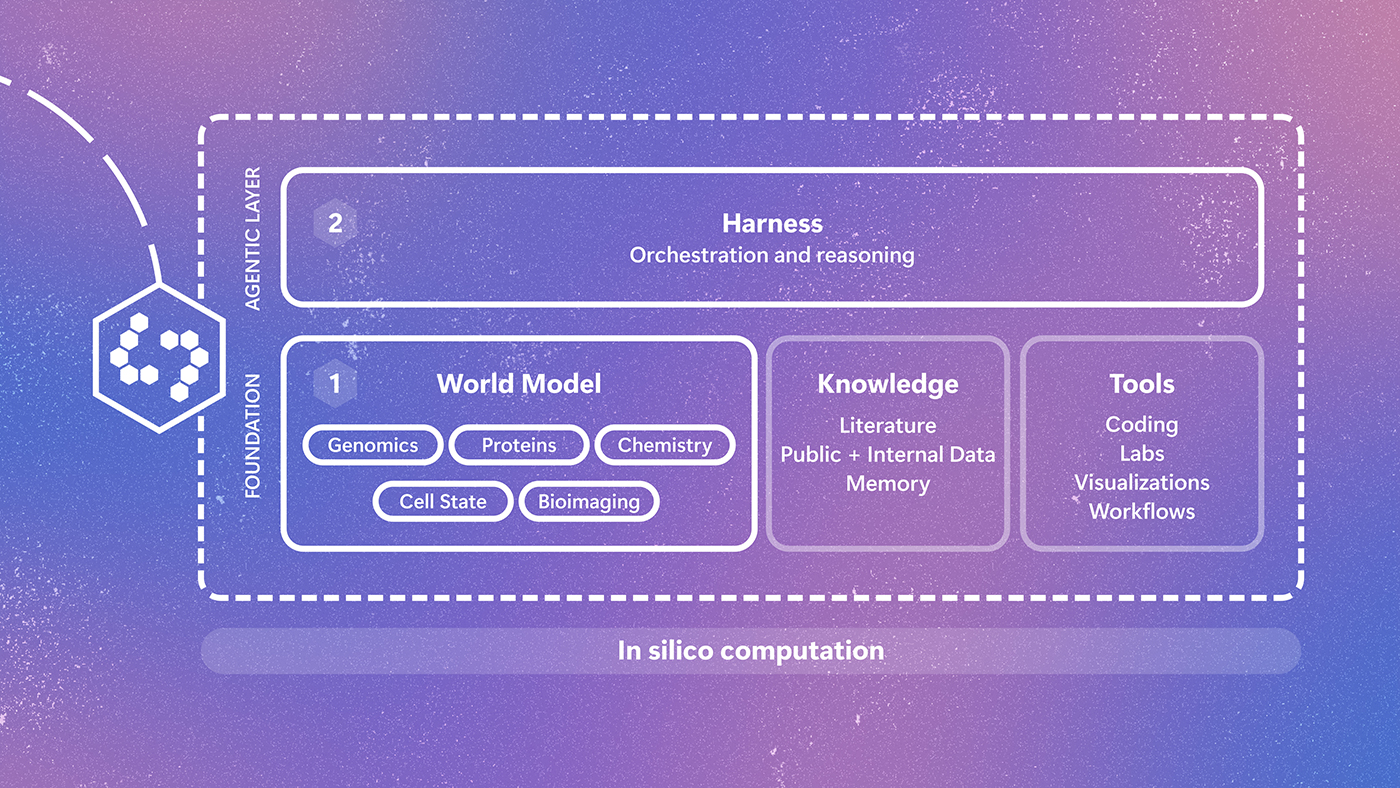
Biology doesn't operate in silos, and neither should the AI representation of it. Quine is an early-stage research effort to create a multimodal world model of biology. By connecting insights across biological scales and modalities, Quine helps scientists computationally search a space far larger than intuition allows and prioritize hypotheses before they reach the lab. Experimental results provide important feedback, helping researchers sharpen future research directions. The post Introducing Q…

We use cookies to run the site and, with your consent, for analytics and to show ads. See our Cookie Policy.