Oct 2026· Digital Enterprise Studies· 0 citations· 64 references
Abstract
Generative artificial intelligence is reaching small firms in emerging economies with unusual speed, because it is rented, not built, and is operated through ordinary language instead of code. This paper develops a conceptual framework that explains when and how generative AI use improves innovation performance in emerging-economy small and medium-sized enterprises. Drawing on absorptive capacity, dynamic capabilities and the institution-based view, and on the resource-based view for the diffusion argument, the framework treats generative AI as a low-cost conduit to codified external knowledge whose innovation value depends on the firm's capacity to verify, transform and exploit what the technology produces. Eight propositions, two of them stated as pairs and so ten statements in all, specify the mechanisms and boundary conditions. Generative AI is expected to widen knowledge access most where external knowledge networks are weakest, to strengthen sensing and the design elements of seizing more than transforming, and to favour incremental product and service innovation, process innovation within existing operations, business model innovation and innovation speed over novel product innovation. Its effect is moderated at the firm level by the evaluative expertise of the owner-manager and core staff, and bounded by the type of institutional void the firm faces, by an infrastructure and affordability threshold, by the fit between the model's training data and the firm's language and market context, and by the stage of diffusion among competing firms. As use diffuses, advantage shifts from access to the combination of generative AI with idiosyncratic local knowledge. The paper treats generative AI as a substitute for the channels through which these firms have obtained external knowledge and a complement to the firm's own evaluative expertise, and sets out a research agenda for testing the framework.

Supporting data, adapters, predictions and code for the article *Low-Cost LoRA Fine-Tuning of Small Language Models for Multi-Step Arithmetic Reasoning* by Jake O'Grady, Asena Isik Gürhan, Chee Fong Ting and Effirul Ramlan (University of Galway). We generated 20,000 GSM8K-derived arithmetic problems with step-by-step s...
O'Grady, Jake, Gürhan, Asena Isik, Chee, Fong Ting et al.· Zenodo (CERN European Organi...· 465 citations
The results are packaged in the Greenfield Startup Model (GSM), which explains the priority of startups to release the product as quickly as possible, and the need to shorten time-to-market, by speeding up the development through low-precision engineering activities.
Carmine Giardino, Nicolò Paternoster, M. Unterkalmsteiner et al.· IEEE Transactions on Softwar...· 178 citations· ⚡14
Software startup companies develop innovative, software-intensive products within limited timeframes and with few resources, searching for sustainable and scalable business models.
M. Unterkalmsteiner, P. Abrahamsson, Xiaofeng Wang et al.· e-Informatica Software Engin...· 157 citations· ⚡17
This study conducts a case survey study based on the secondary data of the major pivots happened in 49 software startups, and demonstrates that customer need pivot is the most common among all pivot types.
Sohaib Shahid Bajwa, Xiaofeng Wang, Anh Nguyen-Duc et al.· Empirical Software Engineeri...· 127 citations· ⚡15
The comparison of adopter and non-adopter sample reveals three potential adoption inhibitor, security, data privacy, and portability, which underlines the importance of the technical and security perspectives for research investigating the adoption of technology.
Nattakarn Phaphoom, Xiaofeng Wang, S. Samuel et al.· Journal of Systems and Softw...· 111 citations· ⚡8
This study investigates how Lean internal startup facilitates software product innovation in large companies and identifies its enablers and inhibitors, and shows the potential of the method-in-action framework to investigate the Lean startup approach in non-startup context.
Henry Edison, Nina M. Smørsgård, Xiaofeng Wang et al.· Journal of Systems and Softw...· 78 citations· ⚡6
Able to defeat top-ranked human players and more efficient than other models, the new system could help decision-makers in military maneuvers or business negotiations.
Microsoft Research Blog· microsoft.comSep 29, 2026
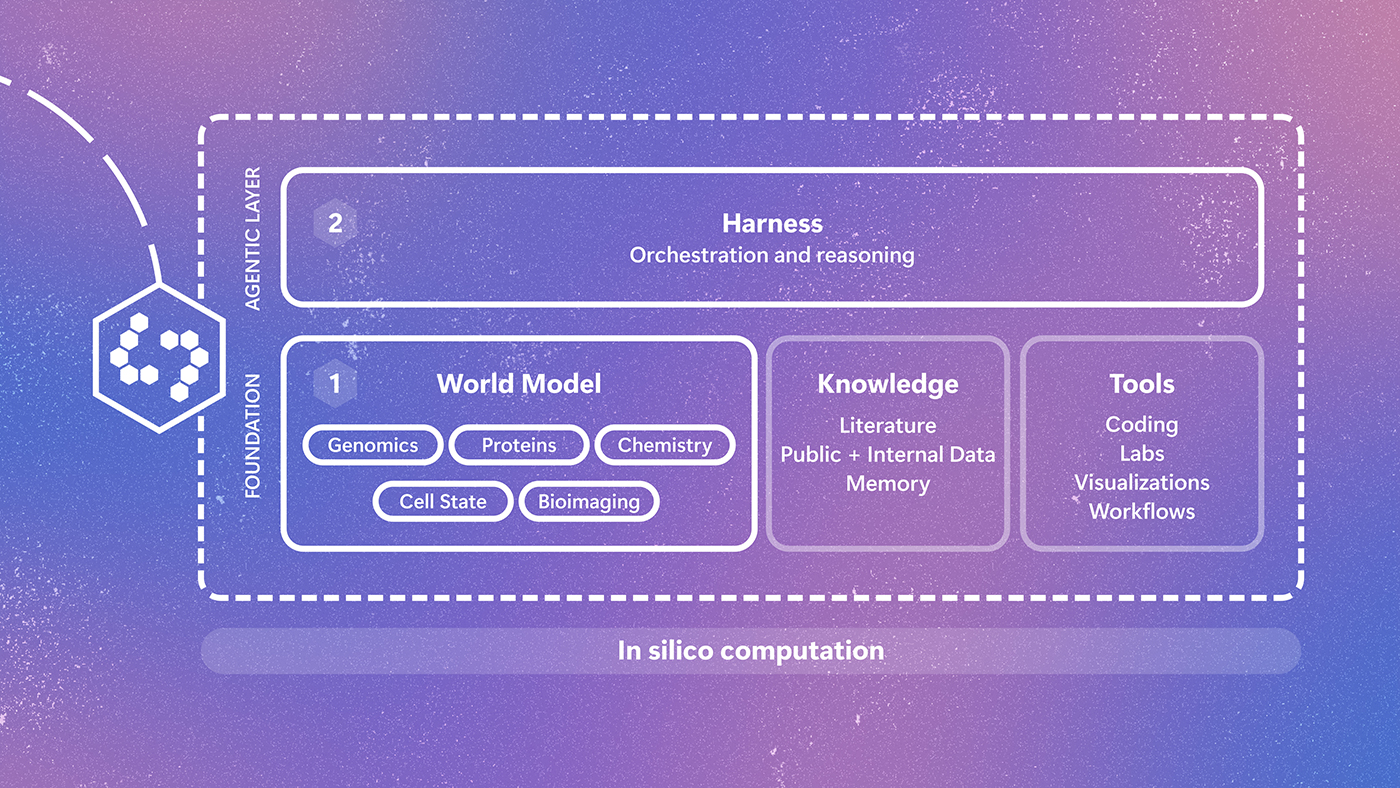
Biology doesn't operate in silos, and neither should the AI representation of it. Quine is an early-stage research effort to create a multimodal world model of biology. By connecting insights across biological scales and modalities, Quine helps scientists computationally search a space far larger than intuition allows and prioritize hypotheses before they reach the lab. Experimental results provide important feedback, helping researchers sharpen future research directions. The post Introducing Q…
We use cookies to run the site and, with your consent, for analytics and to show ads.
See our Cookie Policy.