Skip to content

A Survey on End-to-End Autonomous Driving Training From the Perspectives of Data, Strategy, and Platform

Oct 2026 · IEEE transactions on intelligent transportation systems (Print) · 5 citations · 264 references
Computer Science

TL;DR

A Data-Strategy-Platform taxonomy is introduced that conceptualizes training as an interdependent system and surveys recent advances across data-centric pipelines, learning paradigms, and training infrastructures, and analyze their interplay in shaping model performance, robustness, and deployability.

Abstract

Autonomous driving is a cornerstone technology for the future of intelligent transportation, where end-to-end learning has emerged as a transformative paradigm that directly maps multimodal sensory inputs to driving actions through unified differentiable models. While offering advantages, the effectiveness of end-to-end autonomous driving (E2E-AD) is ultimately determined by the quality of its training ecosystem. This paper provides a comprehensive review of training methods and ecosystem for E2E-AD. We introduce a Data-Strategy-Platform taxonomy that conceptualizes training as an interdependent system. The data layer defines what can be learned, the strategy layer governs how learning aligns with driving objectives, and the platform layer supports scalability and continuous evolution. Within this framework, we survey recent advances across data-centric pipelines, learning paradigms, and training infrastructures, and analyze their interplay in shaping model performance, robustness, and deployability. Finally, we reflect on current limitations and articulate a forward-looking vision that emphasizes a shift from data quantity to data value, from isolated optimization to foundation-driven generalization, and from static training to integrated training-testing loops, aiming toward robust, scalable, and trustworthy autonomous driving systems. We maintain a continuously updated repository tracking cutting-edge literature and works at \href{https://github.com/Jiaaqiliu/Awesome-Training-Ecosystem-for-E2E-AD}{Our Project Page}.

Read PDF

Similar papers

#computer vision Review Sep 2017

Agile Software Development Methods: Review and Analysis

This publication proposes a definition and a classification of agile software development approaches and analyses ten software development methods that can be characterized as being "agile" against the defined criterion.

P. Abrahamsson, O. Salo, Jussi Ronkainen et al. · 727 citations · ⚡54
#computer vision Jun 2008

The impact of agile practices on communication in software development

The study shows that agile practices improve both informal and formal communication, but indicates that, in larger development situations involving multiple external stakeholders, a mismatch of adequate communication mechanisms can sometimes even hinder the communication.

M. Pikkarainen, Jukka Haikara, O. Salo et al. · 401 citations · ⚡48
#machine learning Review Open access Oct 2014

Software development in startup companies: A systematic mapping study

The results indicate that software engineering work practices are chosen opportunistically, adapted and configured to provide value under the constrains imposed by the startup context.

Nicolò Paternoster, Carmine Giardino, M. Unterkalmsteiner et al. · 394 citations · ⚡54

Diffusion models as plug-and-play priors

The possibility of inferring high-dimensional data inference in a model that consists of a prior and an auxiliary differentiable constraint given some additional information is considered, thereby allowing a range of potential applications in adapting models to new domains and tasks.

Alexandros Graikos, Esmeralda S. Whitammer, N. Jojic et al. · 316 citations · ⚡15

Trajectory Balance: Improved Credit Assignment in GFlowNets

It is proved that any global minimizer of the trajectory balance objective can define a policy that samples exactly from the target distribution, and empirically demonstrate the benefits of the trajectories balance objective for GFlowNet convergence, diversity of generated samples, and robustness to long action sequenc...

Esmeralda S. Whitammer, Moksh Jain, Emmanuel Bengio et al. · 302 citations · ⚡60

Related blog posts

Microsoft Research Blog Aug 11, 2026

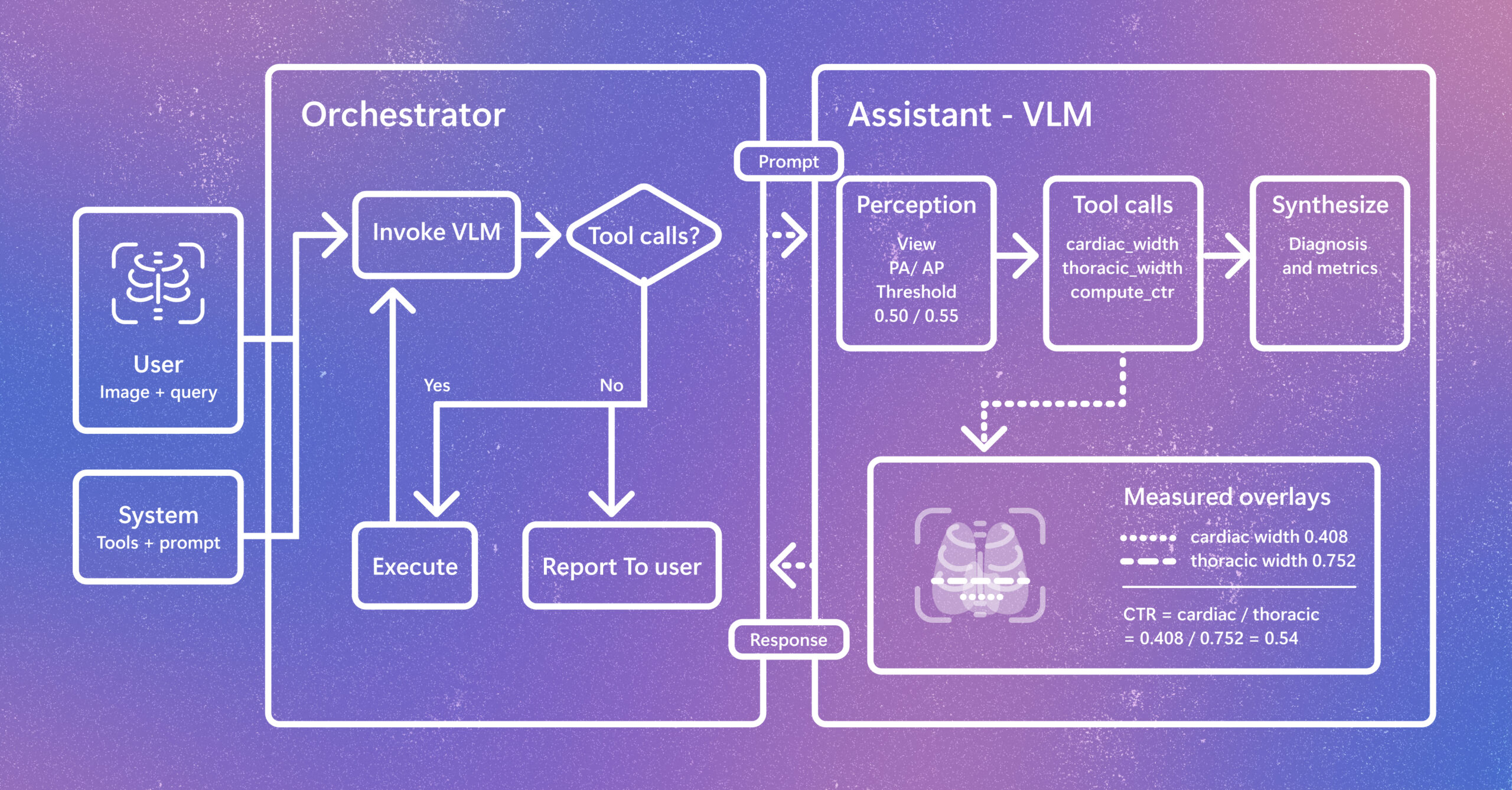
Introducing CARE-X: Towards Clinically Useful Radiology VLMs with Auxiliary Supervision, Reward-Aligned Learning, and Tool-Augmented Measurement

Radiology AI is evolving beyond report generation. CARE-X explores a unified approach that combines flexible reasoning, calibrated predictions, and measurement-based tools for chest X-ray interpretation. The post Introducing CARE-X: Towards Clinically Useful Radiology VLMs with Auxiliary Supervision, Reward-Aligned Learning, and Tool-Augmented Measurement appeared first on Microsoft Research.

We use cookies to run the site and, with your consent, for analytics and to show ads. See our Cookie Policy.
