Sep 2026· Frontiers in Pharmacology· 0 citations· 44 references
Machine Learning in Materials Science
Abstract
In this work, we propose Molrep-SCF, a multimodal self-supervised pretraining framework for molecular representation learning using SMILES sequences, 2D molecular graphs, and 3D geometric structures. The three modalities are encoded using a Transformer, a graph neural network, and an invariant 3D graph neural network, respectively. To enrich geometric supervision beyond a single conformation, Molrep-SCF incorporates three selected and complementary 3D conformational views. We further introduce a 2D-guided conformational consistency refinement mechanism that uses molecular topology to guide the fusion and refinement of their geometric representations. Instead of relying on a single static conformation, our method enforces structural consistency across conformers under the guidance of 2D topological priors. Furthermore, we design a structure-aware cross-modal learning strategy with atomic-level alignment via position-specific masking, enabling fine-grained correspondence across modalities. In addition, masked reconstruction across modalities enhances deep semantic coupling and facilitates information exchange between heterogeneous representations. Extensive experiments demonstrate that Molrep-SCF consistently outperforms existing multi-modal frameworks on molecular property prediction and other tasks, showing stronger generalization and representation quality.
Agile methods continue to gain popularity. In particular, the Scrum method appears to be on the verge of becoming a de-facto standard in the industry, leading the so called Agile movement. While there are success stories and recommendations, there is little scientifically valid evidence of the challenges in the adoptio...
A. Marchenko, P. Abrahamsson· Agile Conference· 59 citations· ⚡11
A comprehensive taxonomy of the challenges faced when a medium-scale organization decided to adopt software platforms is provided, namely: business challenges, organizational challenges, technical challenges, and people challenges.
Yaser Ghanam, F. Maurer, P. Abrahamsson· Information and Software Tec...· 41 citations· ⚡3
It is shown that high article processing charges are not sufficiently justified by the publishers, which often lack transparency and may prevent authors from adopting OA.
D. Graziotin, Xiaofeng Wang, P. Abrahamsson· Scientometrics· 21 citations· ⚡1
MCGLPPI, a novel geometric representation learning framework that combines graph neural networks (GNNs) with the MARTINI molecular coarse-grained (CG) model to predict overall PPI properties accurately and efficiently, offers an effective and efficient solution for PPI overall property predictions.
Yang Yue, Shu Li, Yihua Cheng et al.· bioRxiv· 15 citations
PepPCBench enables a robust evaluation of PFNN-based methods and supports their continued development for peptide-protein structure prediction, and highlights the influence of peptide length, conformational flexibility, and training set similarity on prediction accuracy.
Si-Long Zhai, Huifeng Zhao, Ji-Ke Wang et al.· Journal of Chemical Informat...· 13 citations· ⚡1
OmniMol is presented, a framework using hypergraphs to improve predictions of molecular properties, addressing challenges of imperfect data annotation and enhancing model explainability, and achieves state-of-the-art performance in properties prediction.
Assistant Professor Pat Pataranutaporn describes a new interface that lets everyday users glimpse inside an AI's neural network before their chatbot ever says a word.
Microsoft Research Blog· microsoft.comJul 13, 2026
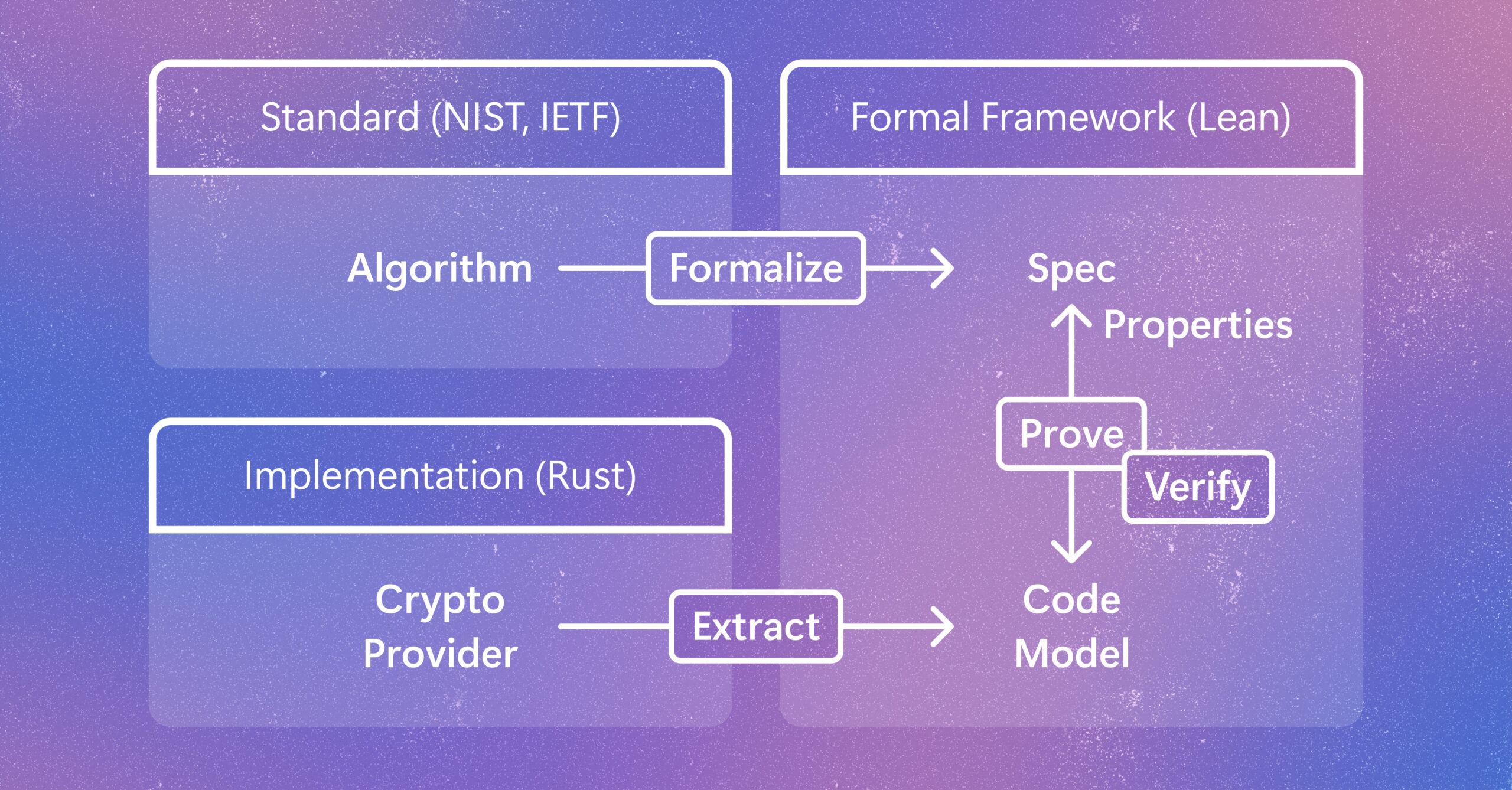
Cryptographic code supports vital protections in modern computing systems. Learn how a new method helps verify code as developers write it while preserving speed and adaptability as it gets implemented and evolves. The post Verifying Rust cryptography in SymCrypt, from standards to code appeared first on Microsoft Research.
MIT News · Artificial Intelligence· news.mit.eduJul 6, 2026
PhD student Rachel Sava, winner of the Envisioning the Future of Computing Prize, explores transformative improvements and dystopian risks of neural technology.