Skip to content

FedTrust-GNN: Federated Learning with Blockchain Trust and Graph Neural Networks for Decentralized Modeling

Sep 2026 · Natural Sciences and Applied Technology
Privacy-Preserving Technologies in Data

Abstract

Centralized user modeling systems inherently violate privacy regulations, with catastrophic failure points, opaque trust management mechanisms, and vulnerability to complex adversarial strategies such as poisoning attacks, model inversions, and membership inference. Federated learning (FL) approaches address data privacy issues by training models without centralized data storage. However, they suffer from Byzantine failures, lack of transparent reputation-based trust mechanisms, and inability to harness relational information implicit in user interactions. This paper proposes FedTrust-GNN, a secure and relationally aware decentralized user modeling framework that integrates federated learning, permissioned blockchain, and graph neural networks. The framework employs differentially private federated learning with secure multi-party computation (SMPC) to perform gradient aggregation while providing strong privacy guarantees. A permissioned blockchain using the Practical Byzantine Fault Tolerance (PBFT) consensus protocol maintains an immutable ledger of participant behaviors, model contributions, and reputation scores, eliminating reliance on a trusted central authority. To model participant relationships, a heterogeneous graph attention network (HGAT) infers dynamic trust scores by capturing multihop trust propagation, collusion patterns, and evolving reputation through attention-based message passing. These trust scores guide a trust-weighted robust aggregation (TWRA) mechanism that combines norm clipping with coordinate-wise median aggregation, achieving Byzantine fault tolerance against up to 30\% malicious participants. Experiments on Federated EMNIST, Stack Overflow, and synthetic datasets with 10,000--100,000 participants demonstrate that FedTrust-GNN achieves 94.2\% accuracy (within 1.3\% of centralized models), reduces successful label-flipping attacks by 82\% (34\% to 6.1\%), improves convergence stability by 41\%, and enables blockchain performance of 1,200 transactions per second with 2.3-second finality, demonstrating its practicality for large-scale deployment.
View source

Similar papers

#machine learning Review Open access Oct 2014

Software development in startup companies: A systematic mapping study

The results indicate that software engineering work practices are chosen opportunistically, adapted and configured to provide value under the constrains imposed by the startup context.

Nicolò Paternoster, Carmine Giardino, M. Unterkalmsteiner et al. · 394 citations · ⚡54
#machine learning Review Open access Jun 2014

Why Early-Stage Software Startups Fail: A Behavioral Framework

This state-of-practice investigation was performed using a literature review followed by a multiple-case study approach and presents how inconsistency between managerial strategies and execution can lead to failure by means of a behavioral framework.

Carmine Giardino, Xiaofeng Wang, P. Abrahamsson · 175 citations · ⚡19
#machine learning Review Open access Oct 2016

“Failures” to be celebrated: an analysis of major pivots of software startups

This study conducts a case survey study based on the secondary data of the major pivots happened in 49 software startups, and demonstrates that customer need pivot is the most common among all pivot types.

Sohaib Shahid Bajwa, Xiaofeng Wang, Anh Nguyen-Duc et al. · 127 citations · ⚡15
#machine learning Review Open access May 2016

Key Challenges in Software Startups Across Life Cycle Stages

It is found that what perceived as biggest challenges by software startups do vary across different life cycle stages, even though its significance decreases when the learning focuses of the startups move from problem to solution and their products mature.

Xiaofeng Wang, Henry Edison, Sohaib Shahid Bajwa et al. · 62 citations · ⚡6
#computer vision Conference Aug 2008

Scrum in a Multiproject Environment: An Ethnographically-Inspired Case Study on the Adoption Challenges

Agile methods continue to gain popularity. In particular, the Scrum method appears to be on the verge of becoming a de-facto standard in the industry, leading the so called Agile movement. While there are success stories and recommendations, there is little scientifically valid evidence of the challenges in the adoptio...

A. Marchenko, P. Abrahamsson · 59 citations · ⚡11

Related blog posts

Microsoft Research Blog Jul 13, 2026

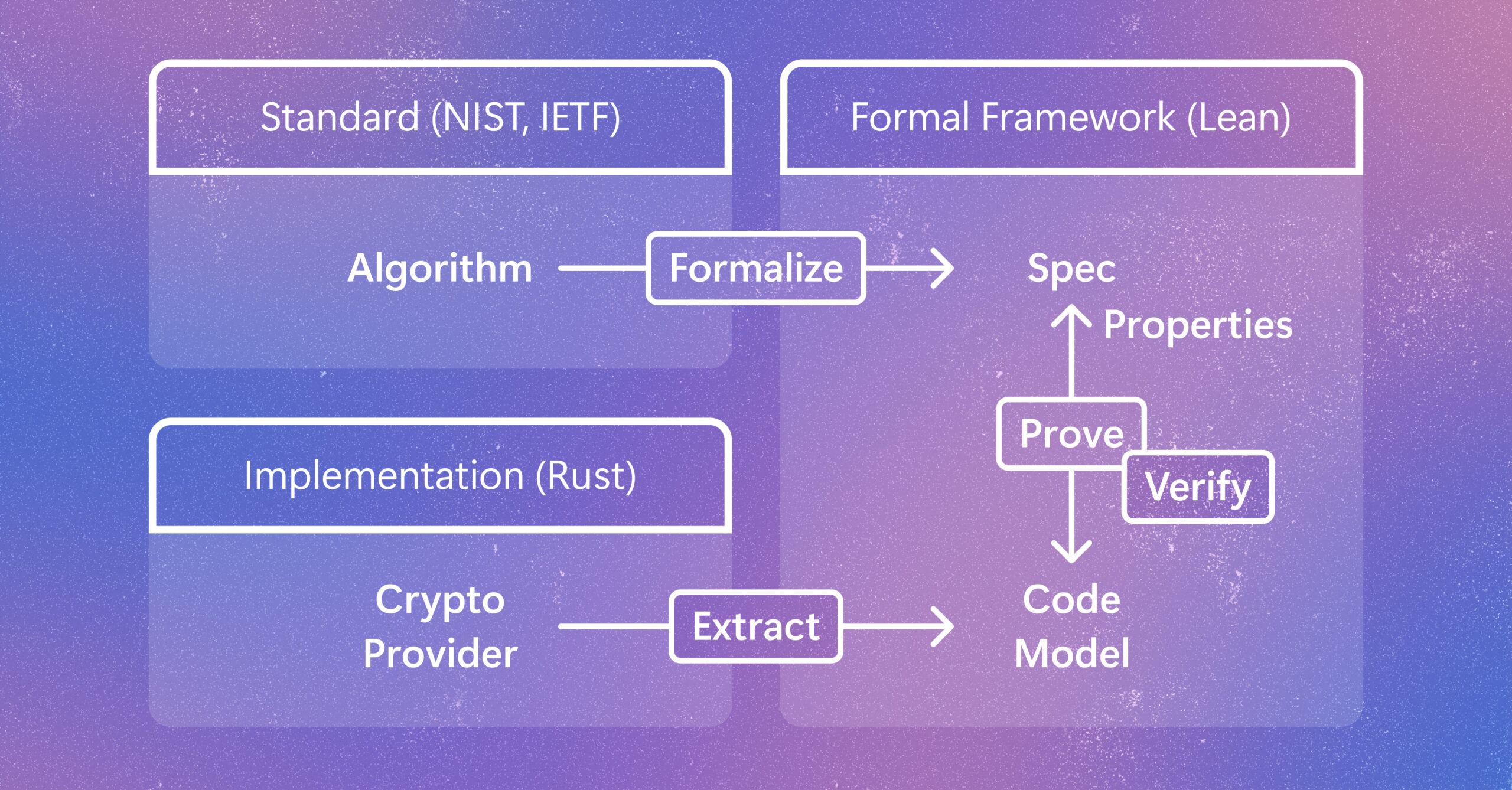
Verifying Rust cryptography in SymCrypt, from standards to code

Cryptographic code supports vital protections in modern computing systems. Learn how a new method helps verify code as developers write it while preserving speed and adaptability as it gets implemented and evolves. The post Verifying Rust cryptography in SymCrypt, from standards to code appeared first on Microsoft Research.

MIT News · Artificial Intelligence Oct 7, 2026

Discovering the value of humanistic inquiry

Students in MIT’s Concourse program delve deeply into the human condition, debate challenging questions, and learn to develop judgment about issues that can’t be quantified.

Microsoft Research Blog Oct 7, 2026

Agent Lightning v1.0: A 3,500-Line Lightweight Agentic RL Framework for Training Agents with Real Harnesses

Training AI agents with reinforcement learning can be challenging because their tools, context, and decision-making are managed by complex frameworks. Agent Lightning connects existing agents to RL training, making it easier to improve them without rebuilding them. The post Agent Lightning v1.0: A 3,500-Line Lightweight Agentic RL Framework for Training Agents with Real Harnesses appeared first on Microsoft Research.

We use cookies to run the site and, with your consent, for analytics and to show ads. See our Cookie Policy.