Skip to content

Risk-Aware Hierarchical Meta-Reinforcement Learning with Quantile Regression LSTM Framework for Adaptive Task Prioritization and Congestion Avoidance Offloading in Fog–Cloud Systems

Sep 2026 · Future Internet · Vol 18, pp. 513 · 0 citations · 31 references
IoT and Edge/Fog Computing

TL;DR

A graph network with a reinforcement learning framework to avoid congestion and schedule tasks with a low makespan in fog–IoT systems and demonstrates the improved ability to ensure reliable and effective fog–cloud allocation in response to dynamically changing workloads.
Abstract

Fog–cloud systems allow distributed and latency-sensitive IoT applications to share edge, fog, and cloud resources for efficient computation, storing and delivering services. Nonetheless, the current methods of task scheduling and resource allocation tend to be based on deterministic prediction, heuristic schedules, or response optimization, restricting risk sensitivity and responsiveness to dynamic workloads. To address these issues, we propose a graph network with a reinforcement learning framework to avoid congestion and schedule tasks with a low makespan in fog–IoT systems. The work starts with real-time monitoring of queue states, delay, bandwidth, energy and deadline properties of upcoming IoT tasks. Quantile Regression Long Short-Term Memory (QR-LSTM) predicts a normal task flow and congestion based on the task queue. The congestion tasks are further scheduled using a Delay-Aware Influence Reinforced-Graph Neural Network (DAIR-GNN). Then, Topology-Sensitive Resource Influence Propagation is used to map and analyze the relationship between the task sender and receiver within a network. After that, Dual-Stage Risk-Aware Hierarchical Policy (DRHP) combines Proximal Policy Optimization (PPO) to select the kinds of sources, like fog or cloud, based on the topology. Similarly, Model-Agnostic Meta-Learning (MAML) with Soft Actor–Critic allocates the resources of each tasks within the selected server. Both RL models are trained using Few-Shot Adaptive Policy Transfer to make better predictions. Lastly, Confidence-Uncertainty Regulated Exploration (CURE) is used to compute the prediction score for task allocation improvement. The proposed framework achieves a variance ratio of 80.6%, latency is 0.626 s, and the success rate is 98% in the prediction of congestion, scheduling and allocation of resources. These results demonstrate the improved ability to ensure reliable and effective fog–cloud allocation in response to dynamically changing workloads.

Read PDF

Similar papers

Sep 2026

Time-Series Load Prediction and Deep Deterministic Policy Gradient-Based Task Scheduling Optimization for Cloud-Edge Collaborative Networks

Cloud-edge collaborative networks have become an important computing paradigm for latency-sensitive and resource-intensive applications, but dynamic workload variation makes efficient task scheduling difficult. Existing scheduling methods often rely on current system states and cannot proactively respond to future load...

Lei Zhong, Min Wu, Peng-Jian Wei et al. · 0 citations
Open access Sep 2026

Guarded deep reinforcement learning for SLA latency and energy aware task scheduling in IoT edge cloud environments

With the fast-growing IoT applications, there is a need for intelligent task-scheduling mechanisms that can meet the latency, energy, and service-level agreement (SLA) constraints in a dynamic edge–cloud environment. This may not be met with traditional heuristic and deep reinforcement learning (DRL)-based schedulers u...

Mohammed Waseem Ahmed, G. Kavitha · 0 citations
Conference Open access Sep 2026

JointScaler: A Hierarchical Multi-Indicator Distribution Forecasting Approach for Uncertainty-Aware Joint Scaling in Cloud Services

JointScaler is proposed, a learning-based framework for multi-indicator distribution forecasting and uncertainty-aware scaling that captures inter-indicator dependencies via hierarchical attention, models dynamic uncertainties with normalizing flows, and leverages full predictive distributions to optimize bundled resou...

Yang Luo, Zhe-Meng Yu, Yi-Kang Fu et al. · 0 citations
Aug 2026

Hybrid Fuzzy-Bayesian Demand Modeling and Simulation-Driven Policy Co-Optimization for Dynamic IoT Data Streams

DFB-PCO is proposed, a demand-aware fuzzy-Bayesian policy co-optimization method for IoT data streams that extracts online stream features, uses fuzzy membership and rule aggregation to represent ambiguous demand boundaries, and applies Bayesian posterior updating to capture temporal demand uncertainty.

Li-Da Chai, Dan Gan, Guang-Xu Yan et al. · 0 citations
Open access Aug 2026

JATO: Deep Reinforcement Learning-based Joint Optimization for Task Offloading and Adaptive Transmission in Multimedia IoT Systems

JATO is presented, a framework to jointly tackle the problems of adaptive task offloading and transmission optimization using Deep Reinforcement Learning, and offers a mono-faceted solution, learning a policy to simultaneously determine the best offloading target and the transmission quality.

G. Purnama, Irma Amelia Dewi, A. Langi et al. · 0 citations

Related blog posts

Microsoft Research Blog Jul 13, 2026

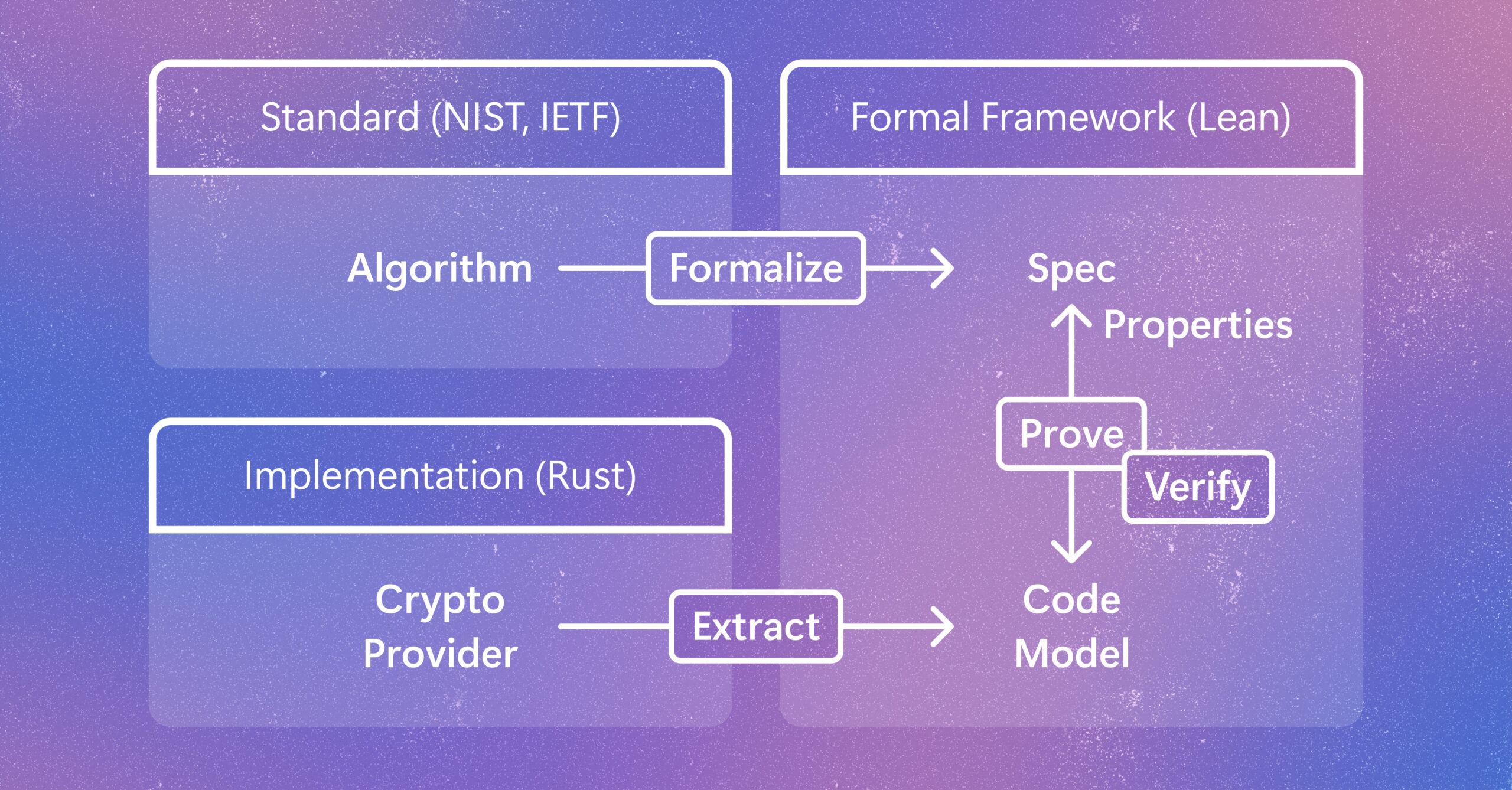
Verifying Rust cryptography in SymCrypt, from standards to code

Cryptographic code supports vital protections in modern computing systems. Learn how a new method helps verify code as developers write it while preserving speed and adaptability as it gets implemented and evolves. The post Verifying Rust cryptography in SymCrypt, from standards to code appeared first on Microsoft Research.

We use cookies to run the site and, with your consent, for analytics and to show ads. See our Cookie Policy.