AIVC (AI Virtual Cell) is a learned simulator of cellular behavior across conditions, and P2P (Perturbation-to-Perturbation) takes a stochastic cell-set view as its supervision unit, which attains the lowest expression RMSE and the highest Effect Pearson, DEG F1, and DEG average precision.
Abstract
AIVC (AI Virtual Cell) is a learned simulator of cellular behavior across conditions. Predicting how a cell population responds transcriptionally to a genetic perturbation is a core task. Perturb-seq records that response by destructive sequencing, so a control cell and a perturbed cell are never observed as a pair, and cells under one condition remain heterogeneous and noisy. Regression on individual cells absorbs sampling variation into the estimated effect, whereas interpretation requires the reproducible population effect. P2P (Perturbation-to-Perturbation) takes a stochastic cell-set view as its supervision unit. Two views drawn from the same condition share a reproducible population effect and differ by view-specific variation. A permutation-invariant set encoder summarizes the control population, a structured encoder represents perturbation tokens, cellular context, dose, and combination interactions, and a gate blends empirical condition-effect memory with a neural residual. A heteroscedastic head predicts the population mean and gene-wise response variance. Under one protocol and five seeds, P2P attains the lowest expression RMSE and the highest Effect Pearson, DEG F1, and DEG average precision on each of Adamson, Norman, Replogle K562, and Replogle RPE1 relative to GenePert, LinearPert, SLIM, Scouter, and scPILOT. On Replogle K562, Effect Pearson rises from 0.643 to 0.702 and DEG F1 rises from 0.067 to 0.178 relative to Scouter, the strongest baseline on both metrics.

Predicting cellular responses to chemical and genetic perturbations is a central test for AI virtual cells, yet many single-cell models reduce each condition to an average expression shift. This target is misaligned with perturbation biology: rare states, resistant subpopulations, and context-dependent effect sizes may...
Experimental results show that DeMixPert effectively captures heterogeneous single-cell perturbation responses and achieves superior performance across unseen-perturbation settings.
Jia-Wen Liu, Xu Cao, Yu-Tong Li et al.· 0 citations
PerturbBridge is proposed, a conditional latent Schrödinger Bridge framework that reformulates stochastic population transport over high-dimensional, sparse geneexpression profiles as bridge learning in a compact cell latent space, and achieves state-of-the-art performance in differential-expression recovery on both be...
Zhi-Hao Liu, Chang-Zhi Jiang, Can Yang et al.· bioRxiv· 0 citations
A mechanism-centric virtual cell world model that represents cellular state as a set of Latent Mechanism Units (LMUs) and treats genetic perturbations as actions on these latent states supports mechanism-level latent state transition as a useful formulation for virtual cell models that aim to predict and interpret cell...
Yu-Wei Miao, Azim Dehghani Amirabad, S. Oloff et al.· 0 citations
Overall, scLDM provides a robust and biologically consistent strategy for in silico perturbation screening, and exhibits strong interpretability, as the learned perturbation embeddings show high functional alignment with known biological mechanisms.
Across several benchmarks, this method outperforms the strongest published method in settings involving combinatorial and unseen perturbation prediction, and is the strongest published method in settings involving combinatorial and unseen perturbation prediction.
Mustapha Bounoua, G. Franzese, P. Michiardi· 0 citations
Related blog posts
MIT News · Artificial Intelligence· news.mit.eduOct 13, 2026
Machine-learning networks can learn without detailed instructions from a designer. Those that do may offer insight into how the brain reorganizes itself during learning.
MIT News · Artificial Intelligence· news.mit.eduSep 29, 2026
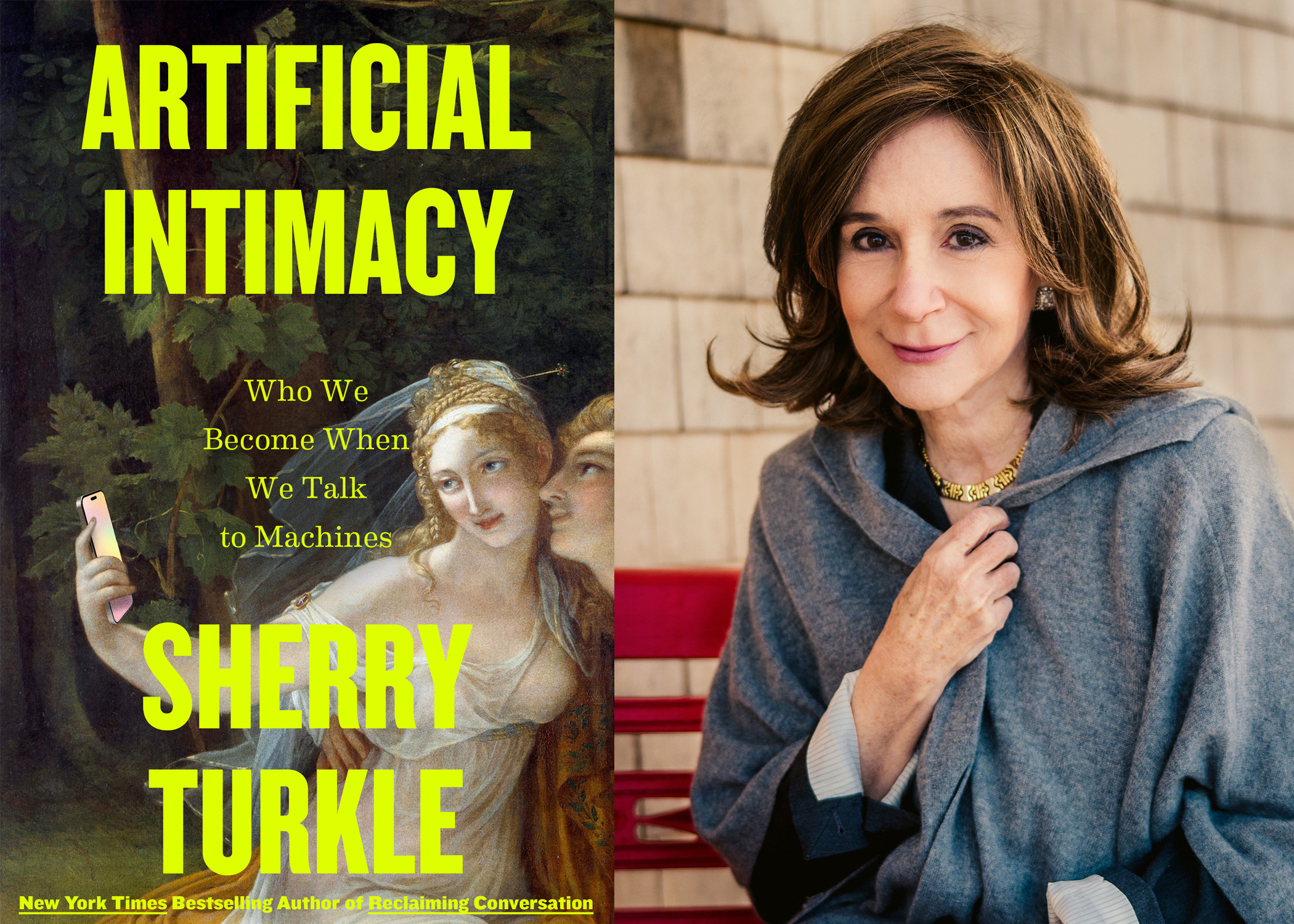
Professor Sherry Turkle’s new book, “Artificial Intimacy,” offers a withering critique of chatbots and the antisocial dynamics she believes they encourage.