Skip to content

Block Sparse Attention with Log-Linear Complexity

Sep 2026 · 0 citations · 41 references
Computer Science

TL;DR

PISA is proposed, a block-sparse attention mechanism that employs a pyramid Top-$K selection strategy, and develops hardware-aware Triton kernels for both training and inference, fusing hierarchical routing and LogSumExp scoring without materializing the query-key score matrix.

Abstract

Scaling language models to long contexts is limited by the quadratic cost of self-attention. Block sparse attention offers an efficient alternative, but selecting the retained blocks remains a bottleneck. Conventional block selection requires scoring all query-block pairs and therefore remains quadratic in sequence length. To address this issue, we propose PISA, a block-sparse attention mechanism that employs a pyramid Top-$K$ selection strategy. The main idea is to gradually narrow down the candidates across different levels, making it more efficient to find the most relevant keys. Specifically, we construct a coarse-to-fine hierarchy of keys and perform selection from the coarsest level. At each level, LogSumExp scoring is applied to a bounded candidate set to select candidates for the next finer level, continuing until the finest level is reached. Through pooling, we construct $O(\log N)$ levels of keys, yielding an overall complexity of $O(N\log N)$, where $N$ denotes the sequence length. We develop hardware-aware Triton kernels for both training and inference, fusing hierarchical routing and LogSumExp scoring without materializing the query-key score matrix. We further evaluate our method on language modeling tasks. Compared with the baseline, our method achieves comparable performance on benchmarks such as commonsense reasoning while delivering better results on retrieval tasks.
View source

Similar papers

#machine learning Preprint Aug 2026

LoGo: Token-Level Dynamic Local-Global Attention

LoGo, a token-level dynamic local-global attention mechanism that uses attention span as a direct proxy for attention budget allocation, is proposed and results suggest that learned token-level span allocation is an effective and scalable way to improve the long-context performance-compute trade-off.

Yu-Qi Pan, Zheng Li, Bo-Hao Tang et al. · 1 citation
#artificial intelligence Preprint Sep 2026

RBS-Attention: Radius-Bounded Sparse Prefill for Long-Context Large Language Models

Long-context large language model inference is increasingly limited by prefill, where dense self-attention processes the entire prompt before generation begins. Sparse block selection can reduce this cost, but a block centroid may hide a highly relevant token among many irrelevant ones. We call this failure mode mean d...

Chu-Xu Song, Jiu-Qi Wei, Zhen-Can Peng · 0 citations
#machine learning Preprint Sep 2026

SANTA++: Sampling Attention through Representative Keys

Attention often concentrates on a small subset of tokens in the context, but which subset matters changes from one query to the next. To exploit this changing structure, we introduce SANTA++, a training-free stochastic attention method that uses representative keys for memory-efficient selection without scanning the en...

Kyle Lee, Christian Z. Pratt, Ruo-Yu Fang et al. · 0 citations
#machine learning Preprint Sep 2026

Retrieval Capacity of Self-Attention Under Competition

How many tokens from its context does a language model actually use, and what determines that number? We study this question through self-attention. Without retraining, we retain only the tokens with the highest attention weights at each head, layer, and query, keeping their original weights unchanged. By varying the s...

Timur Mudarisov, M. Burtsev, Radu State · 0 citations
#natural language process... Preprint Sep 2026

SAS: Simple Attention Sparsification via End-to-End Optimization of Context Ranking

Across reasoning, long-context understanding, and agentic tasks, SAS consistently outperforms trainable sparse attention baselines across attention budgets, with especially large gains under tight budgets, demonstrating more effective context ranking for downstream tasks.

Zhi-Wei Li, Lei Zhu, Hao Gu et al. · 0 citations
#artificial intelligence Preprint Sep 2026

Block-Sparse Attention with Semantic-Geometric Decoupled Routing

Semantic-Geometric Decoupled Routing is proposed, a training-free block routing framework that shifts semantic aggregation to the pre-RoPE space and reconstructs geometric bias with an offline structural prior and relative block distances and yields an explicit closed-form block routing score without token-level search...

Xin-Wei Long, Wei-Gao Sun, Wei-Bo Gao et al. · 0 citations

Related blog posts

Microsoft Research Blog Sep 30, 2026

Forecasting space weather risks on power grids

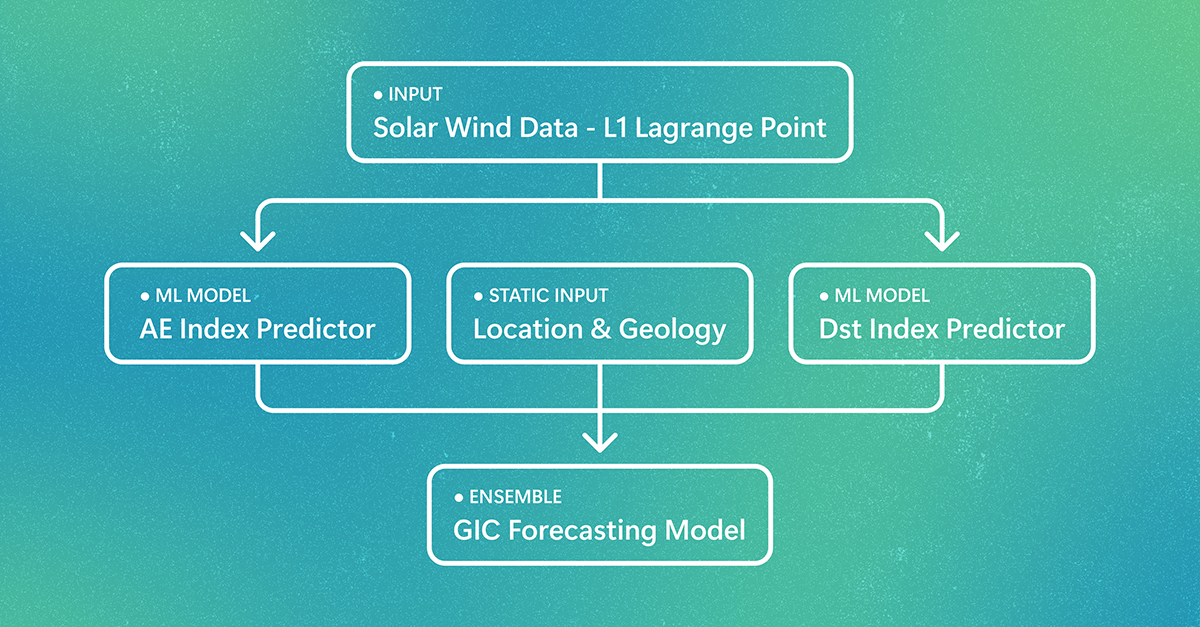
Extreme space-weather events can damage power systems on Earth and degrade GPS accuracy and satellite operations. A new machine learning system can predict where damage is likely to occur 30-60 minutes before a storm arrives. The post Forecasting space weather risks on power grids appeared first on Microsoft Research.

We use cookies to run the site and, with your consent, for analytics and to show ads. See our Cookie Policy.