Sep 2026· International Conference on Image Processing and Pattern Recognition (IC-IPPR 2026)· 0 citations
TL;DR
This method constructs individual financial graphs using accounts, invoices, devices, terminals, and transaction relationships, and employs federated secure aggregation for joint modeling across organizations to address the discretization, isolation, and privacy protection issues in cross-organizational financial fraud detection.
Abstract
To address the discretization, isolation, and privacy protection issues in cross-organizational financial fraud detection, this paper proposes a heterogeneous graph neural network technique combining federated learning and privacy protection. This method constructs individual financial graphs using accounts, invoices, devices, terminals, and transaction relationships. Based on this, it utilizes relationship-aware message passing and temporal distance decay propagation to establish cross-organizational connections, and employs federated secure aggregation for joint modeling across organizations. Furthermore, differential privacy techniques, lightweight message transmission, and robust aggregation mechanisms are used to reduce the risk of information leakage and interference from anomalous updates. Experimental results demonstrate that this method achieves better accuracy, F1 score, AUC, and MCC, and maintains good robustness even under label noise, structural perturbations, and malicious edge injection. In addition, visual examples demonstrate that this model can provide interpretations of high-risk relationship paths and suspicious subgraphs.
This dissertation proposes and evaluates DP-FedSHAP, a new architecture that applies client-level differential privacy only to post-hoc TreeSHAP vectors and measures the trade-off between explanation fidelity, privacy preservation, and the model's Area Under the Precision-Recall Curve (AUPRC).
The results indicate that the proposed edge-driven federated learning framework can support privacy-preserving and robust cross-institutional financial risk modeling and provides an effective solution for collaborative fraud detection and anti-money laundering under data isolation, heterogeneous edge environments, and...
Wan-Li Zhang· ICST Transactions on Scalabl...· 0 citations
A novel, multi-layered artificial intelligence framework designed to move beyond this reactive paradigm, providing a blueprint for a proactive, adaptive, and privacy-compliant system to safeguard 340B program integrity.
Pinaki Bose· International journal of com...· 0 citations
FedHDL (Federated Heterogeneous Deep Learning), a novel privacy-preserving framework for cryptocurrency fraud detection that enables collaborative model training across five heterogeneous institutional nodes without raw data exchange, is introduced.
Kanika Singhal· Journal of Intelligent Decis...· 0 citations
Detection of insiders is challenging due to potential abuses of authorised access. In this work, a privacy-preserving approach to the analysis of enterprise event logs leveraging behavioural attributes, graph-based relations between user activities, anomaly detection and federated learning is proposed. The proxy target...
A. Rakshan, F. George, Ashok Immanuel V· International Conference Com...· 0 citations
GN-MTNet, a novel financial fraud detection framework that synthesizes graph neural networks with multi-task learning, is introduced, furnishing essential technical underpinnings for the development of enterprise risk profiling and the enhancement of intelligent financial auditing systems.
Ding-Mou Huang, Lian Hu, Muhammad Asif· PeerJ Computer Science· 0 citations
Related blog posts
Microsoft Research Blog· microsoft.comJul 13, 2026
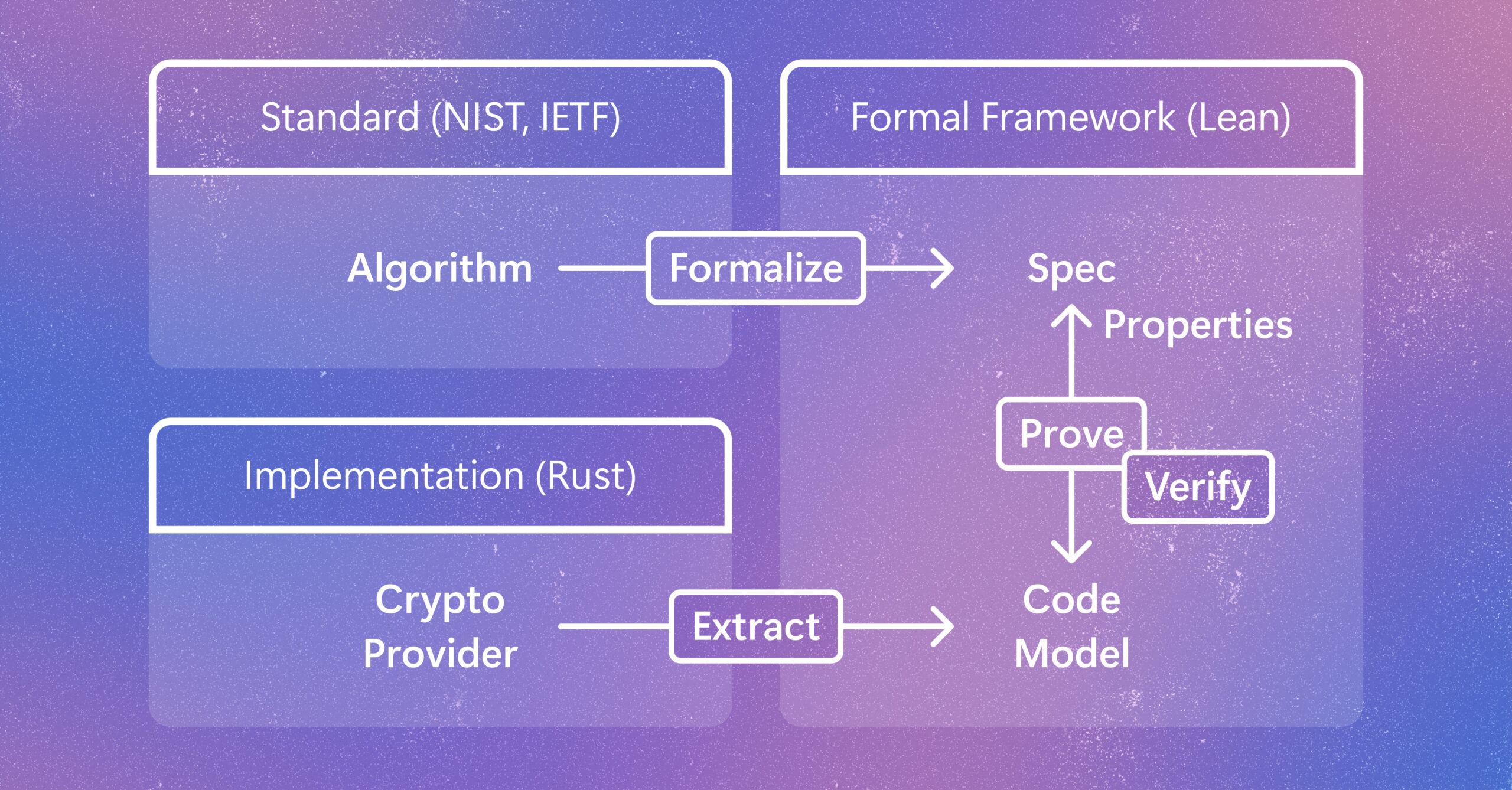
Cryptographic code supports vital protections in modern computing systems. Learn how a new method helps verify code as developers write it while preserving speed and adaptability as it gets implemented and evolves. The post Verifying Rust cryptography in SymCrypt, from standards to code appeared first on Microsoft Research.
Students in MIT’s Concourse program delve deeply into the human condition, debate challenging questions, and learn to develop judgment about issues that can’t be quantified.
Training AI agents with reinforcement learning can be challenging because their tools, context, and decision-making are managed by complex frameworks. Agent Lightning connects existing agents to RL training, making it easier to improve them without rebuilding them. The post Agent Lightning v1.0: A 3,500-Line Lightweight Agentic RL Framework for Training Agents with Real Harnesses appeared first on Microsoft Research.
We use cookies to run the site and, with your consent, for analytics and to show ads.
See our Cookie Policy.