Deep Reinforcement Learning for Security-Aware Task Offloading in IoT Edge Computing: A Systematic Survey of Frameworks, Challenges, and Future Directions
Oct 2026· Israa University Journal for Applied Science· 0 citations
IoT and Edge/Fog Computing
Abstract
Background: IoT devices deployed in hospitals, factories, vehicles, and homes are largely unable to defend themselves. Limited compute and power budgets make running a local intrusion detector impractical, even as the traffic these devices generate grows increasingly attractive to attackers. DRL offers a practical alternative: rather than depending on a fixed environment model, a DRL agent learns by interacting with its surroundings and progressively improves its decisions.
Methods: This survey reports a PRISMA based systematic review of 35 papers (2020–2026) drawn from IEEE Xplore, ACM Digital Library, and Google Scholar. We constructed a two-dimensional taxonomy one axis classifying papers by DRL algorithm family, the other reflecting how tightly each work integrates security into its reward design. Two authors screened all candidates independently; inter-rater agreement was measured using Cohen's kappa (κ = 0.93 for eligibility screening; κ = 0.91 for taxonomy assignment).
Results: Across all 35 reviewed papers (including 7 non-DRL contextual comparators), 40% use performance-only reward design (Type A), 29% security-constrained (Type B), 31% security-weighted (Type C), and 0% implement asymmetric false-negative-penalized design (Type D). The corpus also shows a directional pattern toward lower packet-loss rates for continuous-action DRL agents (DDPG, TD3, SAC) under bandwidth-constrained conditions. Three things don't appear anywhere in the corpus: using on-device classifier confidence as a DRL state variable; testing on physical hardware; and building a reward that treats a missed attack as more costly than a false alarm. Conclusion: Eight concrete research directions follow, from testbed validation and federated DRL to 5G channel modeling and grounding reward weights in real security-cost data.

This publication proposes a definition and a classification of agile software development approaches and analyses ten software development methods that can be characterized as being "agile" against the defined criterion.
P. Abrahamsson, O. Salo, Jussi Ronkainen et al.· arXiv.org· 727 citations· ⚡54
The study shows that agile practices improve both informal and formal communication, but indicates that, in larger development situations involving multiple external stakeholders, a mismatch of adequate communication mechanisms can sometimes even hinder the communication.
M. Pikkarainen, Jukka Haikara, O. Salo et al.· Empirical Software Engineeri...· 401 citations· ⚡48
The results indicate that software engineering work practices are chosen opportunistically, adapted and configured to provide value under the constrains imposed by the startup context.
Nicolò Paternoster, Carmine Giardino, M. Unterkalmsteiner et al.· Information and Software Tec...· 394 citations· ⚡54
The perception of the impact of agile methods is predominantly positive, and several challenge areas were discovered, but based on this study, agile methods are here to stay.
M. Laanti, O. Salo, P. Abrahamsson· Information and Software Tec...· 260 citations· ⚡20
Related blog posts
MIT News · Artificial Intelligence· news.mit.eduOct 2, 2026
A weeklong summer workshop brought higher education faculty to campus to explore how AI and machine learning materials can be adapted for their classrooms.
MIT News · Artificial Intelligence· news.mit.eduAug 27, 2026
A new machine-learning framework aims to improve the success rate of computational protein design while moving away from results that reproduce sequences found in nature.
Microsoft Research Blog· microsoft.comAug 20, 2026
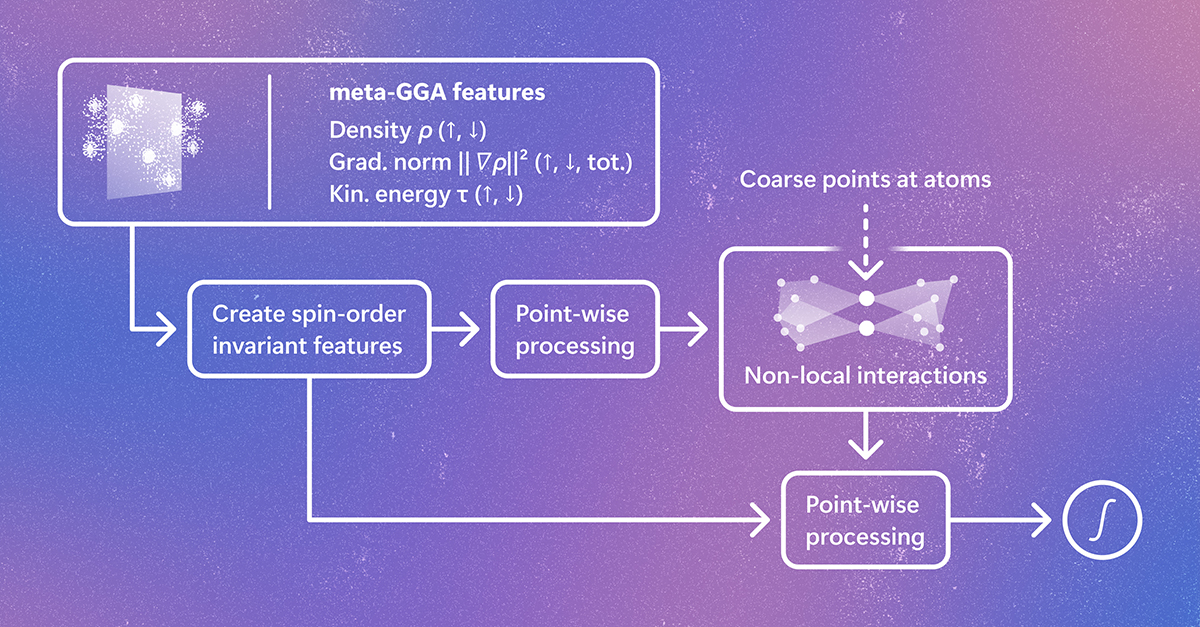
Skala 1.1, the updated deep-learning exchange-correlation functional from Microsoft Research, provides greater accuracy, expanded accessibility across the computational chemistry ecosystem, and a living benchmark to track computational performance. The post Broadening access to Skala creates a faster path to predictive DFT appeared first on Microsoft Research.
We use cookies to run the site and, with your consent, for analytics and to show ads.
See our Cookie Policy.