Accurate long-horizon prediction of tokamak plasma current, position, and boundary evolution is essential for magnetic control, rapid controller development, and reinforcement-learning-based optimization. However, high-fidelity physics-based simulators are often computationally prohibitive when large numbers of simulations are required for controller tuning and large-scale optimization. In this work, we develop a fast, data-driven model for the Experimental Advanced Superconducting Tokamak (EAST) to predict plasma current, position, and shape evolution over horizons of up to 1 s, with an inference time of 0.1 s on a single NVIDIA H800 GPU. Evaluated on a temporally separated test set comprising 5907 discharges, the model demonstrates strong generalization to evolving operating conditions and maintains stable agreement with experimental measurements during long-horizon autoregressive rollouts. The mean geometric error of the plasma centroid and the control-oriented boundary representation is 2.4 cm, indicating reliable centimeter-level accuracy for control-oriented prediction of plasma position and shape evolution. The proposed framework provides a practical, high-throughput alternative to first-principles simulators, enabling efficient control algorithm prototyping, large-scale scenario exploration, and future data-driven optimization for tokamak plasma control. This study focuses on the post-shaping phase of EAST discharges, where sustained plasma current and control-oriented boundary regulation are most critical.
A new approach to tokamak magnetic control enabling high-precision plasma shaping and novel real-time adaptability is experimentally demonstrated on the Tokamak a Configuration Variable (TCV). The method is motivated by the insight that, under appropriate assumptions, a real-time inverse Grad-Shafranov solver approxima...
Allen M. Wang, A. Mele, C. Heiß et al.· 0 citations
Control of plasma turbulence remains a long-standing challenge in magnetically confined fusion research. Here, we explore a reinforcement-learning (RL) approach for bidirectional control of the turbulence-zonal-flow transition in the modified Hasegawa-Wakatani system, a minimal model of electrostatic drift-wave turbule...
Lu-Ning Sun, Ben Zhu, Xin-Yang Liu et al.· 0 citations
Reliable short-term prediction of thermospheric states is important for satellite drag applications but remains difficult because of nonlinear, multiscale variability. We developed a multivariable Adaptive Fourier Neural Operator (AFNO) surrogate using 24 years (2000–2023) of Thermosphere–Ionosphere Electrodynamics Gen...
In the TJ-II stellarator, a finite net toroidal plasma current can modify the rotational transform profile and shift the radial position of low-order rational surfaces. Because these surfaces can influence edge gradients, turbulence and confinement in low-shear configurations, estimating the current waveform is relevan...
G. Rattá, B. V. van Milligen, Víctor Ángel Fuentes Blas et al.· Plasma· 0 citations
Accurate feedback control of the plasma current ($I_p$) and centroid position $(R_c,Z_c)$ is essential for the stable operation of spherical torus (ST) plasmas. Conventional proportional-integral-derivative (PID) controllers require extensive manual tuning and struggle with the fast, strongly coupled dynamics that aris...
Peixin Guo, Zhengyuan Chen, Jianguo Chen et al.· 0 citations
This work presents a focused implementation of ELMO--the Edge Learning and Modeling Orchestrator--as an uncertainty-aware simulation-to-surrogate workflow integrating equilibrium generation, field-aligned mesh construction, large-scale BOUT++ calculations, automated campaign execution and data reduction, and Gaussian P...
Na-Mi Li, X.-Q. Xu, T. Osborne et al.· 0 citations
Related blog posts
MIT News · Artificial Intelligence· news.mit.eduNov 17, 2026
By studying the computational foundations of language learning, Associate Professor Jacob Andreas builds intelligent systems that can communicate effectively with humans.
MIT News · Artificial Intelligence· news.mit.eduNov 17, 2026
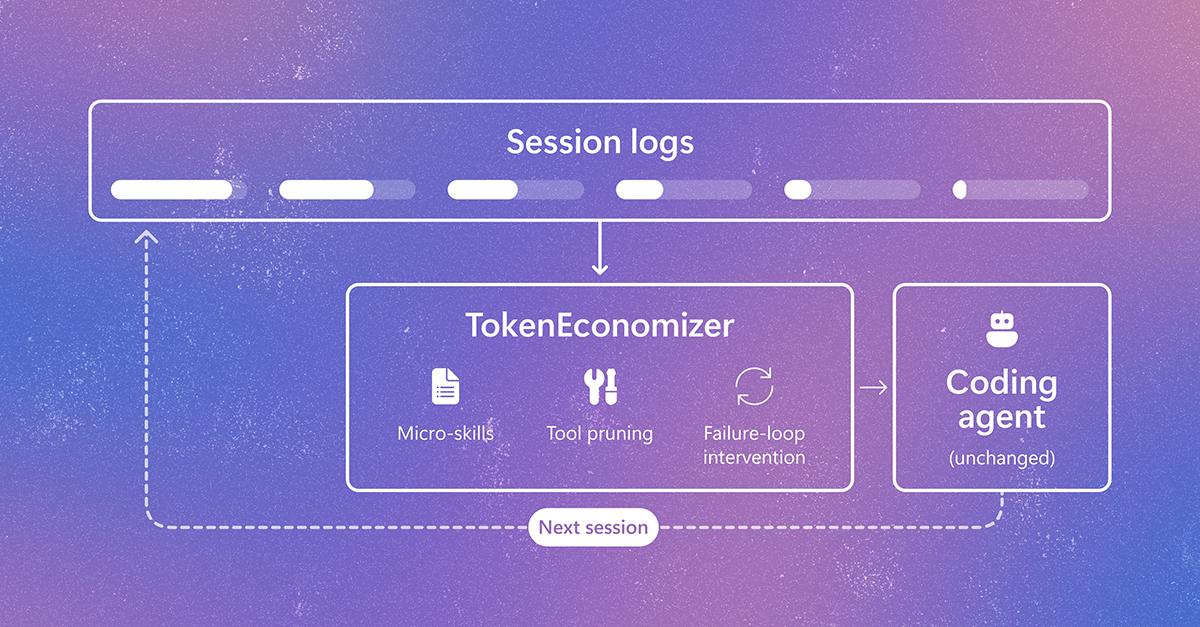
AI coding agents are increasingly help developers fix bugs and build features largely on their own, but every interaction with their models consumes tokens. In each session, an agent sends instructions, tool descriptions, and session history to its model. Most efforts to reduce this cost focus on individual tasks. Yet developers return to the same […] The post TokenEconomizer: Learning from Experience to Make AI Coding Agents More Efficient appeared first on Microsoft Research.
MIT News · Artificial Intelligence· news.mit.eduNov 9, 2026