Skip to content

Tracing the Evidence Behind Zero-Shot Time-Series Forecasting: A Source-First Taxonomy and Audit Framework

Sep 2026 · 0 citations · 22 references
Computer Science

TL;DR

This paper argues that zero-shot TSF should be governed as an evidence-access claim and proposes a source-first taxonomy that separates three primary evidence sources---frozen LLM prior reuse, parametric time-series pretraining, and retrieval-augmented external memory---from the architectures that implement them.

Abstract

Zero-shot time-series forecasting (TSF) is often described as forecasting without target-specific parameter updates, but that training-status condition does not specify what evidence the system may use. A frozen language model prompted with serialized values, a time-series model pretrained on broad forecasting corpora, and a retrieval-augmented forecaster may all satisfy the no-update condition while drawing on different transferable evidence. This paper argues that zero-shot TSF should therefore be governed as an evidence-access claim. We propose a source-first taxonomy that separates three primary evidence sources---frozen LLM prior reuse, parametric time-series pretraining, and retrieval-augmented external memory---from the architectures that implement them. After the source is identified, four additional audit questions remain: task interface, forecast object and scoring, prediction-time context, and resource budget. The resulting agenda is to make zero-shot leaderboards auditable by reporting evidence boundaries and interface assumptions alongside scores, so that benchmark progress reflects transferable forecasting capability rather than undisclosed changes in context, memory, or budget.
View source

Similar papers

Preprint Aug 2026

TIEM: Temporal Integration of Hypergraph Evidence and Skill Memory for Event-Driven Financial Forecasting

TIEM, a timestamp-gated framework with three coordinated components: an Event-Evidence Hypergraph (EEH) for timestamp-filtered multi-tier retrieval; a Case-based Skill Memory (CSM) for source-tagged temporal skills; and Heterogeneous Evidence-Experience Fusion Reasoning (HEFR) for evidence-experience fusion and predict...

Wen-Jin Liu, Shengjie Pang, Chen-Xi Wang et al. · 1 citation
#artificial intelligence Review Sep 2026

RAP: Research Attention Prediction Reveals Target-Conditioned Evidence Acquisition Biases

Large language models (LLMs) increasingly act as research agents, yet their ability to track shifts in research attention is difficult to evaluate because reviews and research ideas lack uniquely verifiable outcomes. We introduce Research Attention Prediction (RAP), a rolling benchmark covering 278 AI/ML fields and 1,3...

Ying-Qian Wu, Jingcong Liang, Si-Yuan Wang et al. · 0 citations
Preprint Sep 2026

When is Test-Time Adaptation Identifiable From Unlabeled Evidence?

Test-time adaptation (TTA) offers many ways to update a deployed model without labels, but choosing the wrong update can make a strong source model worse. Recent methods therefore try to predict which adaptation will work from unlabeled test data. We ask a prior question: does the evidence given to the selector contain...

Kartik Jhawar, Li-Po Wang · 0 citations
#machine learning Preprint Sep 2026

OpenTSLM TeeMoE: A Unified Time-Series Language Model for Forecasting, Contextual Prediction, and Reasoning

Real-world time-series applications increasingly require models that can handle time series forecasting, context-conditioned prediction, and language-based temporal reasoning. Yet current time-series foundation models remain fragmented across these capabilities: numerical specialists often provide the strongest forecas...

Tony Chen, Timo Stoffregen, Maxwell A. Xu et al. · 0 citations
#machine learning Preprint Sep 2026

A Later Test Set Is Not a New Domain: Pretraining Familiarity Survives a Contamination-Free Hold-Out

Time-series foundation models are evaluated almost exclusively on public archives that predate them, so a strong score cannot be separated from having seen the test set during pretraining. The obvious remedy is a hold-out that postdates the models. We build one: thirteen forecasters -- four classical, three trained per...

Mahdi Naser Moghadasi, Faezeh Ghaderi · 0 citations

Related blog posts

Microsoft Research Blog Sep 30, 2026

Forecasting space weather risks on power grids

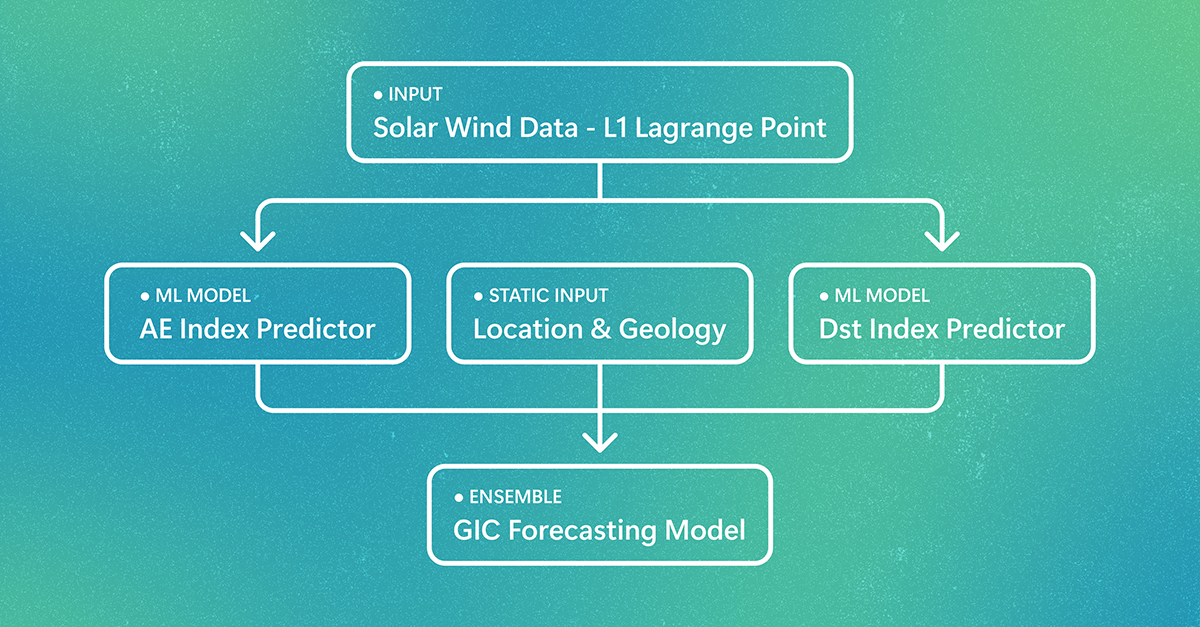
Extreme space-weather events can damage power systems on Earth and degrade GPS accuracy and satellite operations. A new machine learning system can predict where damage is likely to occur 30-60 minutes before a storm arrives. The post Forecasting space weather risks on power grids appeared first on Microsoft Research.

We use cookies to run the site and, with your consent, for analytics and to show ads. See our Cookie Policy.