Skip to content
#gene editing Open access

TheDongLab/AI2AMP-PD: AI2AMP-PD v1.0

Aug 2026 · Zenodo (CERN European Organization for Nuclear Research)

Abstract

This is the first public release of the analysis code accompanying the manuscript "Differential expression and machine-learning classification of Parkinson's disease using AMP-PD RNA-seq data" (Hu R, Dong X, et al.). Overview Analysis pipeline for RNA-seq–based differential expression (DE) and machine-learning (ML) classification of Parkinson's disease (PD) case/control status, using AMP-PD cohorts PPMI and PDBP/BioFIND (PDBF). What's included Data preparation — build case/control and mutation-carrier sample sets and extract per-cohort RNA-seq quantification matrices (DE/src/filtration.py, DE/src/extract_quant.py) Differential expression — DESeq2-based DE analysis for genes, eRNAs, and circRNAs, adjusted for covariates (age, sex, plate, RIN, genotype PCs) (DE/src/DE_PCs.R, DE/src/eRNA/, DE/src/circRNA/) Functional enrichment — GO/KEGG/Reactome/GSEA analysis on DE results (DE/src/Enrich_Profiler.R) ML classification — logistic regression, LASSO, SVM, random forest, XGBoost, KNN, MLP, and stepwise feature-addition classifiers trained on PPMI and independently tested on PDBF (ML/src/*.py) Model evaluation — combined AUROC/PR curve and feature-importance summary plots (ML/src/31_plots_AUC_PR_inOne.py) NanoString QC — standalone endogenous/housekeeping gene QC script (DE/NanoStringData/) Recorded R/Python session info and pinned dependencies (session_info/) Requirements R ≥ 4.0 (tidyverse, DESeq2, clusterProfiler, and related Bioconductor/CRAN packages) Python ≥ 3.8 (pandas, numpy, scikit-learn, matplotlib, seaborn) Known limitations Scripts are tailored to the specific AMP-PD sample sets and covariate schemas used in this study; not general-purpose tools File paths and cohort-specific parameters are set via literals/CLI args and may need editing for new datasets Raw AMP-PD data are not distributed with this repository; access requires a separate application to the AMP-PD Knowledge Portal (https://amp-pd.org/) License MIT License


View source

Similar papers

#gene editing Review Sep 2026

Unlocking non-model organisms with CRISPR-Cas: A roadmap for sustainable biotechnology.

It is concluded that bridging the gap between foundational CRISPR research and its real-world applications is imperative and future efforts should focus on democratizing tools via open-source platforms, advancing delivery systems, and fostering sustainable innovation through synthetic biology integration to fully realize the transformative potential of genome editing in organisms beyond model organisms.

S. Sarsaiya, Archana Jain, Jishuang Chen et al. · 2 citations
#gene editing Review Open access Aug 2026

Overcoming Therapy Resistance in Ovarian Cancer: From Molecular Mechanisms to Emerging Therapeutic Strategies

This review summarizes emerging therapeutic strategies for EOC, their mechanisms of action, and their potential to overcome treatment resistance, and covers molecularly targeted therapies, immunotherapies, metabolic and epigenetic approaches, cellular and gene therapies, targeted drug-delivery systems, and locoregional and physical modalities.

Zofia Pietrasik, Mikołaj Kapała, Joanna Pietrasik et al. · 0 citations
#gene editing Review Open access Aug 2026

Environmental Risk Assessment and Confinement of Genetically Engineered Trees with an Emphasis on Vegetative Reproduction.

Genetic engineering (GE) and gene editing may endow traits to trees such as increased biomass and the production of novel biomaterials. Long-lived organisms such as trees might be subject to biotechnology-related risks that could be different than those of annual row crops. Those risks could be relevant to production in engineered plantations and beyond plantations to natural forests. Therefore, appropriate risk regulation is important to assure biosafety of commercialized engineered trees. In addition to gene flow via sexual reproduction, vegetative reproduction might play an additional role in environmental "exposure" risk relative to transgene dispersal in GE tree plantations. While vegetative reproduction is beneficial for preserving desired genetic traits during tree propagation, it may lead to proximal clonal spread in the field. Although the environmental risks associated with vegetative reproduction of GE trees are recognized in commercial forestry, there are few field-based environmental risk assessment (ERA) studies on dispersal risks of self-propagated GE trees. GE or gene editing of target genes involved in the vegetative propagation processes may be useful to mitigate environmental risks of clonal spread through vegetative reproduction. This review provides updates for recent field test results of GE and gene edited trees. Gene candidates related to vegetative reproduction including adventitious shooting (AS) and adventitious rooting (AR) are discussed herein as a means to mitigate unintended clonal spread from GE tree plantations.

Yongil Yang, C. N. Stewart · 0 citations
#gene editing Open access Aug 2026

Programmable RNA targeting with clustered regularly interspaced short palindromic repeats (CRISPR) effector Cas7-11 in zebrafish embryos and mammalian cells

Findings establish Cas7-11 as a precise and efficient RNA knockdown tool for functional studies in embryonic development and stem cell biology, providing a versatile alternative to DNA-based gene-editing approaches.

Huan Yan, Imtiaz Ul Hassan, Kai Yan et al. · 0 citations

Related blog posts

MIT News · Artificial Intelligence Aug 17, 2026

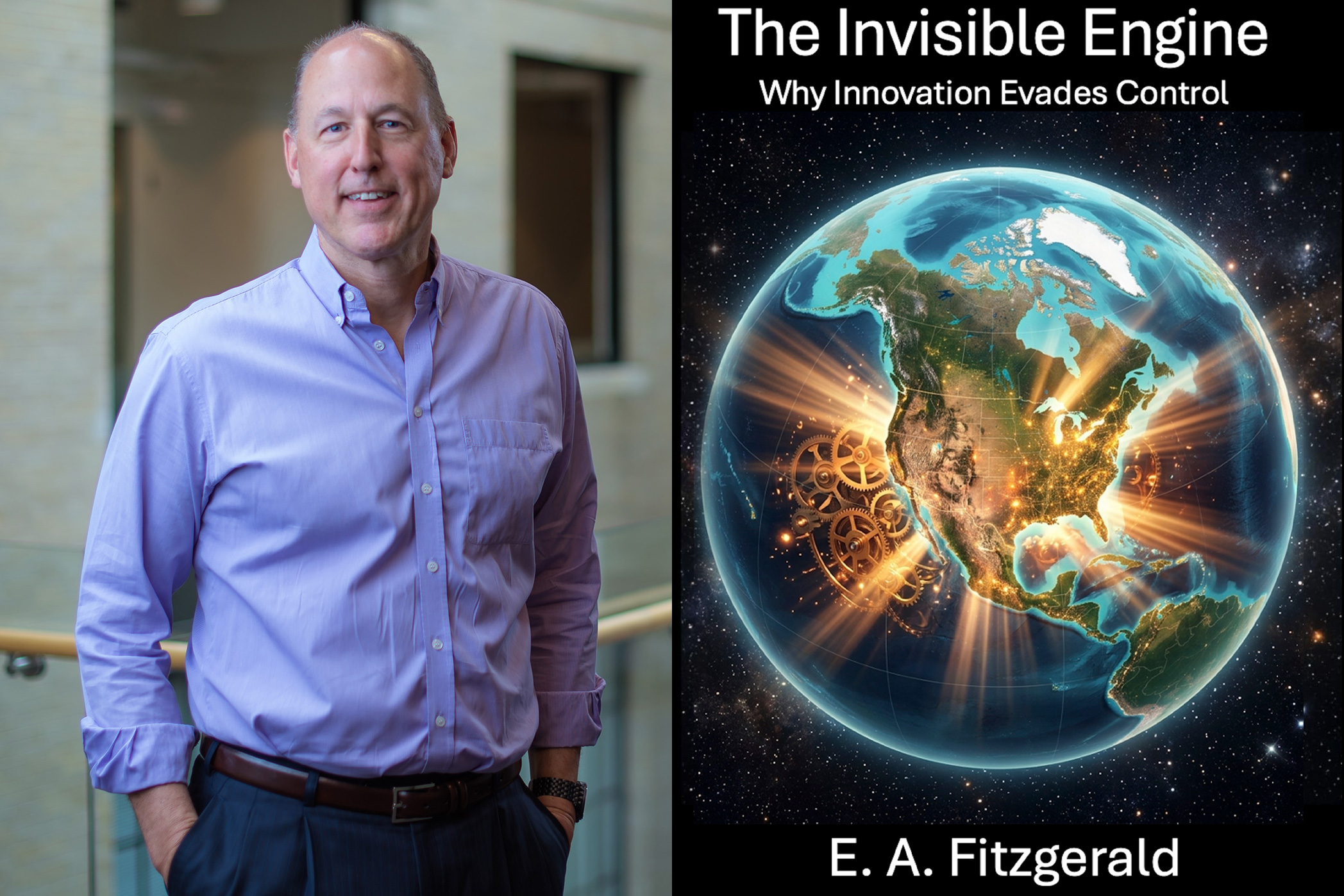
Q&A: Rethinking how innovation happens

In his latest book, Professor Eugene Fitzgerald examines the forces that turn breakthroughs into value — and why innovation resists simple formulas.