Skip to content

Between Methodological Expansion and Epistemic Boundary Dissolution: Generative AI, Distributed Epistemic Processes, and the Reorganization of Scientific Responsibility

Sep 2026 · American Journal of Multidisciplinary Research and Innovation · 0 citations · 64 references
Computational and Text Analysis Methods

Abstract

Although individual studies have examined the capabilities of generative AI in annotation, coding, item construction, thematic analysis, and data simulation, there has so far been no cross-paradigm framework that systematically integrates technical performance, methodological validity, institutional embedding, and the attribution of scientific responsibility. Against this backdrop, the study examines under what conditions the delegation of knowledge-relevant research operations to large language models (LLMs) should be evaluated as a controlled methodological extension or as an epistemic dissolution of boundaries. Methodologically, it follows a critical integrative evidence synthesis. From 80 hits across the eight thematically differentiated search clusters and five additional articles identified through citation tracking, 58 publications remained in the core analytical corpus after removing duplicates, screening titles and abstracts, and reviewing full texts based on predefined criteria. The predefined criteria restricted the corpus to studies that empirically evaluated LLM-mediated research operations or examined their validity, bias, reproducibility, epistemic efficacy, or governance with direct or transferable relevance to social science and educational research. With regard to the synthesized findings, the evidence indicates that LLMs operationally scale quantitative methods but may in the process foster methodological pseudo-competence, non-classical measurement errors, and synthetic circularity. In qualitative designs, they expand the scope for contrastive interpretation but do not replace situated case understanding; in mixed-methods designs, they reduce translation costs without negating the independent logics of validity of the combined strands. Building on, but analytically distinct from, these synthesized findings, the study advances an exploratory conceptual framework in the form of an original five-level matrix of epistemic delegation, ranging from operational and infrastructural offloading to empirical surrogation. Each level is linked to specific epistemic risks and proportionate verification requirements. In addition, reflexive controllability is operationalized as a governance framework with eight dimensions. Both instruments can be directly applied to research design, quality assurance, institutional rule-making, and methodological training and are transferable across different empirical paradigms. Therefore, generative AI appears neither as a neutral tool nor as a responsible agent of knowledge but rather as a probabilistic epistemic actor within distributed knowledge arrangements, for which the ultimate scientific responsibility remains with identifiable individuals and institutions.
Read PDF

Similar papers

#computer vision Open access Jun 2016

Software Development in Startup Companies: The Greenfield Startup Model

The results are packaged in the Greenfield Startup Model (GSM), which explains the priority of startups to release the product as quickly as possible, and the need to shorten time-to-market, by speeding up the development through low-precision engineering activities.

Carmine Giardino, Nicolò Paternoster, M. Unterkalmsteiner et al. · 178 citations · ⚡14
#computer vision Open access Oct 2016

Software Startups - A Research Agenda

Software startup companies develop innovative, software-intensive products within limited timeframes and with few resources, searching for sustainable and scalable business models.

M. Unterkalmsteiner, P. Abrahamsson, Xiaofeng Wang et al. · 157 citations · ⚡17
#machine learning Review Open access Oct 2016

“Failures” to be celebrated: an analysis of major pivots of software startups

This study conducts a case survey study based on the secondary data of the major pivots happened in 49 software startups, and demonstrates that customer need pivot is the most common among all pivot types.

Sohaib Shahid Bajwa, Xiaofeng Wang, Anh Nguyen-Duc et al. · 127 citations · ⚡15
#computer vision Review Open access May 2015

A survey study on major technical barriers affecting the decision to adopt cloud services

The comparison of adopter and non-adopter sample reveals three potential adoption inhibitor, security, data privacy, and portability, which underlines the importance of the technical and security perspectives for research investigating the adoption of technology.

Nattakarn Phaphoom, Xiaofeng Wang, S. Samuel et al. · 111 citations · ⚡8
#computer vision Conference Open access Dec 2013

Affordable and Energy-Efficient Cloud Computing Clusters: The Bolzano Raspberry Pi Cloud Cluster Experiment

The ongoing work building a Raspberry Pi cluster consisting of 300 nodes is presented, with potential use cases being an inexpensive and green test bed for cloud computing research and a robust and mobile data center for operating in adverse environments.

P. Abrahamsson, S. Helmer, Nattakarn Phaphoom et al. · 110 citations · ⚡7
#computer vision Book Open access Mar 2017

On the Unhappiness of Software Developers

The results indicate that software developers are a slightly happy population, but the need for limiting the unhappiness of developers remains, and 219 factors representing causes of unhappiness while developing software are identified.

D. Graziotin, Fabian Fagerholm, Xiaofeng Wang et al. · 84 citations · ⚡6

Related blog posts

MIT News · Artificial Intelligence Sep 30, 2026

This game-playing AI is the new champ at Stratego

Able to defeat top-ranked human players and more efficient than other models, the new system could help decision-makers in military maneuvers or business negotiations.

Microsoft Research Blog Sep 29, 2026

Introducing Quine: An AI research system designed for the complexity of biology

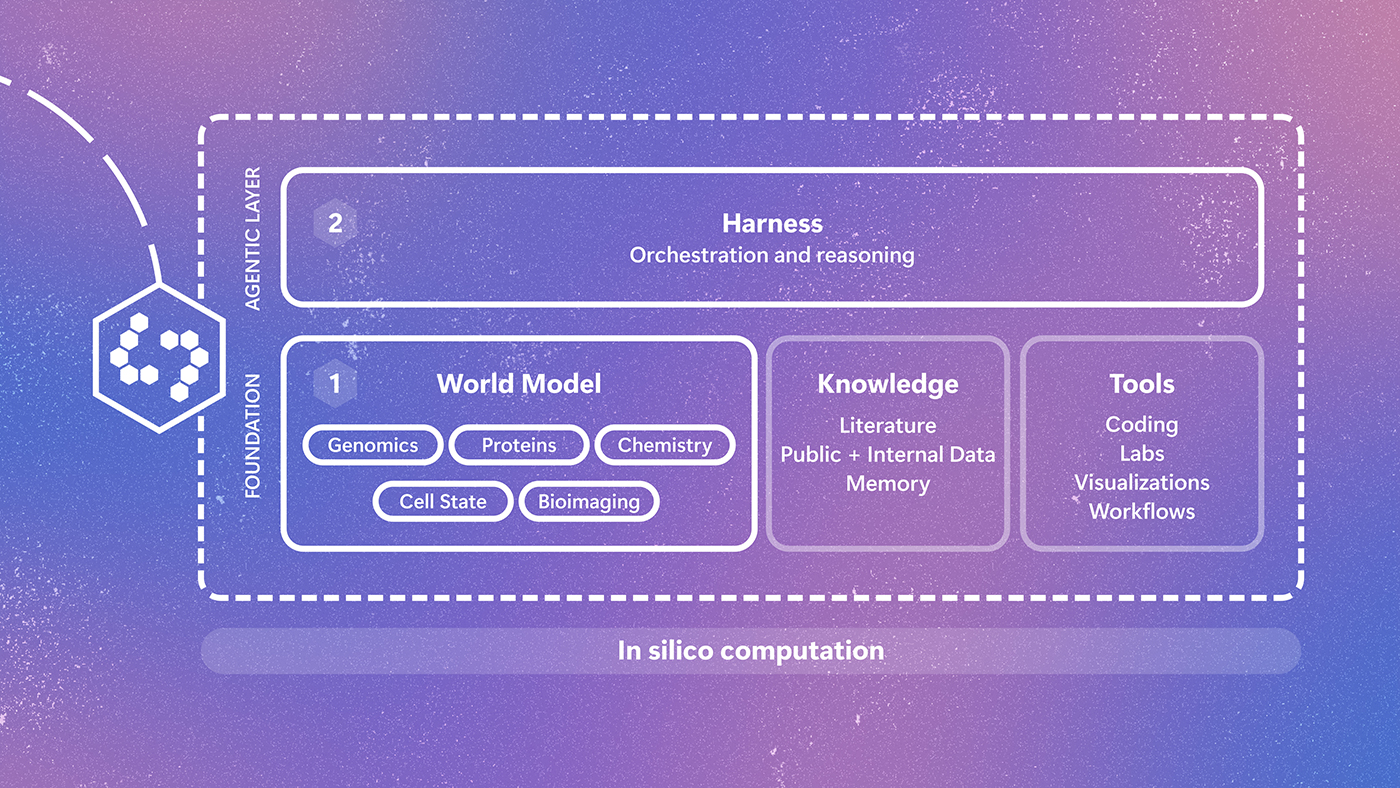
Biology doesn't operate in silos, and neither should the AI representation of it. Quine is an early-stage research effort to create a multimodal world model of biology. By connecting insights across biological scales and modalities, Quine helps scientists computationally search a space far larger than intuition allows and prioritize hypotheses before they reach the lab. Experimental results provide important feedback, helping researchers sharpen future research directions. The post Introducing Q…

We use cookies to run the site and, with your consent, for analytics and to show ads. See our Cookie Policy.