The results show that reliable scenario generation requires verifying realized behavior, not merely executable code, and demonstrate the value of explicit intermediate representations for verifiable and repairable language-driven co-simulation.
Abstract
Air-ground transportation research increasingly relies on co-simulation, yet constructing scenarios remains labor-intensive and difficult to validate. More importantly, a generated scenario may execute successfully while failing to realize the spatial, temporal, communication, or behavioral relationships requested by the user. This paper presents AURORA, a natural-language-driven agentic framework that treats air-ground scenario generation as a process of compilation with verification. Central to AURORA is the Air-Ground Scenario Graph (AGSG), a typed intermediate representation that explicitly connects agents, aerial missions, events, communication links, success conditions, and their cross-domain dependencies. This shared representation enables simulator-grounded parsing, joint road-airspace grounding, temporal planning, pre-execution feasibility checking, trace-based runtime verification, failure localization, and bounded repair within a unified workflow. We further introduce AURORA-Bench to evaluate not only whether generated scenarios execute, but whether they faithfully realize the requested interactions. Experiments across multiple language models show that structured execution substantially improves reliability, while runtime verification exposes silent failures that completion-based evaluation overlooks. Localized repair further resolves many violations without regenerating the entire scenario. The results show that reliable scenario generation requires verifying realized behavior, not merely executable code, and demonstrate the value of explicit intermediate representations for verifiable and repairable language-driven co-simulation.
This review critically examines how large language models (LLMs) and multimodal large language models (MLLMs) are reshaping the intelligence paradigm of air-ground heterogeneous collaborative systems between 2023 and 2026 and argues that the core of this transformation is a change in how AGCS understand tasks, coordina...
Zhao-Hui Wang, Yi-Ming Nie, Yan-Xu Hong et al.· Electronics· 0 citations
Language-enabled robot systems increasingly combine semantic-graph planning with temporal-logic safety monitors. We investigate a trace-completeness assumption in these systems: whether the high-level action sequence checked by a monitor represents the navigation and implicit action effects induced during execution. We...
Stabak Das, Priyesh Ranjan, Xiang-Fang Li et al.· 0 citations
MUSE is presented, an interactive meta-agent that enhances user understanding and control of agentic data science systems by dynamically restructuring low-level execution traces into multiple semantic levels that support navigation from high-level overviews to low-level implementation details.
Wei-Hao Chen, Weixi Tong, Yuan Tian et al.· 0 citations
Evaluating four representative open-source VLMs on 60 curated rallies via a zero-shot protocol, it is found that models remain weak across all diagnostic levels, with especially clear bottlenecks in spatial state, interaction binding, and terminal evidence.
Evaluating language-guided mobile agents has recently shifted from rule-based to model-based approaches to achieve scalable and automated assessments. However, existing holistic evaluation paradigms process entire trajectories at once, leading to substantial context overload. Moreover, they primarily focus on task comp...
Peng-Jian Yang, Zijing Gao, Xue Yu et al.· 1 citation
KC-Bench is introduced, a controlled multi-turn benchmark for measuring model-level behavior across world-knowledge conflicts, input inconsistencies, and multi-source temporal conflicts, and provides a reproducible diagnostic for developing conflict-aware reasoning and execution safeguards.
Yaxing Lyu, Sheng-Jie Zhou, B. Toh et al.· 0 citations
Related blog posts
MIT News · Artificial Intelligence· news.mit.eduJul 30, 2026
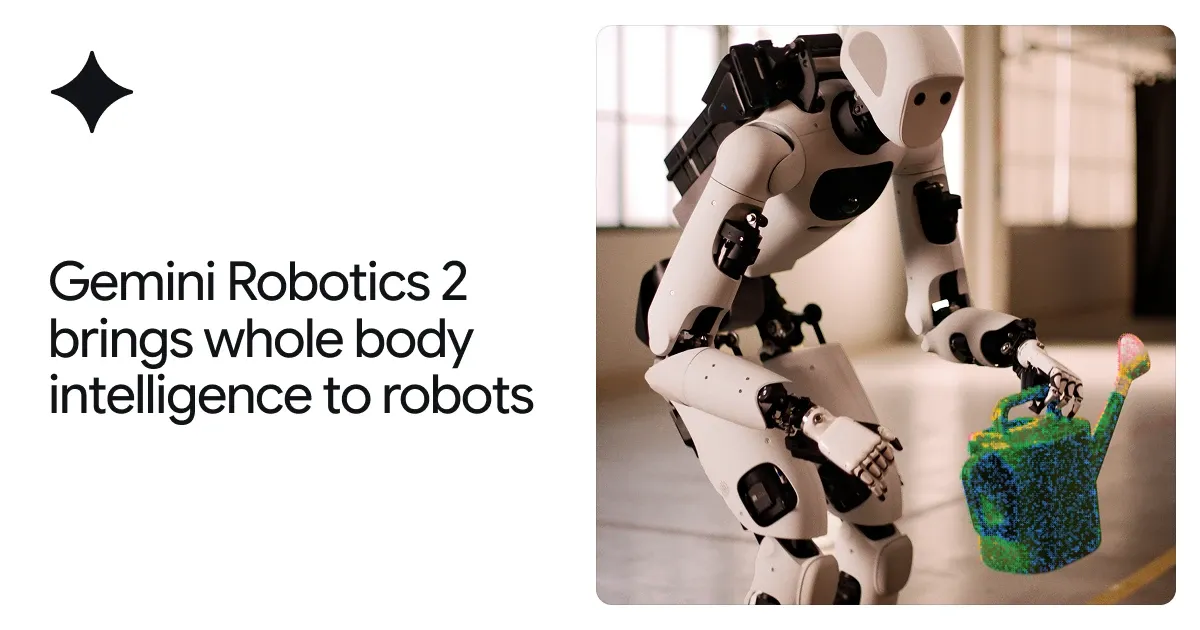
From feet to fingertips — we are teaching robots intelligent whole-body control, fine dexterity, and teamwork to complete a broad range of complex tasks.
With $2.1 million funding from Google.org, the open-source Public Transit Intelligence Hub will unify public transit monitoring, operations, and passenger communication.
We use cookies to run the site and, with your consent, for analytics and to show ads.
See our Cookie Policy.

