In the world of rapidly evolving communication networks, network demand and traffic are increasing, which makes efficient network slicing and resource allocation techniques a requirement. The existing models for network slicing and resource allocation lack efficient algorithms, limited generalization, and practical implementations. To overcome these issues, this research introduced a hybrid Digital twin Reinforcement Learning framework with Grey Wolf Harris Hawks Optimization (DRL_GWHHO) to efficiently allocate resources. In the initial stage, real-time data are collected and forwarded to preprocessing. The preprocessed data were then used by the hybrid Multi-Head Attention Vision transformer (MHAV) model for extracting the network features. The features that are extracted are provided as the input to the HDRL model to learn network policy and optimized network states, which are then utilized by the intelligent network slicing module built using the Graph Transformer Kolmogorov-Arnold Network (GTKAN). The optimal network slices from the model are provided for dynamic resource allocation using Temporal Fusion Transformer-Mixture-of-Experts (TFT-MoE). Finally, the network slices and resources are optimized and forwarded to the Explainable AI (XAI) module for ensuring interpretability. The evaluation of the experiment has shown an accuracy of 98.6%, bandwidth utilization of 97.3%, and network reliability of 98.2%. The proposed model showed higher accuracy, packet delivery, resource reliability, and bandwidth utilization with low latency, making it suitable for real-world applications.

This publication proposes a definition and a classification of agile software development approaches and analyses ten software development methods that can be characterized as being "agile" against the defined criterion.
P. Abrahamsson, O. Salo, Jussi Ronkainen et al.· arXiv.org· 727 citations· ⚡54
The study shows that agile practices improve both informal and formal communication, but indicates that, in larger development situations involving multiple external stakeholders, a mismatch of adequate communication mechanisms can sometimes even hinder the communication.
M. Pikkarainen, Jukka Haikara, O. Salo et al.· Empirical Software Engineeri...· 401 citations· ⚡48
The results indicate that software engineering work practices are chosen opportunistically, adapted and configured to provide value under the constrains imposed by the startup context.
Nicolò Paternoster, Carmine Giardino, M. Unterkalmsteiner et al.· Information and Software Tec...· 394 citations· ⚡54
The perception of the impact of agile methods is predominantly positive, and several challenge areas were discovered, but based on this study, agile methods are here to stay.
M. Laanti, O. Salo, P. Abrahamsson· Information and Software Tec...· 260 citations· ⚡20
Related blog posts
MIT News · Artificial Intelligence· news.mit.eduOct 2, 2026
A weeklong summer workshop brought higher education faculty to campus to explore how AI and machine learning materials can be adapted for their classrooms.
MIT News · Artificial Intelligence· news.mit.eduAug 27, 2026
A new machine-learning framework aims to improve the success rate of computational protein design while moving away from results that reproduce sequences found in nature.
Microsoft Research Blog· microsoft.comAug 20, 2026
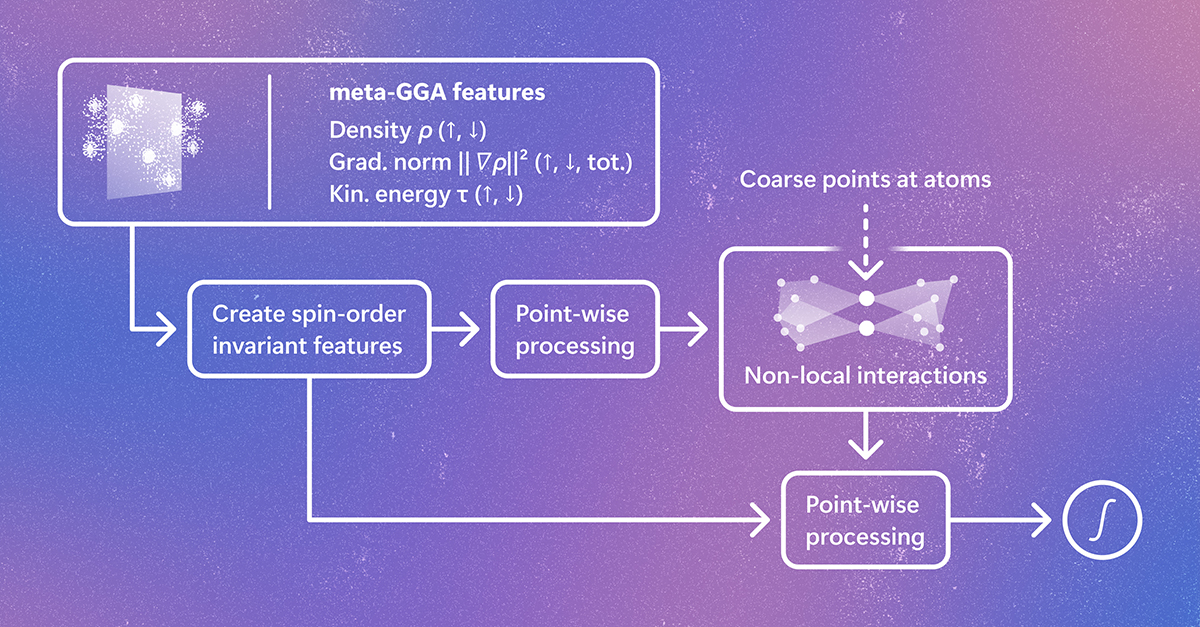
Skala 1.1, the updated deep-learning exchange-correlation functional from Microsoft Research, provides greater accuracy, expanded accessibility across the computational chemistry ecosystem, and a living benchmark to track computational performance. The post Broadening access to Skala creates a faster path to predictive DFT appeared first on Microsoft Research.
We use cookies to run the site and, with your consent, for analytics and to show ads.
See our Cookie Policy.