Advancing variant-agnostic liver-directed gene editing using homology-independent targeted integration.
Medicine
It is concluded that bridging the gap between foundational CRISPR research and its real-world applications is imperative and future efforts should focus on democratizing tools via open-source platforms, advancing delivery systems, and fostering sustainable innovation through synthetic biology integration to fully realize the transformative potential of genome editing in organisms beyond model organisms.
It is argued that formation of a tumour-intrinsic niche is a prerequisite for BRAF-mutant CRC seeding to distant organs and that interference with niche formation may help avoid metastatic relapse.
This review summarizes emerging therapeutic strategies for EOC, their mechanisms of action, and their potential to overcome treatment resistance, and covers molecularly targeted therapies, immunotherapies, metabolic and epigenetic approaches, cellular and gene therapies, targeted drug-delivery systems, and locoregional and physical modalities.
Genetic engineering (GE) and gene editing may endow traits to trees such as increased biomass and the production of novel biomaterials. Long-lived organisms such as trees might be subject to biotechnology-related risks that could be different than those of annual row crops. Those risks could be relevant to production in engineered plantations and beyond plantations to natural forests. Therefore, appropriate risk regulation is important to assure biosafety of commercialized engineered trees. In addition to gene flow via sexual reproduction, vegetative reproduction might play an additional role in environmental "exposure" risk relative to transgene dispersal in GE tree plantations. While vegetative reproduction is beneficial for preserving desired genetic traits during tree propagation, it may lead to proximal clonal spread in the field. Although the environmental risks associated with vegetative reproduction of GE trees are recognized in commercial forestry, there are few field-based environmental risk assessment (ERA) studies on dispersal risks of self-propagated GE trees. GE or gene editing of target genes involved in the vegetative propagation processes may be useful to mitigate environmental risks of clonal spread through vegetative reproduction. This review provides updates for recent field test results of GE and gene edited trees. Gene candidates related to vegetative reproduction including adventitious shooting (AS) and adventitious rooting (AR) are discussed herein as a means to mitigate unintended clonal spread from GE tree plantations.
Findings establish Cas7-11 as a precise and efficient RNA knockdown tool for functional studies in embryonic development and stem cell biology, providing a versatile alternative to DNA-based gene-editing approaches.
Generative AI
A new method for surgically removing training examples from a model reveals that as datasets grow, the link between what a model learns and what it produces dissolves.
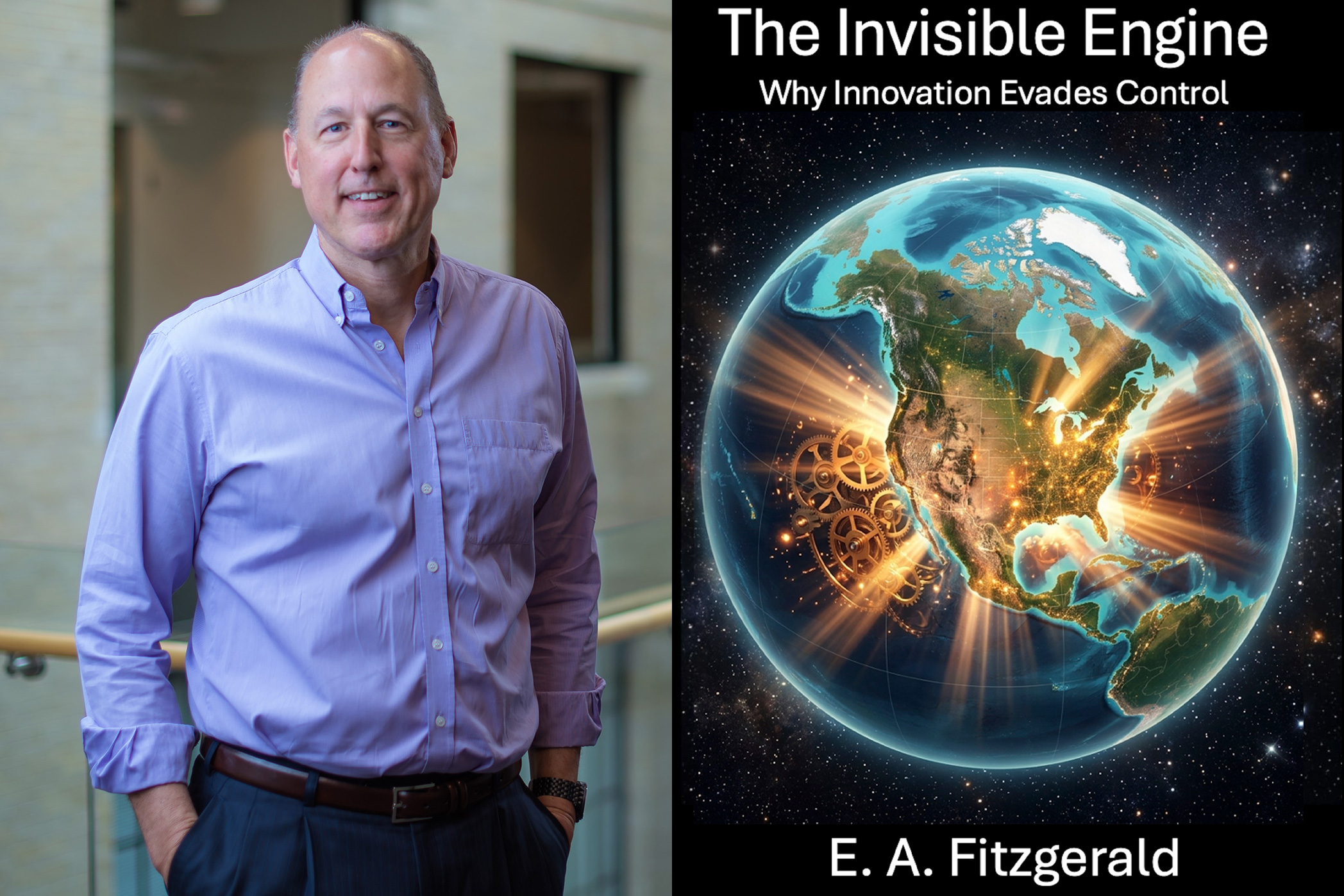
In his latest book, Professor Eugene Fitzgerald examines the forces that turn breakthroughs into value — and why innovation resists simple formulas.
General Science