Sep 2026· ACM Transactions on Knowledge Discovery from Data· 0 citations· 73 references
Advanced Graph Neural Networks
TL;DR
It is formally proved that GNN architectures lacking spectral expressiveness impose strict constraints on the representation space, so that harmful linear correlations between sensitive attributes and target prediction logits are preserved whenever a low-expressive backbone is paired with a debiasing operator acting within that backbone's representation space.
Abstract
Graph Neural Networks (GNNs) have achieved remarkable success, yet they are susceptible to encoding and amplifying societal biases. Current research in fair graph learning predominantly focuses on developing specialized debiasing techniques through input data preprocessing, training optimization, or model architecture modifications under the assumption that the GNN backbone is an interchangeable component capable of independently generating a debiased representation space. This paper revisits this prevalent paradigm by demonstrating that the expressiveness of backbone GNNs critically influences fairness outcomes. Through spectral-domain theoretical analysis, we establish the link between GNN expressiveness and the elimination of linear statistical bias. We formally prove that GNN architectures lacking spectral expressiveness impose strict constraints on the representation space, so that harmful linear correlations between sensitive attributes and target prediction logits are preserved whenever a low-expressive backbone is paired with a debiasing operator acting within that backbone's representation space. Universal spectral expressiveness is therefore a necessary condition for eliminating linear prediction-sensitive correlation in this family of methods, although it is not sufficient on its own. Driven by this finding, we propose a fair graph learning framework that pairs a universally expressive GNN backbone, utilizing powerful graph-wise filtering and node-wise signal transformation, with a lightweight linear decorrelation module operating in the logit space. Comprehensive evaluations on six real-world datasets show that FairFormer attains a strong accuracy–fairness trade-off and ranks as the best or near-best fairness method on most benchmarks. On Bail and Pokec_n, however, a linear decorrelation module alone does not dominate every baseline on every fairness metric. Our results are consistent with the necessity of spectral expressiveness for linear decorrelation of prediction and sensitive attributes, establishing expressiveness as a key design axis for trustworthy GNN design. Code is available at https://github.com/qslim/expressive-fair-learning.
Graph Neural Networks (GNNs) have demonstrated strong predictive performance across a wide range of applications. However, their increasing deployment has raised critical fairness concerns, as these models can inherit and amplify existing biases. Most existing fairness approaches rely on explicit demographic informatio...
Zi-Chong Wang, Zhi-Peng Yin, Mo Sha et al.· Proceedings of the Thirty-Fi...· 4 citations
Subgraph Filtering for Fair Graph Neural Networks is proposed, a lightweight and architecture-agnostic framework that mitigates structural bias at its source and achieves consistent fairness improvements while maintaining competitive predictive performance, leading to a better fairness--accuracy trade-off than recent f...
Hao-Hui Lu, Ji-Yuan Tian, Fangyu Zhou et al.· 0 citations
It is proved that sufficiently parameterized RGNNs contain sparse subnetworks that maintain 1-RWL expressivity and derive a lower bound on the probability that a random pruning yields such a subnetwork.
Lorenz Kummer, Samir Moustafa, Anatol Ehrlich et al.· 0 citations
This work proposes Graph Diffusion Counterfactual Explanation via Inversion (GDCE-I), a discrete denoising diffusion model with a novel discrete inversion scheme that enables distribution-aware edits leveraging the whole domain edit space and qualitatively shows that GDCE-I attains interpretable in-distribution solutio...
Network embedding methods learn low-dimensional representations of graph-structured data to support downstream tasks such as node classification, link prediction, and influence maximization. However, real-world networks often reflect structural inequalities arising from demographic imbalances, homophily, and other soci...
E. Has, Harshit Yadav, Gaurav Dixit et al.· 1 citation
Large Language Models (LLMs) achieve strong performance in many applications but remain limited in handling graph-structured data due to their reliance on textual context. Recent approaches integrate Graph Neural Networks (GNNs) to enhance structural modeling, yet they largely overlook fairness, leaving models vulnerab...
Zhi-Peng Yin, Zi-Chong Wang, Zhong Chen et al.· Proceedings of the Thirty-Fi...· 5 citations
Related blog posts
MIT News · Artificial Intelligence· news.mit.eduJul 15, 2026
Assistant Professor Pat Pataranutaporn describes a new interface that lets everyday users glimpse inside an AI's neural network before their chatbot ever says a word.
Microsoft Research Blog· microsoft.comJul 13, 2026
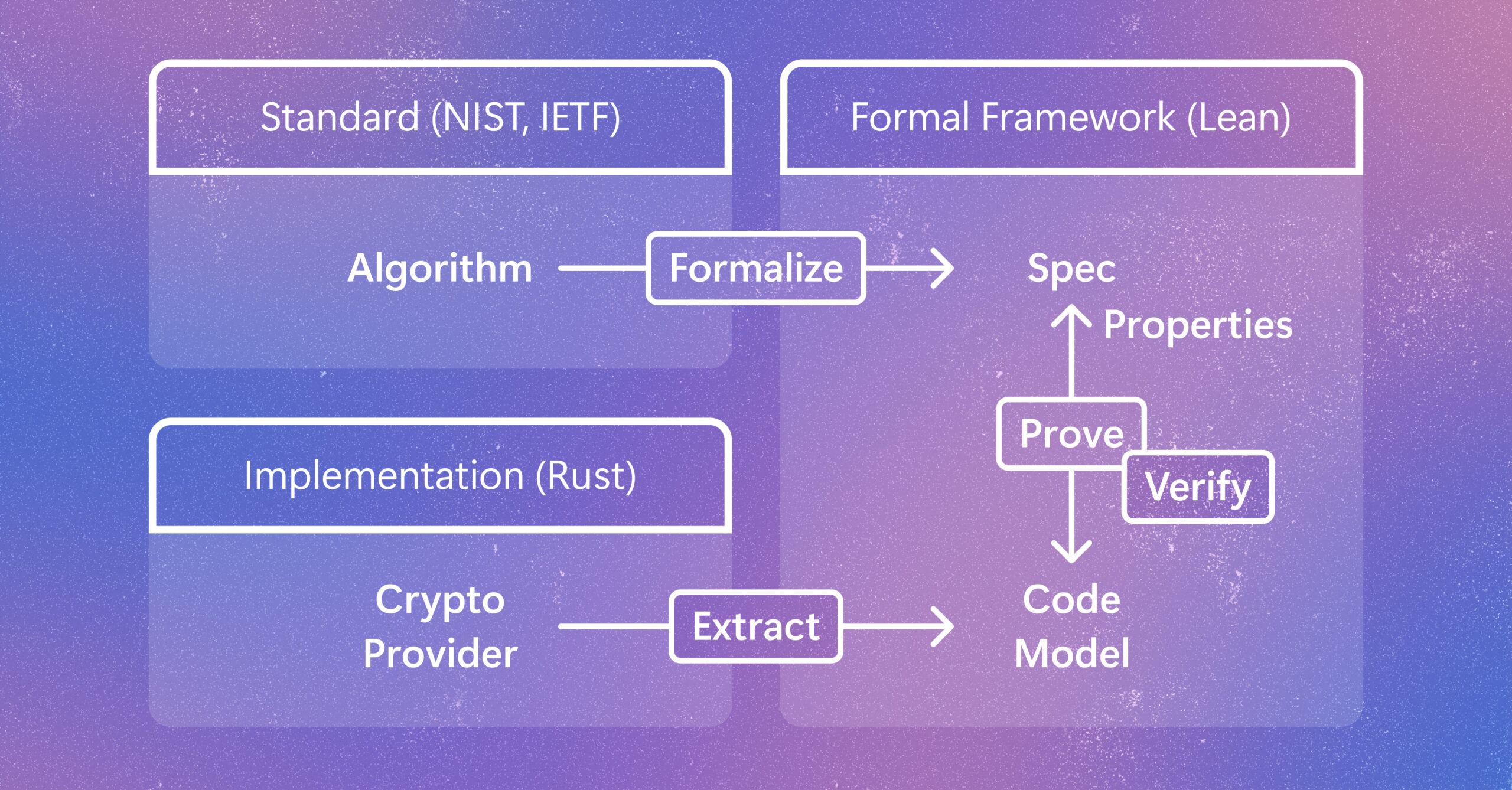
Cryptographic code supports vital protections in modern computing systems. Learn how a new method helps verify code as developers write it while preserving speed and adaptability as it gets implemented and evolves. The post Verifying Rust cryptography in SymCrypt, from standards to code appeared first on Microsoft Research.
MIT News · Artificial Intelligence· news.mit.eduJul 6, 2026
PhD student Rachel Sava, winner of the Envisioning the Future of Computing Prize, explores transformative improvements and dystopian risks of neural technology.