Skip to content

Cloud Workflow Scheduling Based on Graph Attention-Driven Hierarchical Reinforcement Learning

Sep 2026 · 0 citations · 34 references
Computer Science

TL;DR

A Graph Attention-Driven Hierarchical Reinforcement Learning framework is developed and model the scheduling process as an event-driven hierarchical semi-Markov decision process (SMDP) that maintains competitive workflow success rate and generally achieves higher container utilization and lower energy consumption.

Abstract

Dynamic cloud workflow scheduling must balance deadline satisfaction, container utilization, and energy consumption while dealing with stochastic task-execution speeds, placement-dependent communication, and coupled task and container decisions. Workflows are naturally modeled as directed acyclic graphs (DAGs), but conventional vector- or matrix-based states do not fully capture their dependency topology. To better represent task urgency and structural relationships, we assign predicted sub-deadlines to tasks and use a multi-head graph attention network (GAT) to extract dependency information from the evolving DAGs. Based on these representations, we develop a Graph Attention-Driven Hierarchical Reinforcement Learning (GA-HRL) framework and model the scheduling process as an event-driven hierarchical semi-Markov decision process (SMDP). Workflow arrivals and task completions trigger scheduling events. At each scheduling event, the Task Scheduling (TS) agent first processes the currently ready tasks by assigning them to admissible existing containers or requesting new ones. The requested containers are then processed by the Container Scheduling (CS) agent for host placement before the environment advances. The two agents are trained alternately using separate Proximal Policy Optimization (PPO). Experiments on the 2018 Alibaba cluster trace show that GA-HRL maintains competitive workflow success rate and, in settings where success is comparable, generally achieves higher container utilization and lower energy consumption. Under the largest speed variation, it trades a small success-rate margin for substantially lower energy. Simulation code is available at: https://github.com/zongjin130/GA-HRL.

View source

Similar papers

#machine learning Preprint Sep 2026

HiGFRL: Hierarchical Graph Fusion-Driven Reinforcement Learning for Dependency-Aware Task Scheduling in Heterogeneous Cloud

This work proposes HiGFRL, a Hierarchical Graph Fusion-Driven Reinforcement Learning framework, which designs a fusion-driven dual-network architecture to optimize RL decision-making and incorporates a topology-prior-guided hybrid reward mechanism that distills static topological priors into the learning process to acc...

Tiangang Li, Shi Ying, Xiang-Bo Tian · 0 citations
Conference

Dynamic Graph-Based Reinforcement Learning for Efficient Scheduling in Large-Scale Flexible Job Shops

The Flexible Job Shop Scheduling Problem (FJSP) is an NP-hard optimization challenge with significant industrial applications, especially for large-scale instances. Traditional approaches, such as Priority Dispatching Rules (PDRs), often struggle with time-intensive design processes and suboptimal performance as proble...

Jeongwon Park, Feng Ju · 0 citations
Preprint Sep 2026

Latency-Aware Orchestration for Multi-Agent LLM Workflows on Heterogeneous GPUs

A prediction-guided runtime that uses workflow forecasts to construct and optimize a physical execution graph and reduces end-to-end makespan and overall p95 completion latency under burst arrivals by up to 36.8% and 25.8% over state-of-the-art workflow schedulers.

Jing-Hao Wang, Yi-Feng Zhang, Xiao Zhou et al. · 0 citations
Open access Sep 2026

An Integrated Qos Dependency Aware and Multi Objective Metaheuristic Framework For Cloud Task Scheduling

Cloud task scheduling involves heterogeneous virtual machines, differentiated service requirements, workflow precedence constraints, and competing time, energy, cost, and utilization objectives. We propose an integrated three-model framework. QTSF clusters independent tasks using normalized service and resource attribu...

M. Rupasri, G. P. S. Varma, H. Indukuri · 0 citations
#artificial intelligence Preprint Sep 2026

PPO-STGNN: A Proximal Policy Optimization Approach with Spatio-Temporal Graph Neural Networks for DAG Task Scheduling in Cloud-Edge-End Computing

With the rapid development of the Internet of Things, computation intensive directed acyclic graph (DAG) tasks have become increasingly common in cloud-edge-end collaborative environments. However, cloud, edge, and end nodes are highly heterogeneous in computing capacity, network bandwidth, and energy consumption, whic...

Yan Qi, Chen-Wei Wang, Zi-Han Shen et al. · 0 citations
#reinforcement learning Open access Sep 2026

Research on Multi-Objective Task Scheduling Optimization and Reinforcement Learning Decision-Making Methods for Edge-Cloud Collaborative Scalable Information Systems

INTRODUCTION: Edge-cloud schedulers must coordinate latency, energy, load balance, and deadline compliance under changing demand while keeping task-arrival and throughput units physically consistent.OBJECTIVE: This study evaluates MORL-ECSO under an auditable, paired-seed simulation protocol and compares it with tuned...

Li-Na Guo, Cheng-Yu Sun · 0 citations

Related blog posts

MIT News · Artificial Intelligence Nov 17, 2026

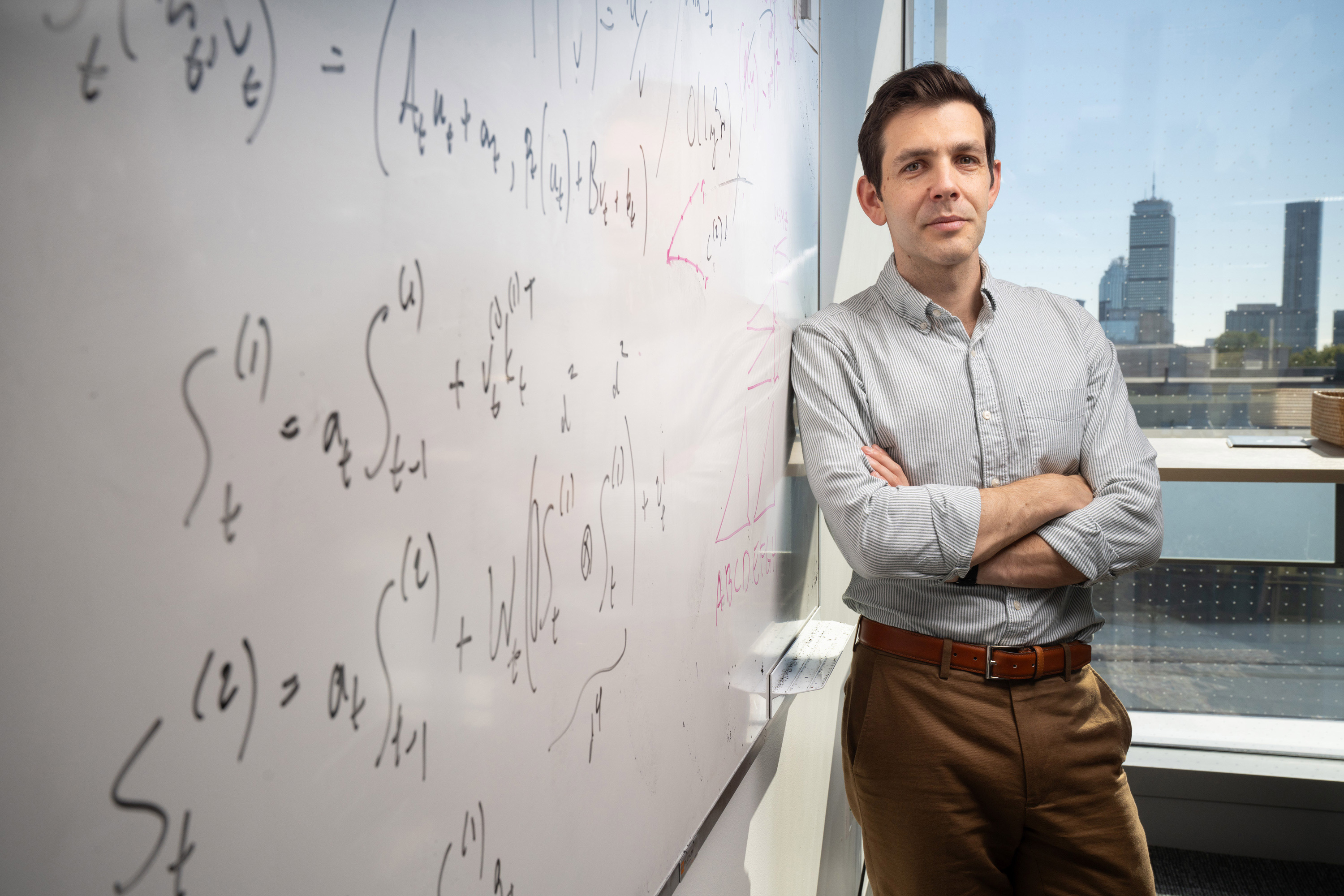
Learning the language of machine learning

By studying the computational foundations of language learning, Associate Professor Jacob Andreas builds intelligent systems that can communicate effectively with humans.

Microsoft Research Blog Nov 16, 2026

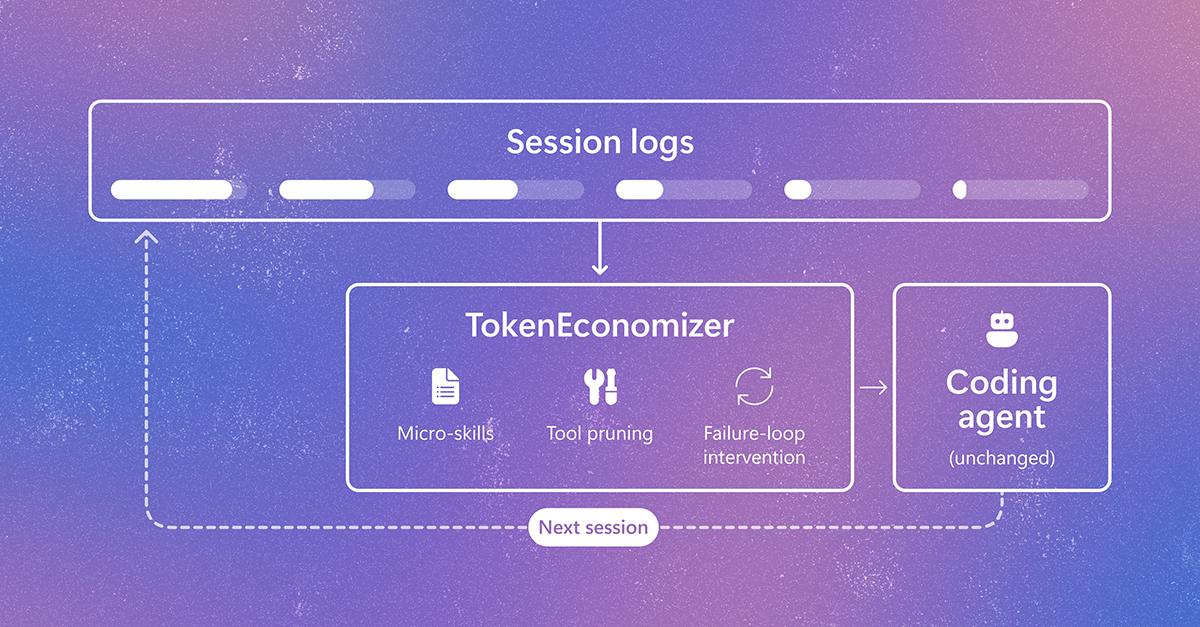
TokenEconomizer: Learning from Experience to Make AI Coding Agents More Efficient

AI coding agents are increasingly help developers fix bugs and build features largely on their own, but every interaction with their models consumes tokens. In each session, an agent sends instructions, tool descriptions, and session history to its model. Most efforts to reduce this cost focus on individual tasks. Yet developers return to the same […] The post TokenEconomizer: Learning from Experience to Make AI Coding Agents More Efficient appeared first on Microsoft Research.

We use cookies to run the site and, with your consent, for analytics and to show ads. See our Cookie Policy.