Oct 2026· IEEE Transactions on Mobile Computing· Vol 25, pp. 17684-17700· 0 citations· 33 references
Abstract
With the rapid advancement and deep integration of the Internet of Things (IoT) and 5G technologies, mobile edge computing (MEC) has undertaken an increasingly important role in enhancing service quality. Leveraging their high mobility and flexible deployment, unmannedaerial vehicles (UAVs) extend MEC services to challenging environments such as mountainous areas. Nevertheless, UAVs have inherent limitations, including restricted onboard resources (e.g., energy and computing capacity) and the need for obstacle avoidance flight. In this work, which investigates a UAV-assisted MEC system with uneven terrain and dynamic service scenarios, these limitations bring additional challenges to system optimization. The incorporation of terrain information in high-dimensional state space, the continuous action space required for fine control, and the variable network demands under dynamic service scenarios complicate the non-convex optimization problem. By jointly designing UAV’s trajectory and user equipments’ (UEs) task allocation, we address the task offloading problem under safe flight conditions, aiming to maximize both service coverage ratio and UAV’s propulsion energy efficiency. Then, we propose a phased hierarchical deep reinforcement learning (PH-DRL) algorithm, in which the network training is designed in phases and the network structure is organized hierarchically. Specifically, the phased method overcomes insufficient network experience in complex environments, while the hierarchical method decomposes the optimization variables, enabling independent solution. Experimental results demonstrate that the PH-DRL algorithm substantially improves service coverage ratio and propulsion energy efficiency, achieving system utility that significantly outperforms other comparative strategies.
This publication proposes a definition and a classification of agile software development approaches and analyses ten software development methods that can be characterized as being "agile" against the defined criterion.
P. Abrahamsson, O. Salo, Jussi Ronkainen et al.· arXiv.org· 727 citations· ⚡54
The study shows that agile practices improve both informal and formal communication, but indicates that, in larger development situations involving multiple external stakeholders, a mismatch of adequate communication mechanisms can sometimes even hinder the communication.
M. Pikkarainen, Jukka Haikara, O. Salo et al.· Empirical Software Engineeri...· 401 citations· ⚡48
The results indicate that software engineering work practices are chosen opportunistically, adapted and configured to provide value under the constrains imposed by the startup context.
Nicolò Paternoster, Carmine Giardino, M. Unterkalmsteiner et al.· Information and Software Tec...· 394 citations· ⚡54
The perception of the impact of agile methods is predominantly positive, and several challenge areas were discovered, but based on this study, agile methods are here to stay.
M. Laanti, O. Salo, P. Abrahamsson· Information and Software Tec...· 260 citations· ⚡20
AI is making software generation faster, but speed does not remove the need for expertise. As more work is delegated to AI, tacit knowledge may become one of the most important human advantages in software engineering. The post Beyond Prompt Engineering: The Role of Tacit Knowledge in Software Engineering appeared first on GPT-Lab.
MIT News · Artificial Intelligence· news.mit.eduSep 9, 2026
A weeklong summer workshop brought higher education faculty to campus to explore how AI and machine learning materials can be adapted for their classrooms.
MIT News · Artificial Intelligence· news.mit.eduSep 2, 2026
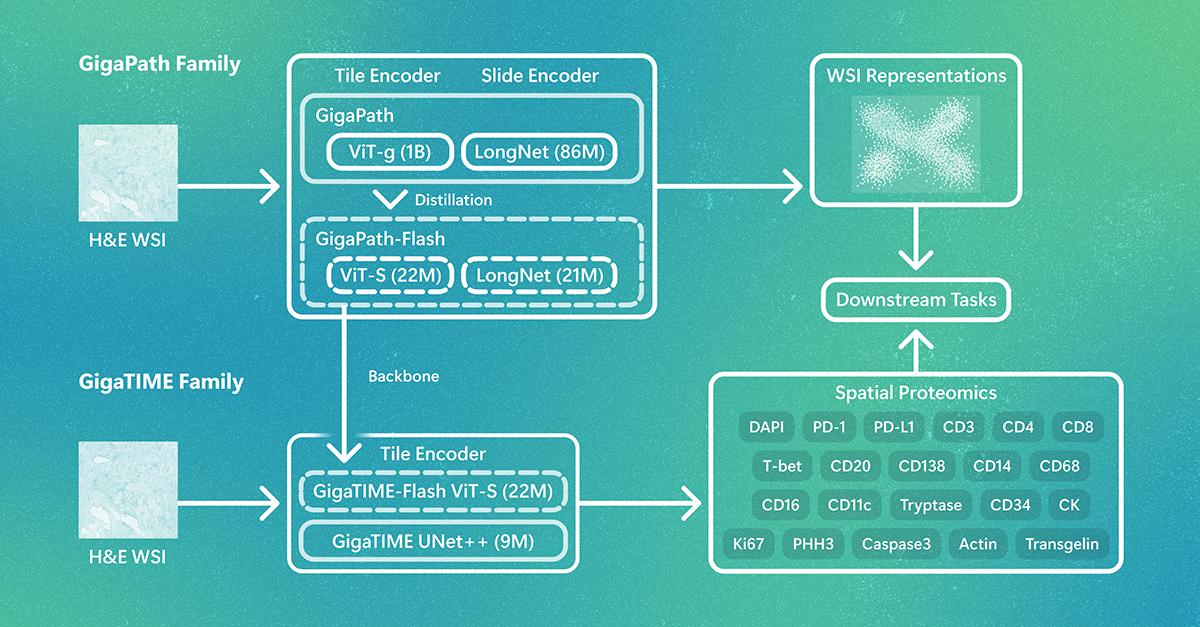
What if pathology foundation models could do more with less? GigaPath-Flash and GigaTIME-Flash cut computational demands while maintaining strong performance, opening the door to larger studies and broader exploration. The post GigaPath-Flash and GigaTIME-Flash: Toward population-scale discovery with efficient pathology foundation models appeared first on Microsoft Research.
We use cookies to run the site and, with your consent, for analytics and to show ads.
See our Cookie Policy.