Skip to content
#edge computing Open access

Joint Optimization of Offloading, Phase-Shift, Trajectory and Resource Allocation in Priority-Aware IRS-Assisted UAV-MEC Systems

Sep 2026 · ACM Transactions on Internet of Things · 0 citations · 46 references
UAV Applications and Optimization

Abstract

Unmanned aerial vehicle (UAV)-assisted mobile edge computing (MEC) utilizes low-altitude resources to provide computation services for ground users (GUs). However, the wireless channels connecting UAVs and GUs are often weak, and the priority of heterogeneous tasks is usually ignored, leading to unsatisfactory quality of service (QoS). To overcome this challenge, this paper considers task priority and integrates intelligent reflecting surface (IRS) into traditional UAV-MEC to enhance offloading efficiency. Firstly, we present a priority-aware multi-UAV single IRS-aided MEC system, where GUs can process the tasks with different priorities and tolerable delays locally or offload them to UAV via IRS. Subsequently, we formulate the problem as a joint optimization of task offloading, IRS phase shift, UAV trajectory and resource allocation, with the objective of maximizing the weighted sum of time and energy efficiency. To tackle this complicated Mixed Integer Non-linear Programming (MINLP) problem, we decouple it into three sub-problems and design corresponding algorithms to solve them: 1) we propose a Dynamic Dual-Weighting (DDW)-based Offloading Algorithm (DDWOA) to determine GUs’ offloading strategy; 2) we propose a Genetic Algorithm-based IRS Phase-shift Optimization method (GAIPO) to maximize selected GUs’ uplink channel gain; 3) we devise a Multi-Agent Proximal Policy Optimization (MAPPO)-DDW based UAV Trajectory and Resource Allocation approach (MDUTRA) to maximize system utility. Finally, extensive experimental results indicate that the system utility of our proposed method is dramatically higher than other benchmark schemes under different scenes.

Read PDF

Similar papers

#computer vision Review Sep 2017

Agile Software Development Methods: Review and Analysis

This publication proposes a definition and a classification of agile software development approaches and analyses ten software development methods that can be characterized as being "agile" against the defined criterion.

P. Abrahamsson, O. Salo, Jussi Ronkainen et al. · 727 citations · ⚡54
#computer vision Jun 2008

The impact of agile practices on communication in software development

The study shows that agile practices improve both informal and formal communication, but indicates that, in larger development situations involving multiple external stakeholders, a mismatch of adequate communication mechanisms can sometimes even hinder the communication.

M. Pikkarainen, Jukka Haikara, O. Salo et al. · 401 citations · ⚡48
#machine learning Review Open access Oct 2014

Software development in startup companies: A systematic mapping study

The results indicate that software engineering work practices are chosen opportunistically, adapted and configured to provide value under the constrains imposed by the startup context.

Nicolò Paternoster, Carmine Giardino, M. Unterkalmsteiner et al. · 394 citations · ⚡54

Related blog posts

Microsoft Research Blog Sep 29, 2026

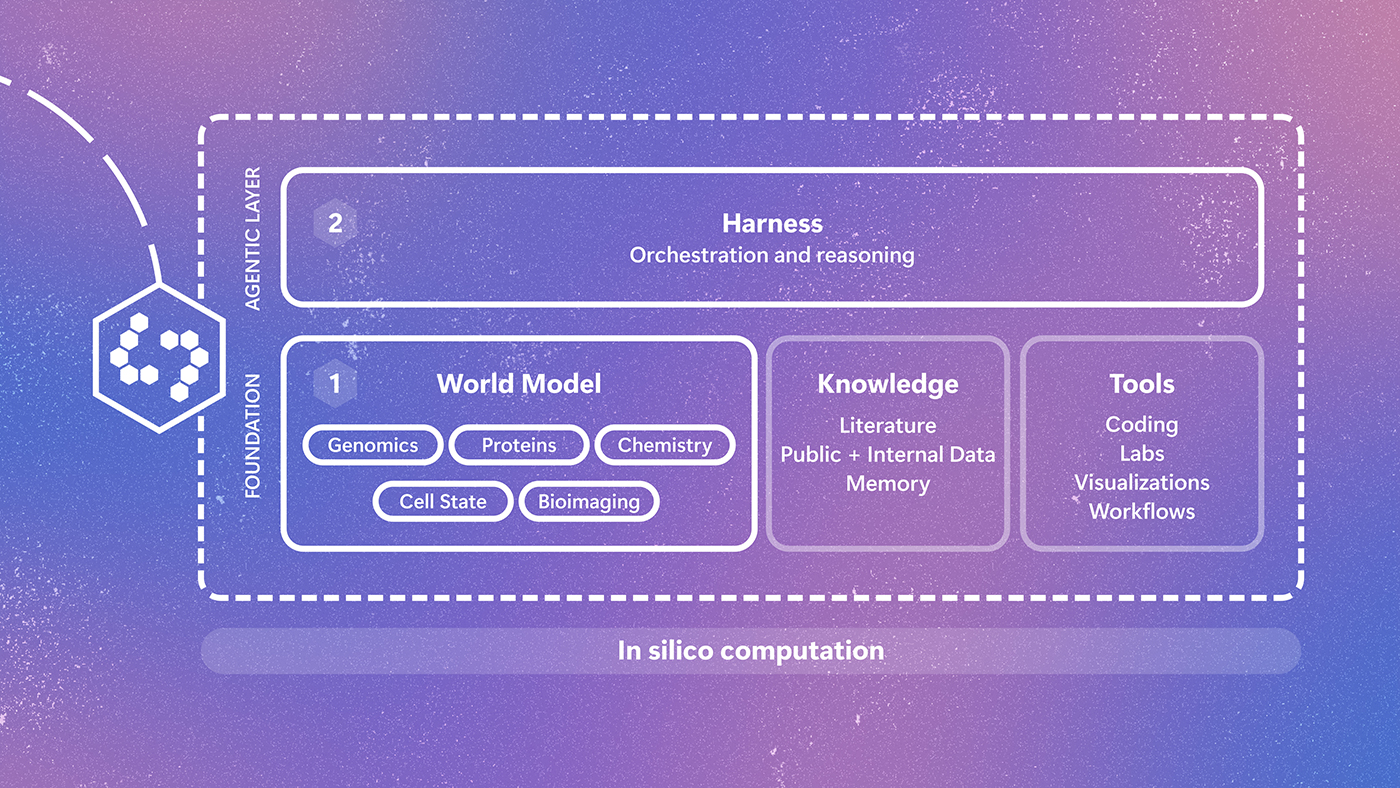
Introducing Quine: An AI research system designed for the complexity of biology

Biology doesn't operate in silos, and neither should the AI representation of it. Quine is an early-stage research effort to create a multimodal world model of biology. By connecting insights across biological scales and modalities, Quine helps scientists computationally search a space far larger than intuition allows and prioritize hypotheses before they reach the lab. Experimental results provide important feedback, helping researchers sharpen future research directions. The post Introducing Q…

We use cookies to run the site and, with your consent, for analytics and to show ads. See our Cookie Policy.