Skip to content

FedOTO: Toward Low-Latency Drowsiness Detection Service in IoV via Structured Federated Pruning

Oct 2026 · IEEE Transactions on Mobile Computing · Vol 25, pp. 16557-16572 · 0 citations · 60 references

Abstract

Drowsy driving continues to be a leading cause of motor vehicle accidents (MVAs), accounting for nearly 30% of all incidents according to recent studies. While numerous drowsiness detection methods have been developed, existing solutions often struggle with practical deployment due to limitations in detection accuracy, processing latency, or computational efficiency. To overcome these challenges, we propose federated only-train-once (FedOTO), a low-latency drowsiness detection framework for the internet of vehicles (IoV). FedOTO integrates edge computing with a novel two-tier structured federated pruning framework to deliver personalized, accurate, and real-time drowsiness detection services. By leveraging individual user data, local models on vehicular edge nodes are dynamically pruned and optimized to capture the individual drowsiness patterns. To reduce the processing latency, we employ zero-invariant groups (ZIGs), which identify computation-redundant parameter groups that can be safely pruned, and a hybrid efficient structured sparse optimizer (HESSO), which automatically trains local models and performs pruning, thereby minimizing local training time, communication delay, and response time. Additionally, our co-adaptive strategy dynamically adjusts both the number of redundant groups and learning rate across iterations, thus significantly accelerating the model convergence. Extensive experiments demonstrate FedOTO’s superior performance, achieving an average accuracy of 0.9997 and an average F1 score of 0.9989. Moreover, compared to conventional federated learning, FedOTO reduces local training time by 30.7%, communication delay by 28.9%, and response time by 34.3% to achieve superior overall performance over state-of-the-art baselines.

View source

Similar papers

#computer vision Review Sep 2017

Agile Software Development Methods: Review and Analysis

This publication proposes a definition and a classification of agile software development approaches and analyses ten software development methods that can be characterized as being "agile" against the defined criterion.

P. Abrahamsson, O. Salo, Jussi Ronkainen et al. · 727 citations · ⚡54
#computer vision Jun 2008

The impact of agile practices on communication in software development

The study shows that agile practices improve both informal and formal communication, but indicates that, in larger development situations involving multiple external stakeholders, a mismatch of adequate communication mechanisms can sometimes even hinder the communication.

M. Pikkarainen, Jukka Haikara, O. Salo et al. · 401 citations · ⚡48
#machine learning Review Open access Oct 2014

Software development in startup companies: A systematic mapping study

The results indicate that software engineering work practices are chosen opportunistically, adapted and configured to provide value under the constrains imposed by the startup context.

Nicolò Paternoster, Carmine Giardino, M. Unterkalmsteiner et al. · 394 citations · ⚡54

Related blog posts

GPT-Lab Sep 17, 2026

Beyond Prompt Engineering: The Role of Tacit Knowledge in Software Engineering

AI is making software generation faster, but speed does not remove the need for expertise. As more work is delegated to AI, tacit knowledge may become one of the most important human advantages in software engineering. The post Beyond Prompt Engineering: The Role of Tacit Knowledge in Software Engineering appeared first on GPT-Lab.

Microsoft Research Blog Aug 31, 2026

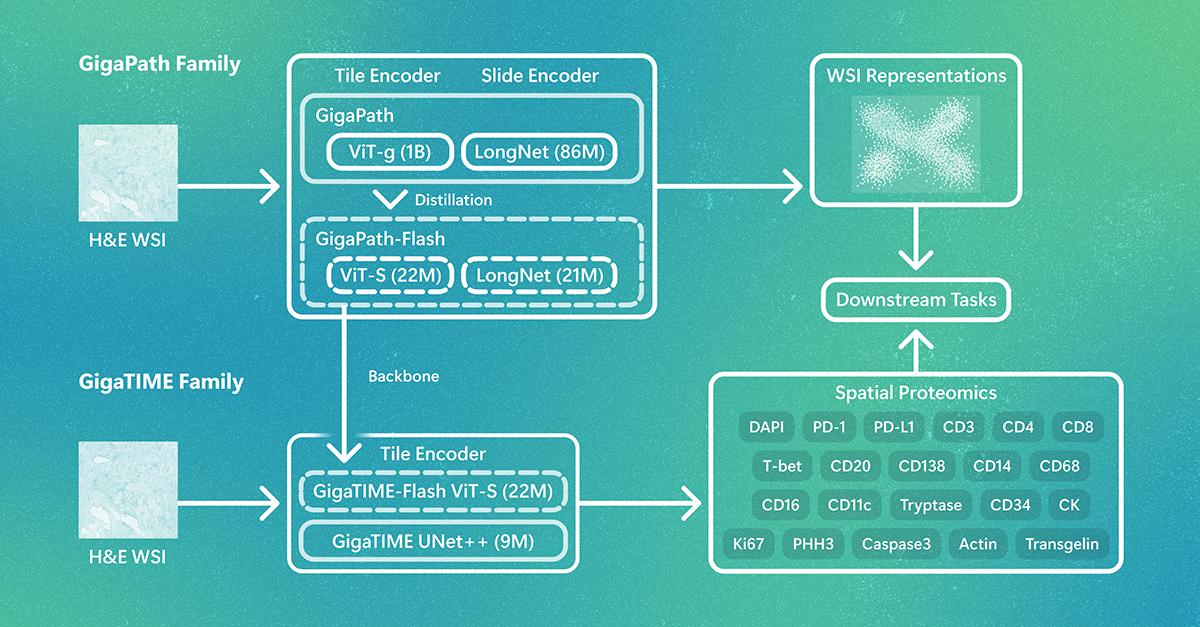
GigaPath-Flash and GigaTIME-Flash: Toward population-scale discovery with efficient pathology foundation models

What if pathology foundation models could do more with less? GigaPath-Flash and GigaTIME-Flash cut computational demands while maintaining strong performance, opening the door to larger studies and broader exploration. The post GigaPath-Flash and GigaTIME-Flash: Toward population-scale discovery with efficient pathology foundation models appeared first on Microsoft Research.

We use cookies to run the site and, with your consent, for analytics and to show ads. See our Cookie Policy.