Phishing attacks continue to become more sophisticated and employee behavior is still a major part of the organization’s cyber security strategy. This study introduces a behavior-aware framework to predict the phishing susceptibility through supervised learning, clustering (unsupervised learning techniques), and reinfo...
Preservation mirror. This Zenodo record is a long-term preservation mirror of the official Hugging Face repository nvidia/NVIDIA-Nemotron-3.5-Bolt-E4B-BF16 published by NVIDIA, mirrored byte-for-byte at the pinned revision 49843eed8db1f1c616c47af75cfd36e07aec0667 (revision tree). The deposit contains the complete 18-fi...
NVIDIA· Zenodo (CERN European Organi...· 0 citations
Aiming at the problem of the separation of logistics network design prediction and optimization under the double uncertainty of dynamic demand and disruption risk, this paper proposes a prediction-optimization-decision integration framework with deep integration of machine learning and system optimization. The framewor...
Tianwen Zhao, Guoqing Chen, Nanjun He et al.· Scientific Reports· 0 citations
Code, input data and results for the paper "Chargers Before Robots: Designing Delivery-Robot Fleets and Charging Infrastructure under Delivery Deadlines". The record contains: an event-driven simulator of depot-based autonomous delivery robots on two Bengaluru road networks (Koramangala and HSR Layout), with travel tim...
K. M. Haneesh, P. Jisha· Zenodo (CERN European Organi...· 0 citations
Evolutionary game theory (EGT) is widely used in production research to model coordination, regulation, and quality governance in supply chains and manufacturing systems. The classical analytical pipeline, deriving replicator equations, enumerating equilibria, and testing stability through Jacobian analysis, becomes in...
The paradigm of Explainable Artificial Intelligence (XAI) has been developed as a solution for increasing transparency, interpretability, and accountability of Artificial Intelligence (AI) models used in autonomous Information Technology (IT) systems. The fast adoption of autonomous AI technologies in cybersecurity, di...
Vikram Kulkarni, M. Ankush Kumar, Rajendhar Puppala et al.· Journal of Intelligent & Fuz...· 0 citations
The accelerating transition toward sustainable energy systems has intensified the need for intelligent and optimization-driven solutions capable of addressing the growing complexity of renewable energy systems (RES) and power electronics (PE). In this context, artificial intelligence (AI) and metaheuristic optimization...
By studying the computational foundations of language learning, Associate Professor Jacob Andreas builds intelligent systems that can communicate effectively with humans.
MIT News · Artificial Intelligence· news.mit.eduNov 17, 2026
AI coding agents are increasingly help developers fix bugs and build features largely on their own, but every interaction with their models consumes tokens. In each session, an agent sends instructions, tool descriptions, and session history to its model. Most efforts to reduce this cost focus on individual tasks. Yet developers return to the same […] The post TokenEconomizer: Learning from Experience to Make AI Coding Agents More Efficient appeared first on Microsoft Research.
MIT News · Artificial Intelligence· news.mit.eduNov 9, 2026
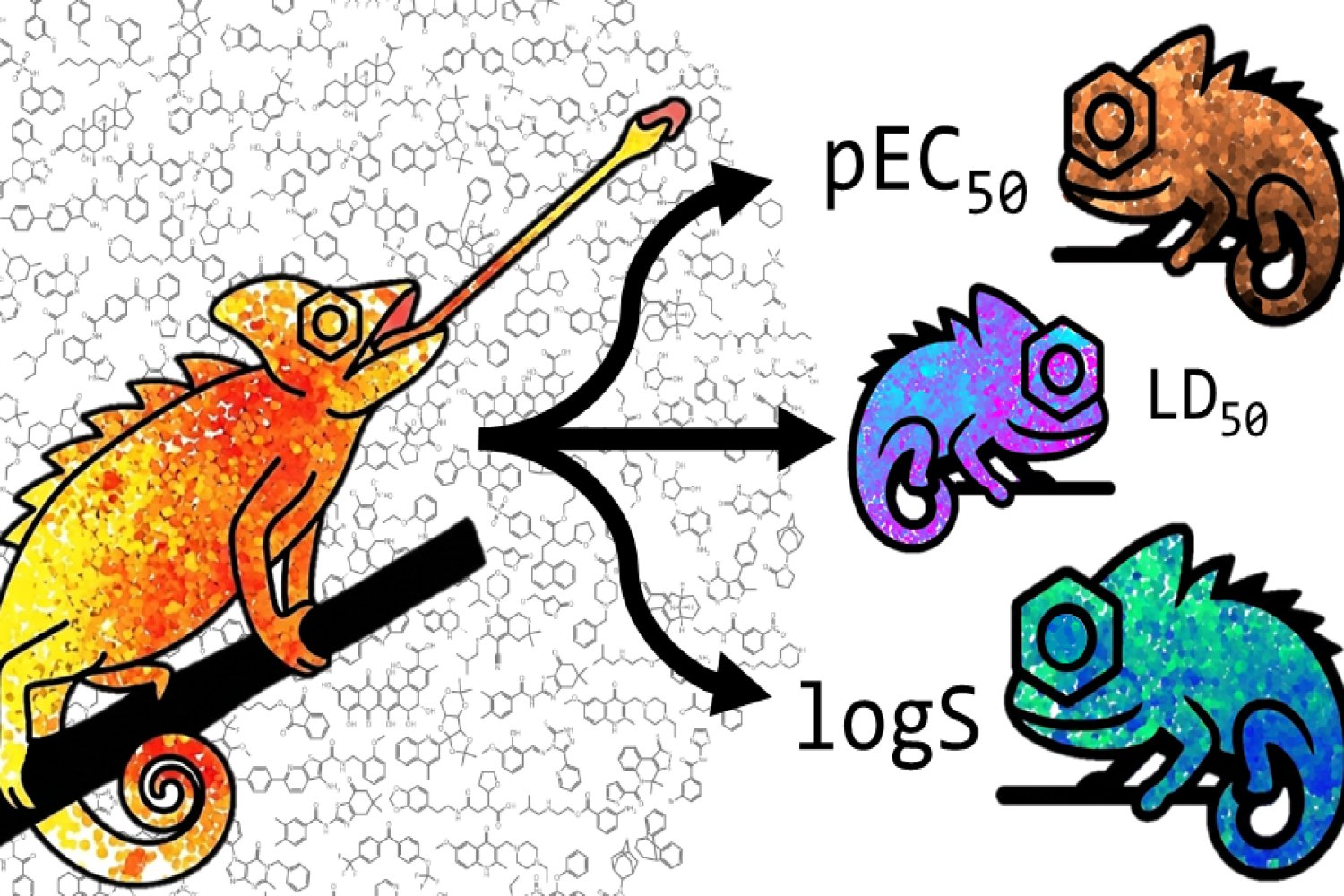
A machine-learning approach called CheMeleon provides a practical way to develop new drugs or other molecules with much less detailed, expensive experimentation.
We use cookies to run the site and, with your consent, for analytics and to show ads.
See our Cookie Policy.