DEX-Comp is proposed, a two-stage training recipe that separates reliable imitation from targeted exploration and applies outcome-based reinforcement learning to teacher-failed questions to directly optimize answer correctness.
Constructive feedback is crucial for creative writers to refine their storytelling abilities. Since receiving feedback from human experts is often costly and time-intensive, large language models (LLMs) offer a scalable and efficient alternative as automatic writing assistants. Despite their potential, research indicat...
Maja Stahl, Timon Ziegenbein, Henning Wachsmuth· 0 citations
Bayesian Optimization (BO) is a powerful technique for optimizing black-box functions, particularly those where gradient information is unavailable. However, its performance can degrade significantly when faced with noisy or non-stationary objective functions. This paper proposes a novel approach, Dynamic Bayesian Opti...
Jincheng Zhang· Zenodo (CERN European Organi...· 0 citations
The selection of an appropriate kernel function remains a significant challenge in kernel methods, frequently relying on manual tuning and heuristic approaches. This research introduces a novel framework employing meta-reinforcement learning to autonomously learn and adapt kernel functions. The system utilizes a reinfo...
Jincheng Zhang· Zenodo (CERN European Organi...· 0 citations
This paper presents a novel self-adaptive neural network architecture leveraging machine learning to dynamically adjust network structure and parameters. Traditional neural network design relies heavily on human expertise, limiting the network's adaptability. This work introduces a framework that utilizes machine learn...
Jincheng Zhang· Zenodo (CERN European Organi...· 0 citations
This paper presents Adaptive Network Routing Based on Reinforcement Learning (ANRRL), a novel approach to network routing optimization utilizing reinforcement learning (RL). Traditional network routing protocols often rely on static configurations or shortest-path algorithms, which may not adapt effectively to dynamic...
Jincheng Zhang· Zenodo (CERN European Organi...· 0 citations
This paper explores the application of Deep Reinforcement Learning (DRL) for optimizing quantum resource allocation in quantum computing. Traditional quantum resource allocation often relies on manual design and expert knowledge, which can be computationally expensive and limit scalability. We propose a novel framework...
Jincheng Zhang· Zenodo (CERN European Organi...· 0 citations
Learn how Google DeepMind and GovTech Singapore uses lightweight on-device Gemma models to intercept conversational scams in private chats with zero cloud data egress.
MIT News · Artificial Intelligence· news.mit.eduOct 13, 2026
Machine-learning networks can learn without detailed instructions from a designer. Those that do may offer insight into how the brain reorganizes itself during learning.
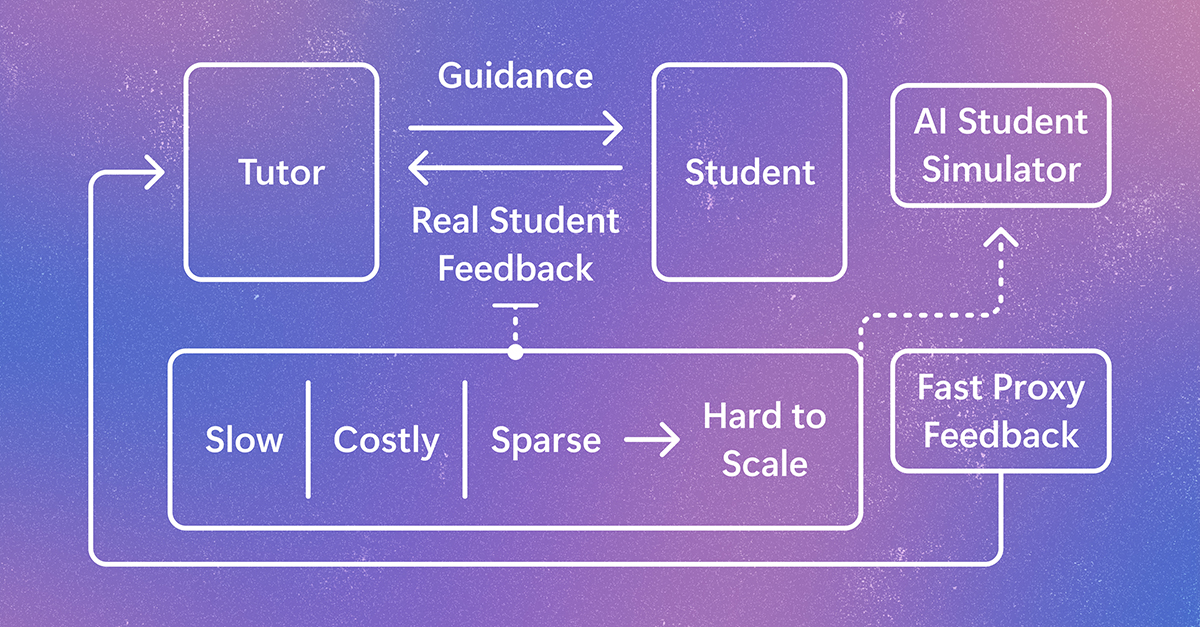
StudentSim is a research system for evaluating and improving AI tutoring tools before they are tested with learners. It models how individuals may engage with tutors, giving feedback to improve tutor performance across subjects like chess, writing, and mathematics. The post Simulating student learning for better AI tutoring appeared first on Microsoft Research.
MIT News · Artificial Intelligence· news.mit.eduOct 7, 2026
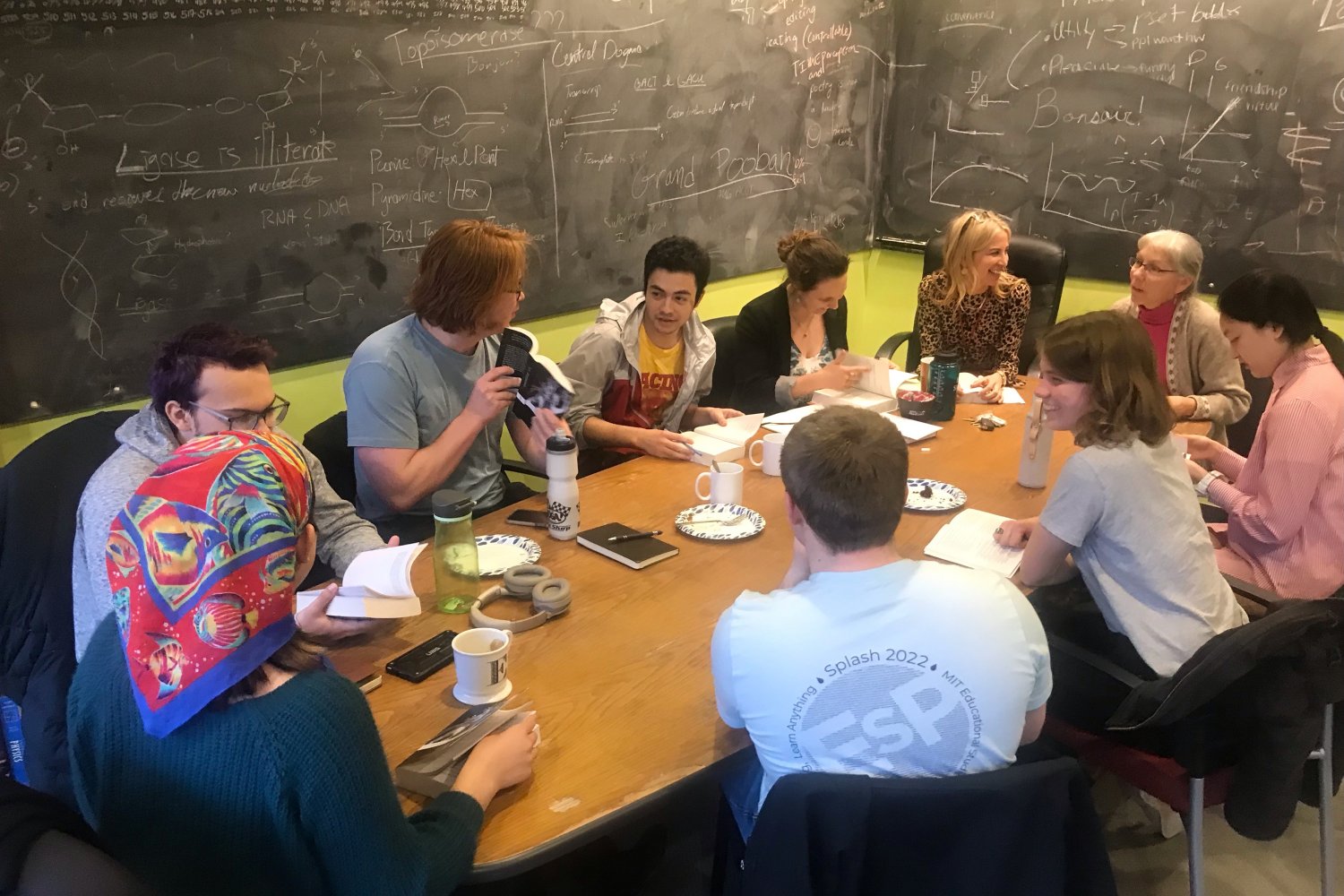
Students in MIT’s Concourse program delve deeply into the human condition, debate challenging questions, and learn to develop judgment about issues that can’t be quantified.
We use cookies to run the site and, with your consent, for analytics and to show ads.
See our Cookie Policy.