This paper introduces a novel self-adaptive GAN (GAN) training strategy designed to enhance model generation quality and stability. Traditional GAN training often relies on manual parameter adjustment, which can be time-consuming and suboptimal. Our approach leverages a dynamic adjustment mechanism to automatically tun...
Jincheng Zhang· Zenodo (CERN European Organi...· 0 citations
This paper presents a novel approach to massive data stream processing based on adaptive control. The core idea is to dynamically adjust processing strategies based on the inherent characteristics of the data stream, thereby optimizing efficiency and resource utilization. We leverage reinforcement learning (RL) to lear...
Jincheng Zhang· Zenodo (CERN European Organi...· 0 citations
Quantum error correction (QEC) is a cornerstone of quantum information processing, enabling the reliable transmission of quantum information over noisy channels. However, the performance of QEC protocols is heavily reliant on the efficient allocation of quantum channels, a process that is often static and suboptimal. T...
Jincheng Zhang· Zenodo (CERN European Organi...· 0 citations
This paper introduces an Adaptive Graph Neural Network (AGNN) designed to enhance Bayesian inference, particularly within complex, high-dimensional datasets. Traditional graph neural networks struggle with data complexities, often requiring extensive hyperparameter optimization. We propose an innovative AGNN architectu...
Jincheng Zhang· Zenodo (CERN European Organi...· 0 citations
Reach audiences
Advertise in front of researchers, engineers, and readers.
This dataset accompanies the manuscript "Planning for Leakage-Aware Collaborative Carbon Mitigation: Optimizer-Informed Multi-Agent Reinforcement Learning in Shandong's Dual Metropolitan Areas" submitted to the Journal of Urban Planning and Development (ASCE). It contains the full numerical inputs, calibrated artefacts...
Naibin Jiang, Zhen Peng· Zenodo (CERN European Organi...· 0 citations
Quantum state tomography (QST) is a fundamental technique for characterizing the state of a quantum system. However, traditional QST protocols often require a large number of measurements, leading to significant experimental overhead and uncertainties in the reconstructed state. This paper proposes a novel approach to...
Jincheng Zhang· Zenodo (CERN European Organi...· 0 citations
This paper develops WRRA as a minimal-computation artificial intelligence architecture. WRRA transforms SOURCE through RELATION into STATE, converts that state into observable behavior through a RENDERER, and limits every conclusion by explicit OBSERVABLE and BOUNDARY conditions. Its objective is not maximum performanc...
Wonsik Choi· Zenodo (CERN European Organi...· 0 citations
This Supplemental Materials file accompanies the manuscript submitted to the Journal of Urban Planning and Development (ASCE). It contains eleven supplementary figures (Figs. S1–S11) and three supplementary tables (Tables S1–S3), whose numbering matches the in-text citations and supports every robustness, calibration,...
Naibin Jiang, Zhen Peng· Zenodo (CERN European Organi...· 0 citations
MATLAB source code supporting the research article “QMDP-PER-DDQN Trajectory Tracking for Mecanum Robots under Partial Observability.” This repository provides the MATLAB implementation of a belief-aware trajectory-tracking framework for a four-Mecanum-wheel mobile robot operating under noisy and partially observable s...
Oorappan G M, Lakshmanan S A, S Vignesh· Zenodo (CERN European Organi...· 0 citations
This dataset accompanies the manuscript "Planning for Leakage-Aware Collaborative Carbon Mitigation: Optimizer-Informed Multi-Agent Reinforcement Learning in Shandong's Dual Metropolitan Areas" submitted to the Journal of Urban Planning and Development (ASCE). It contains the full numerical inputs, calibrated artefacts...
Naibin Jiang, Zhen Peng· Zenodo (CERN European Organi...· 0 citations
This paper proposes a novel approach to reinforcement learning (RL) that combines the strengths of hierarchical reinforcement learning (HRL) and memory networks. Traditional RL methods often struggle with complex tasks due to the curse of dimensionality and the difficulty of learning long-term dependencies. Hierarchica...
Jincheng Zhang· Zenodo (CERN European Organi...· 0 citations
This paper introduces a novel reinforcement learning framework for robot control, leveraging adaptive reinforcement learning (ARL) to dynamically adjust control strategies based on both environmental feedback and the robot's internal state. Traditional reinforcement learning models often suffer from static policies, li...
Jincheng Zhang· Zenodo (CERN European Organi...· 0 citations
Learn how Google DeepMind and GovTech Singapore uses lightweight on-device Gemma models to intercept conversational scams in private chats with zero cloud data egress.
MIT News · Artificial Intelligence· news.mit.eduOct 13, 2026
Machine-learning networks can learn without detailed instructions from a designer. Those that do may offer insight into how the brain reorganizes itself during learning.
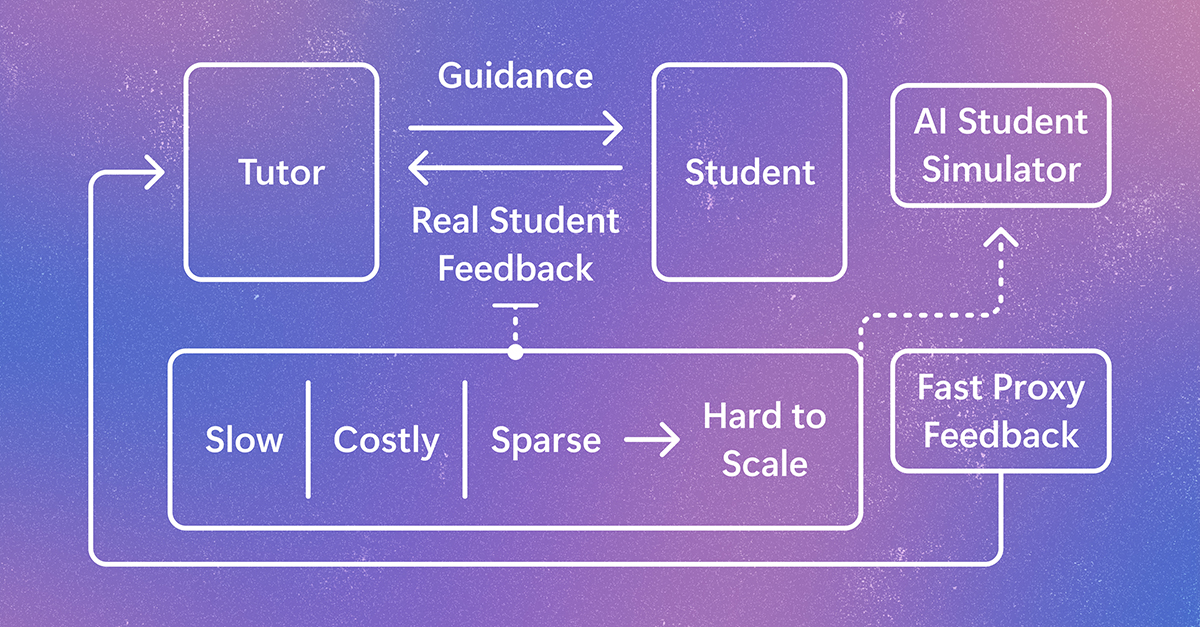
StudentSim is a research system for evaluating and improving AI tutoring tools before they are tested with learners. It models how individuals may engage with tutors, giving feedback to improve tutor performance across subjects like chess, writing, and mathematics. The post Simulating student learning for better AI tutoring appeared first on Microsoft Research.
MIT News · Artificial Intelligence· news.mit.eduOct 7, 2026
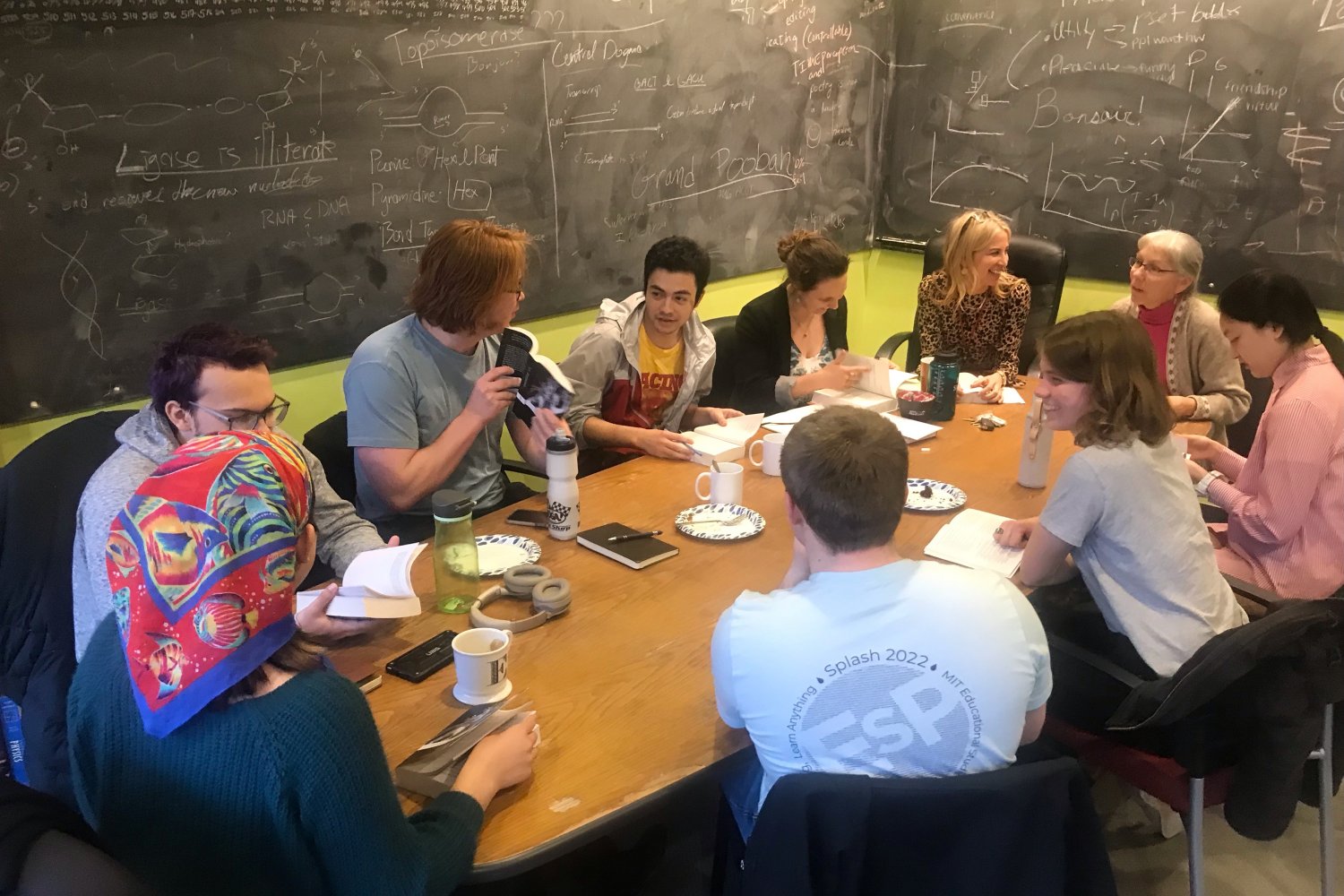
Students in MIT’s Concourse program delve deeply into the human condition, debate challenging questions, and learn to develop judgment about issues that can’t be quantified.
We use cookies to run the site and, with your consent, for analytics and to show ads.
See our Cookie Policy.