A variability-preserving imputation method is introduced that augments linear interpolation with locally adaptive stochastic noise, retaining physiological dynamics essential for accurate forecasting in short-term Heart Rate Variability forecasting.
Abstract
Short-term Heart Rate Variability (HRV) forecasting could provide clinicians with actionable lead time for detecting autonomic dysfunction and adverse cardiac events. Consumer wearable devices generate fragmented, artifact-rich HRV signals that challenge conventional forecasting approaches. In this study, we evaluated the forecasting ability of three Time Series Foundation Models (TSFMs), TimesFM, Chronos, and MOIRAI, against traditional baselines (Mean, Exponential Smoothing, and Exponentially Weighted Moving Average) on real-world wearable data collected from 49 healthy individuals. To address data fragmentation, we introduce a variability-preserving imputation method that augments linear interpolation with locally adaptive stochastic noise, retaining physiological dynamics essential for accurate forecasting. The results show that TSFMs outperformed all baselines without fine-tuning, achieving average Mean Absolute Scaled Error (MASE) between 0.81 and 0.87 across TSFMs and both context lengths (32 and 64 time steps), with Chronos and TimesFM as the top models, though MOIRAI showed limited gains over baselines. With up to a 2-hour forecast horizon, the results establish a baseline for TSFMs'performance on a real-world dataset, highlighting domain-specific fine-tuning as a promising direction for clinical deployment.
Reliable estimation of heart rate variability (HRV) from electrocardiography (ECG) depends on accurate detection of R-peaks, a task that becomes challenging in operational environments characterized by noise, motion artifacts, and monitoring-grade sensor configurations. While classical detection algorithms perform well under controlled conditions, their robustness is often limited in realistic settings. This study investigates whether artificial intelligence (AI)-based approaches can achieve robust R-peak detection in noisy operational ECG recordings, providing a reliable foundation for downstream HRV analysis. A physiologically constrained annotation framework was developed to generate temporally consistent reference annotations for evaluation of operational ECG recordings, while model training was performed exclusively using the MIT-BIH Arrhythmia Database with noise augmentation from the MIT-BIH Noise Stress Test Database. Two AI-based approaches were evaluated: a bidirectional Long Short-Term Memory (LSTM) network and a Transformer-based time-series foundation model (Mantis-8M) with task-specific output layers. Model performance was evaluated using both the MIT-BIH Arrhythmia Database and a real-world dataset comprising monitoring-grade ECG recordings from 30 participants acquired under operational conditions. The strongest-performing AI-based models achieved near-perfect benchmark performance (F1 ≈ 0.99) and maintained high accuracy under noisy conditions. On operational data, the LSTM model achieved the strongest overall performance (F1 = 0.96), substantially outperforming classical Pan–Tompkins implementations and alternative AI architectures. Additional validation analyses demonstrated consistent performance across participants, low RR interval error, and minimal variability across repeated training runs, supporting the robustness and reproducibility of the proposed approach. The results demonstrate that AI-based R-peak detection preserves physiologically consistent beat-to-beat timing in noisy, monitoring-grade ECG recordings, providing a robust foundation for downstream HRV analysis. The study focuses on robustness in operational, non-clinical environments rather than diagnostic ECG interpretation. These findings support AI-based ECG analysis, trained on physiologically valid benchmark data, as a robust and reproducible foundation for real-time physiological monitoring in complex operational environments.
Maja Boström, Erik Jonsäll, Fredrik Allenmark et al.· Frontiers in Psychology· 0 citations
Respiratory frequency is a critical biomarker in sleep medicine and circadian biology. We investigated whether the high-frequency (HF) component of heart-rate variability (HRV)—which reflects respiratory sinus arrhythmia (RSA)—can serve as a non-invasive proxy for breathing rate estimation from ECG or PPG. We employed a two-stage validation design: (1) a physiologically calibrated simulation study (N = 30 per condition, five conditions, 180 s recordings) for controlled error characterization using the PhysioNet ECG-ID Database (Electrocardiogram Identification Database, DOI: 10.13026/C2XW26) as the processing pipeline reference; and (2) pilot real-data validation in N = 10 older adult participants (mean age 71.3 years) with simultaneous ECG and thermistor respiratory reference measured using the East Medic Biotope Mini (1000 Hz). Results: Under controlled resting conditions, simulation yielded MAE = 0.46 bpm (SNR = 4.8). An empirical error formula MAE = 2.017 × SNR^(−1.187) (R2 = 0.71) was derived. In the real-data validation, 4/10 participants achieved MAE ≤ 2.0 bpm; the remaining 6/10 showed errors of 6–17 bpm attributable to non-respiratory HF oscillations, harmonic confusion, and breathing rate variability. The HF-peak method is reliable when SNR is high and breathing is regular but requires additional quality criteria beyond SNR alone in older adult populations where non-respiratory HF oscillations may confound spectral peak detection.
Emi Yuda, Naoya Morikawa, J. Hayano· Clocks & Sleep· 0 citations
Heart rate variability (HRV) forms the basis of non-invasive autonomic nervous system assessment. However, its analysis is constrained by the non-stationary nature of physiological signals. Standard analytical methods, which assume stationarity within fixed time windows, fail to capture dynamical effects of interest, such as the response to a physiological stressor. This limitation obstructs the development of mechanistic hypotheses about autonomic control. Here, we address this challenge by introducing a probabilistic framework for modeling non-stationary HRV dynamics during transient, single-event perturbation-recovery paradigms. We propose a hypothesis-driven, generative model that transforms the physiological response into a continuous-time stochastic process controlled by a double-logistic function. This approach deconstructs the R-R interval (RRi) series into a set of interpretable parameters representing the latency, rate, and magnitude of distinct response and recovery phases. Through simulation, we show that the model achieves high-fidelity parameter recovery and describes these dynamics more accurately than conventional fixed-time window methods under conditions matching its own generative assumptions. We then apply the framework to an empirical exercise-recovery recording, generating a precise, falsifiable hypothesis of “dissonant autonomic recovery”, where the baseline RR interval and its variability recover to distinct extents. The biphasic autonomic non-stationary decomposition (BAND) framework provides a formal methodology for translating RRi time series into quantitative, testable estimates of their generative processes.
Matías Castillo-Aguilar, David Medina-Ortiz, Ruby Méndez Muñoz et al.· Technologies· 0 citations
Heart rate variability (HRV) is an age-dependent autonomic biomarker increasingly derived from wearable devices. Across normal, prediabetes, and diabetes groups, we investigated whether modeling age influences the association between glycemic status and resting seated wearable-derived heart rate variability, and whether the corrected QT interval is independently associated with heart rate variability after multivariable adjustment. In this cross-sectional multimodal study, 72 adults across three glycemic states (normal, prediabetes, and diabetes) underwent wearable single-lead electrocardiography during stable seated resting-state recordings for heart rate variability assessment alongside standard 12-lead electrocardiography. Heart rate variability was quantified as the natural logarithm of the root mean square of successive differences (ln[RMSSD]). Multivariable linear regression models adjusted for age, sex, body mass index, mean heart rate, and electrocardiographic parameters, with restricted cubic splines used to account for nonlinear age effects. Unadjusted analyses showed significant differences in ln(RMSSD) across glycemic groups. In linear models, diabetes was associated with lower ln(RMSSD), whereas the corrected QT interval was not independently associated with heart rate variability. However, modeling age with restricted cubic splines attenuated the association between diabetes and ln(RMSSD) to non-significance. Predicted heart rate variability curves for normoglycemic and diabetic groups overlapped across the age range after adjustment. These findings suggest that differences in resting seated wearable-derived HRV across glycemic states are highly sensitive to age modeling and limited covariate overlap. Therefore, they should be interpreted cautiously as evidence of model-dependent biomarker interpretation rather than as definitive evidence for or against diabetes-related autonomic dysfunction.
Mindong Sung, Sihun Park, Shihwan Jang et al.· Scientific Reports· 0 citations
Smartphone cameras enable continuous, equipment-free heart rate monitoring, yet the photoplethysmography (PPG) signals they capture are susceptible to movement, contact instability, and environmental variation that differ sharply from controlled validation settings. This study evaluated heart rate estimation from smartphone PPG signals using a feature-based approach, five classical regression models, and Recursive Feature Elimination (RFE) on the BUT PPG v2.0.0 dataset (3,888 recordings from 50 subjects, ECG reference). A total of 21 features were extracted from time, morphology, frequency, and signal quality domains, normalized using Yeo-Johnson, and evaluated under a subject-wise 5-fold cross-validation scheme. SVR with an RBF kernel achieved the best performance (MAE 9.20 bpm, RMSE 12.05 bpm). Feature selection reduced the feature count from 21 to 12 with negligible performance loss (MAE 9.19 bpm), and a Jaccard Stability Index of 0.7513 indicated that the selected subset generalizes consistently. Condition-stratified error analysis revealed that signal quality is the primary error driver, with MAE rising from 6.49 bpm on clean signals to 9.91 bpm on noisy ones, and that dynamic activities such as walking (13.69 bpm), laughing (12.74 bpm), and coughing (11.62 bpm) produce the highest errors. These findings indicate that upstream signal quality assessment is a necessary component of a reliable smartphone PPG heart rate estimation system.
I. Azizah, Fatma Indriani, D. Nugrahadi et al.· 2026 International Conferenc...· 0 citations
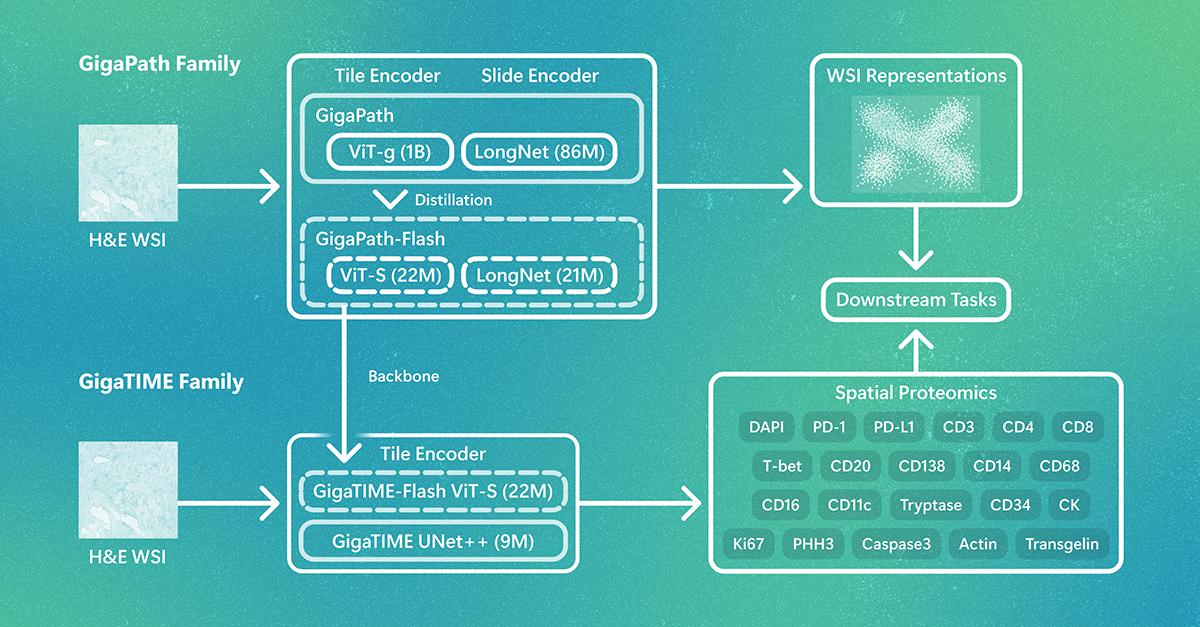
What if pathology foundation models could do more with less? GigaPath-Flash and GigaTIME-Flash cut computational demands while maintaining strong performance, opening the door to larger studies and broader exploration. The post GigaPath-Flash and GigaTIME-Flash: Toward population-scale discovery with efficient pathology foundation models appeared first on Microsoft Research.
We use cookies to run the site and, with your consent, for analytics and to show ads.
See our Cookie Policy.