The need for agile methods in the focal domain is presented, their shortcomings are identified on the basis of three large-scale case studies from industry and all of the cases deal with the development of mobile information system.
P. Abrahamsson· International Conference on...· 28 citations· ⚡1
The results show that the effect of TDD on program design was not as evident as expected, but the test coverage was significantly superior to iterative test-last development.
Maria Siniaalto, P. Abrahamsson· International Symposium on E...· 55 citations· ⚡5
The Profes conference series was established in 1999 to provide a venue for industry and academia to present and discuss the shift from model-based improvement to a product-oriented perspective in the field of software engineering and software process improvement, which includes a context-oriented understanding of the...
P. Abrahamsson, Jürgen Münch, P. Kuvaja· Software Process: Improvemen...· 4 citations
Results indicate that refactoring not only increases aspects of software quality, but also improves productivity and is applicable to small teams working in similar, highly volatile domains.
Raimund Moser, P. Abrahamsson, W. Pedrycz et al.· Central and East European Co...· 162 citations· ⚡9
Reach audiences
Advertise in front of researchers, engineers, and readers.
Log messages are proposed to be used to predict failures running devices that read log files of running application and warns about the likely failure of the system; the prediction is based on the Cox Proportional Hazards (PH) model that has been applied successfully in various fields of research.
P. Abrahamsson, I. Fronza, Jelena Vlasenko· International Conference on...· 1 citation
A comprehensive taxonomy of the challenges faced when a medium-scale organization decided to adopt software platforms is provided, namely: business challenges, organizational challenges, technical challenges, and people challenges.
Yaser Ghanam, F. Maurer, P. Abrahamsson· Information and Software Tec...· 41 citations· ⚡3
Three preliminary findings are obtained: walking can lead to an effective idea generation session; brainstorming while walking can encourage team members to participate in and contribute to the session in an equal manner; and it can help a team to maintain sustainable mental energy.
Xiaofeng Wang, D. Graziotin, Juha Rikkilä et al.· arXiv.org· 1 citation
SEMAT Accelerator (SematAcc) is a Web-positioning tool for a software engineering endeavor, which implements the SEMAT’s Essence kernel, and permits the use of Essence, thus helping to understand it.
D. Graziotin, P. Abrahamsson· arXiv.org· 33 citations· ⚡2
This paper provides a comprehensive review on the building blocks of cloud computing and relevant technological aspects including architecture, virtualization, data management, and security issues.
Feature Usage Explorer can be reused in any HTML5 based applications where an understanding of how users interact with the system is required (i.e. user experience and usability studies, human computer interaction field, or requirement prioritization area).
Sarunas Marciuska, P. Abrahamsson· Journal of Open Research Sof...· 0 citations
An empirical study on the impact of affective states on software developers’ performance while programming and the value of applying psychometrics in Software Engineering studies is demonstrated and a call to valorize the human, individualized aspects of software developers is echoed.
D. Graziotin, Xiaofeng Wang, P. Abrahamsson· International Conference on...· 55 citations· ⚡4
Jennifer Neville did not want to go into computer science—but that’s exactly where she landed. Neville discusses the starts and stops that led to her professional sweet spot and her work identifying “surprising failures” making it hard for AI to handle complexity. The post What AI gets wrong and what failure teaches us appeared first on Microsoft Research.
MIT News · Artificial Intelligence· news.mit.eduOct 2, 2026
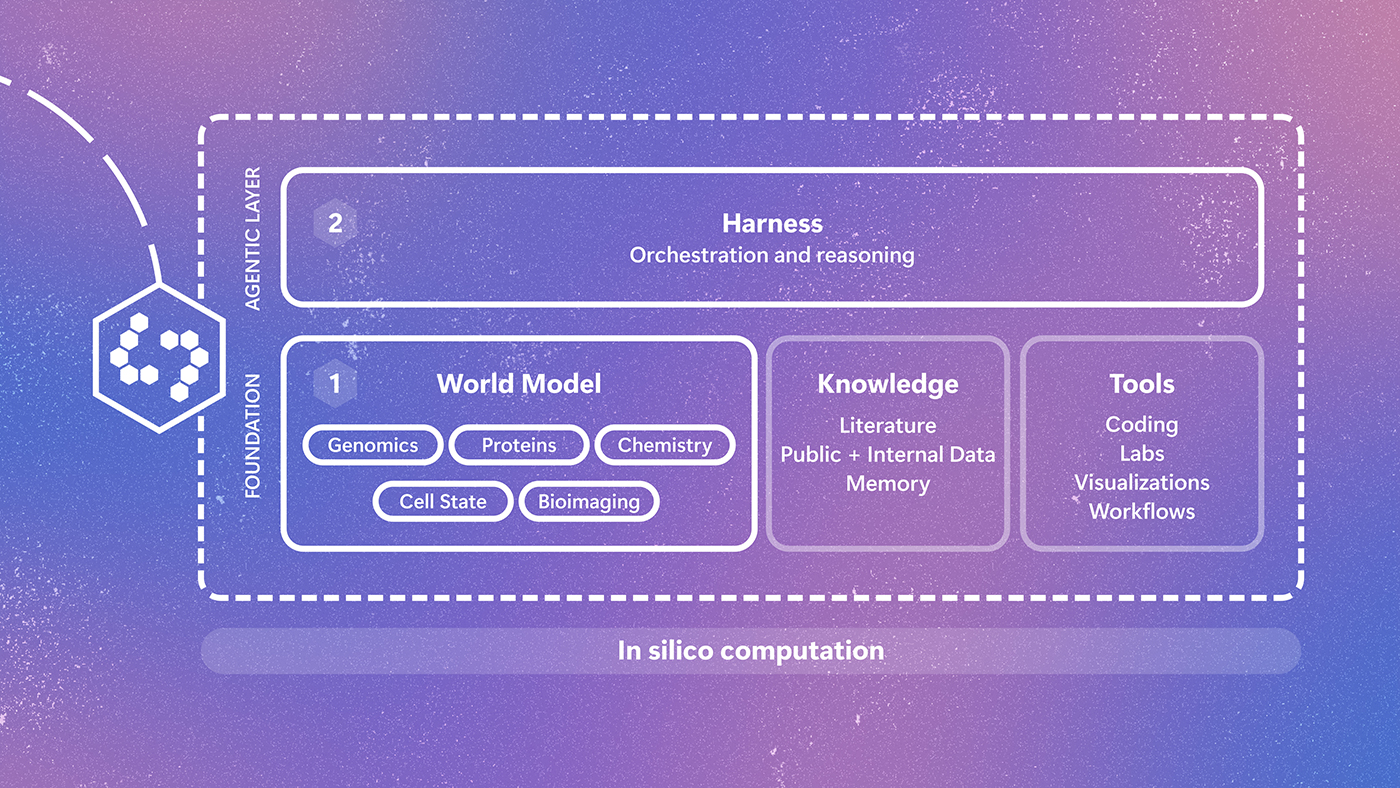
Biology doesn't operate in silos, and neither should the AI representation of it. Quine is an early-stage research effort to create a multimodal world model of biology. By connecting insights across biological scales and modalities, Quine helps scientists computationally search a space far larger than intuition allows and prioritize hypotheses before they reach the lab. Experimental results provide important feedback, helping researchers sharpen future research directions. The post Introducing Q…