An approach and an associated tool to automate feature identification for web applications are presented and it is indicated that there is a good potential for automating feature identification in web applications.
Sarunas Marciuska, Çigdem Gencel, P. Abrahamsson· International Conference on...· 11 citations
It is claimed that consumers' technology foresight horizon is limited by the existing technological base and the idea database should be an interesting source of ideas for service developers.
Petteri Alahuhta, P. Abrahamsson, Antti Nummiaho· International Conference on...· 2 citations· ⚡1
The ongoing work building a Raspberry Pi cluster consisting of 300 nodes is presented, with potential use cases being an inexpensive and green test bed for cloud computing research and a robust and mobile data center for operating in adverse environments.
P. Abrahamsson, S. Helmer, Nattakarn Phaphoom et al.· IEEE International Conferenc...· 110 citations· ⚡7
This paper proposes a research design towards a comparative analysis framework of JSF, which merges researcher needs and practitioner needs and is a call for action to the critical needs.
D. Graziotin, P. Abrahamsson· International Conference on...· 20 citations· ⚡1
Reach audiences
Advertise in front of researchers, engineers, and readers.
It is shown that high article processing charges are not sufficiently justified by the publishers, which often lack transparency and may prevent authors from adopting OA.
D. Graziotin, Xiaofeng Wang, P. Abrahamsson· Scientometrics· 21 citations· ⚡1
This state-of-practice investigation was performed using a literature review followed by a multiple-case study approach and presents how inconsistency between managerial strategies and execution can lead to failure by means of a behavioral framework.
Carmine Giardino, Xiaofeng Wang, P. Abrahamsson· International Conference on...· 175 citations· ⚡19
A study with 42 participants investigates the relationship between the affective states, creativity, and analytical problem-solving skills of software developers and offers support for the claim that happy developers are indeed better problem solvers in terms of their analytical abilities.
D. Graziotin, Xiaofeng Wang, P. Abrahamsson· PeerJ· 216 citations· ⚡13
The results indicate that software engineering work practices are chosen opportunistically, adapted and configured to provide value under the constrains imposed by the startup context.
Nicolò Paternoster, Carmine Giardino, M. Unterkalmsteiner et al.· Information and Software Tec...· 394 citations· ⚡54
The results of this study show that the Ball ecosystem has the potential to improve the productivity of software development, however, it should produce smaller and more reasonable software systems, leading to a better reusability and a shorter learning phase for new developers.
Michael Gurschler, Henry Edison, Kalle Launiala et al.· 1 citation
This research examines whether and how open source communities can leverage microblogging to improve the quality of their software and increase the likelihood of adoption.
Jennifer Neville did not want to go into computer science—but that’s exactly where she landed. Neville discusses the starts and stops that led to her professional sweet spot and her work identifying “surprising failures” making it hard for AI to handle complexity. The post What AI gets wrong and what failure teaches us appeared first on Microsoft Research.
MIT News · Artificial Intelligence· news.mit.eduOct 2, 2026
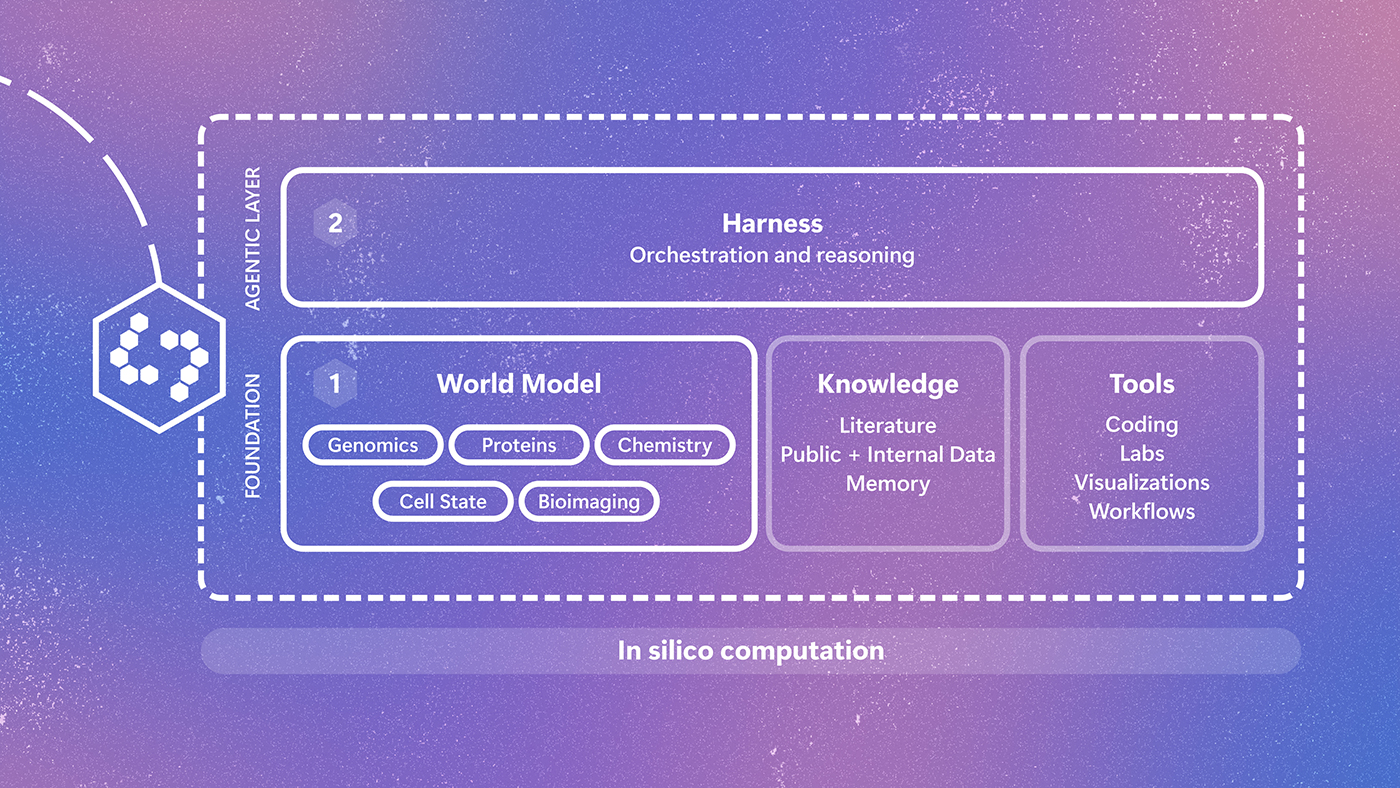
Biology doesn't operate in silos, and neither should the AI representation of it. Quine is an early-stage research effort to create a multimodal world model of biology. By connecting insights across biological scales and modalities, Quine helps scientists computationally search a space far larger than intuition allows and prioritize hypotheses before they reach the lab. Experimental results provide important feedback, helping researchers sharpen future research directions. The post Introducing Q…