SEMAT Accelerator (SematAcc) is a Web-positioning tool for a software engineering endeavor, which implements the SEMAT’s Essence kernel, and permits the use of Essence, thus helping to understand it.
Abstract
As opposed to more mature subjects, software engineering lacks general theories that establish its foundations as a discipline. The Essence Theory of software engineering (Essence) has been proposed by the Software Engineering Methods and Theory (SEMAT) initiative. The goal of Essence is to develop a theoretically sound basis for software engineering practice and its wide adoption. However, Essence is far from reaching academic- and industry-wide adoption. The reasons for this include a struggle to foresee its utilization potential and a lack of tools for implementation. SEMAT Accelerator (SematAcc) is a Web-positioning tool for a software engineering endeavor, which implements the SEMAT’s Essence kernel. SematAcc permits the use of Essence, thus helping to understand it. The tool enables the teaching, adoption, and research of Essence in controlled experiments and case studies.

It is found that Llama 3 delivers comparable quality to leading language models such as GPT-4 on a plethora of tasks, and performs competitively with the state-of-the-art on image, video, and speech recognition tasks.
This paper investigates developing real-world perception for active agents, proposes Gibson Environment for this purpose, and showcases a set of perceptual tasks learned therein.
F. Xia, Amir Zamir, Zhi-Yang He et al.· 2018 IEEE/CVF Conference on...· 1,069 citations· ⚡112
This publication proposes a definition and a classification of agile software development approaches and analyses ten software development methods that can be characterized as being "agile" against the defined criterion.
P. Abrahamsson, O. Salo, Jussi Ronkainen et al.· arXiv.org· 727 citations· ⚡54
Supporting data, adapters, predictions and code for the article *Low-Cost LoRA Fine-Tuning of Small Language Models for Multi-Step Arithmetic Reasoning* by Jake O'Grady, Asena Isik Gürhan, Chee Fong Ting and Effirul Ramlan (University of Galway). We generated 20,000 GSM8K-derived arithmetic problems with step-by-step s...
O'Grady, Jake, Gürhan, Asena Isik, Chee, Fong Ting et al.· Zenodo (CERN European Organi...· 465 citations
The study shows that agile practices improve both informal and formal communication, but indicates that, in larger development situations involving multiple external stakeholders, a mismatch of adequate communication mechanisms can sometimes even hinder the communication.
M. Pikkarainen, Jukka Haikara, O. Salo et al.· Empirical Software Engineeri...· 401 citations· ⚡48
Related blog posts
MIT News · Artificial Intelligence· news.mit.eduNov 20, 2026
Senior Research Scientist Jim Glass discusses how his MIT-IBM Computing Research Lab collaboration connects perception and language, and addresses the shortcoming of current models.
MIT News · Artificial Intelligence· news.mit.eduNov 12, 2026
MIT scientists developed a training method to generate models that simulate the effects of human activities on climate much more quickly than other approaches.
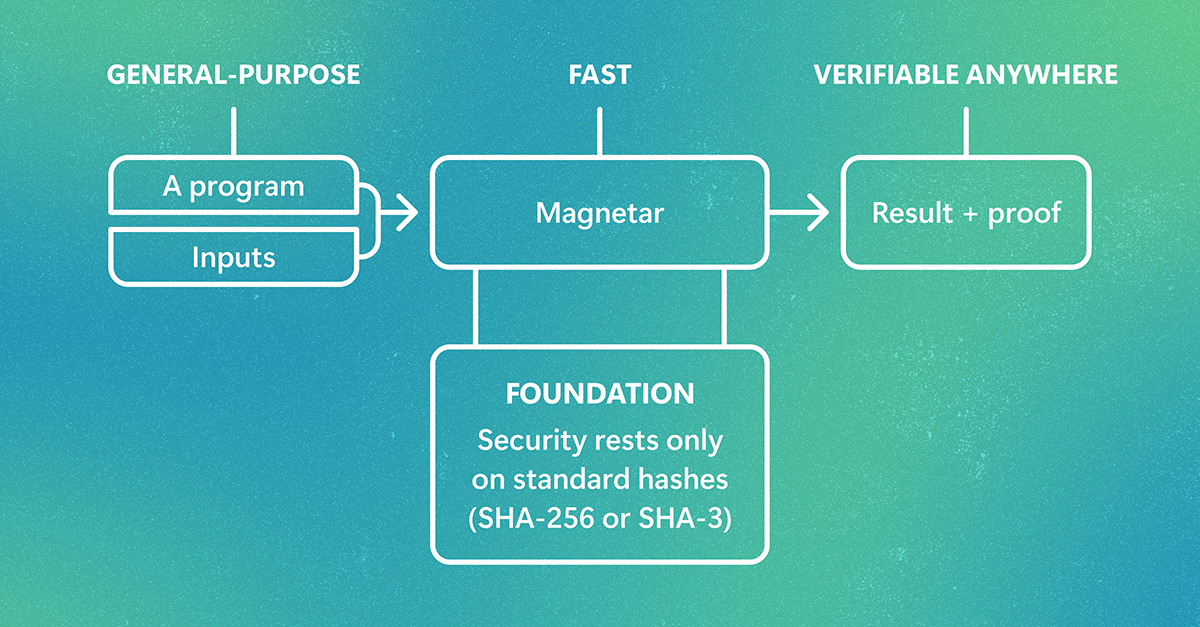
Zero-knowledge proofs can verify computing results without rerunning workloads or exposing sensitive data. Magnetar helps bring them into the mainstream with support for standard programming languages, major speed gains, and quantum-resistant security. The post Proof-based general-purpose computing with Magnetar appeared first on Microsoft Research.
We use cookies to run the site and, with your consent, for analytics and to show ads.
See our Cookie Policy.