Skip to content
#machine learning #quantum computing Preprint Open access

Inductive Graph Representation Learning with Quantum Graph Neural Networks

Arthur M. Faria Ignacio F. Gra\~na Savvas Varsamopoulos
Sep 2026
Machine Learning Quantum Computing

Abstract

Graph Neural Networks (QGNNs) offer a promising approach to combining quantum computing with graph-structured data processing. While classical Graph Neural Networks (GNNs) are scalable and robust, existing QGNNs often lack flexibility due to graph-specific quantum circuit designs, limiting their applicability to diverse real-world problems. To address this, we propose a versatile QGNN framework inspired by GraphSAGE, using quantum models as aggregators to generate quantum-native node embeddings. We integrate inductive representation learning techniques with parameterized quantum convolutional and pooling layers, bridging classical and quantum paradigms. The convolutional layer is flexible, allowing tailored designs for specific tasks. Benchmarked on a node regression task with the QM9 dataset, our framework, using a single minimal circuit for all aggregation steps, handles molecules with varying numbers of atoms without changing qubits or circuit architecture. While classical GNNs achieve higher training performance, our quantum approach remains competitive and often shows enhanced generalization as molecular complexity increases. We also observe faster learning in early training epochs. To mitigate trainability limitations of a single-circuit setup, we extend the framework with multiple quantum aggregators on QM9. Assigning distinct circuits to each hop substantially improves training performance across all cases. Additionally, we numerically demonstrate the absence of barren plateaus as qubit numbers increase, suggesting that the proposed model remains trainable to larger, more complex graph-based problems.

View source

Similar papers

#computer vision Review Sep 2017

Agile Software Development Methods: Review and Analysis

This publication proposes a definition and a classification of agile software development approaches and analyses ten software development methods that can be characterized as being "agile" against the defined criterion.

P. Abrahamsson, O. Salo, Jussi Ronkainen et al. · 727 citations · ⚡54
#computer vision Jun 2008

The impact of agile practices on communication in software development

The study shows that agile practices improve both informal and formal communication, but indicates that, in larger development situations involving multiple external stakeholders, a mismatch of adequate communication mechanisms can sometimes even hinder the communication.

M. Pikkarainen, Jukka Haikara, O. Salo et al. · 401 citations · ⚡48
#machine learning Review Open access Oct 2014

Software development in startup companies: A systematic mapping study

The results indicate that software engineering work practices are chosen opportunistically, adapted and configured to provide value under the constrains imposed by the startup context.

Nicolò Paternoster, Carmine Giardino, M. Unterkalmsteiner et al. · 394 citations · ⚡54

Diffusion models as plug-and-play priors

The possibility of inferring high-dimensional data inference in a model that consists of a prior and an auxiliary differentiable constraint given some additional information is considered, thereby allowing a range of potential applications in adapting models to new domains and tasks.

Alexandros Graikos, Esmeralda S. Whitammer, N. Jojic et al. · 316 citations · ⚡15

Related blog posts

MIT News · Artificial Intelligence Aug 27, 2026

Looking beyond natural sequences

A new machine-learning framework aims to improve the success rate of computational protein design while moving away from results that reproduce sequences found in nature.

Microsoft Research Blog Aug 20, 2026

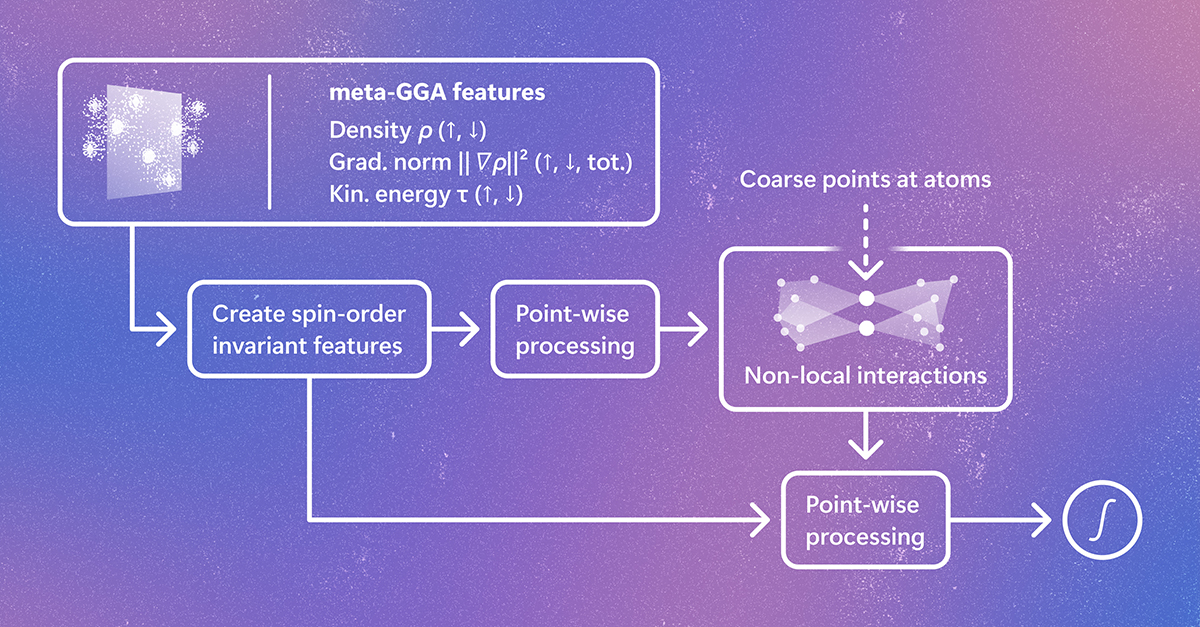
Broadening access to Skala creates a faster path to predictive DFT 

Skala 1.1, the updated deep-learning exchange-correlation functional from Microsoft Research, provides greater accuracy, expanded accessibility across the computational chemistry ecosystem, and a living benchmark to track computational performance. The post Broadening access to Skala creates a faster path to predictive DFT  appeared first on Microsoft Research.

We use cookies to run the site and, with your consent, for analytics and to show ads. See our Cookie Policy.