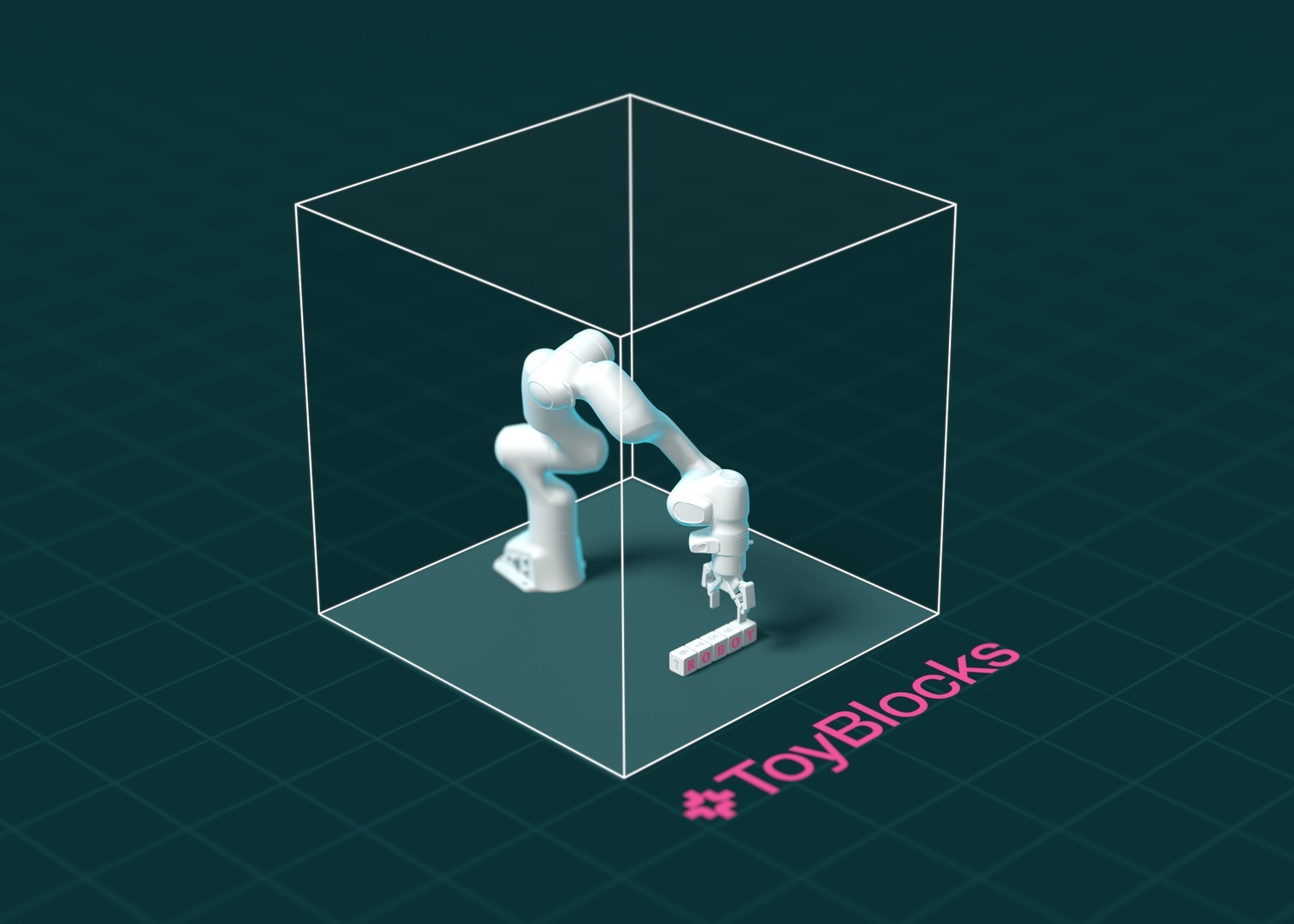
Security evaluation of learning-based systems requires more than just testing the system against a fixed collection of attacks. It requires adaptive mechanisms that can efficiently discover \textit{sets} of inputs that induce model failure. We introduce ATLAS (Adaptive Trust-Regions for Latent Adversarial Searches), wh...
Marsalis T. Gibson, Claire J. Tomlin, S. Sastry· 0 citations
Model optimizations help improve inference performance and accuracy of ML workflows. However, relying on a single model to perform inference across all data batches often fails to maximize accuracy and thus overall performance. In many cases, alternate models could perform better on specific subsets of data where a pri...
Analog hardware platforms offer the potential to reduce energy consumption over digital architectures, but in order to succeed, large-scale analog systems must also be able to operate with or recover from the variability of their components. Towards this goal, we derive and demonstrate the lock-in equilibrium propagati...
Linkage algorithms for hierarchical clustering (HC) are a powerful and efficient framework for constructing clustering trees, yet it is often unclear which merge rule best suits a given dataset or task. In contrast, neural approaches can learn from data, but often fail to retain the efficiency and size generalization o...
Robert R. Nerem, P. Singh, Cheyenne Ward et al.· 0 citations
Reach audiences
Advertise in front of researchers, engineers, and readers.
Neural algorithmic reasoning, or aligning a neural network with an algorithmic paradigm, has emerged as an approach to solving polynomial-time-solvable and computationally harder combinatorial optimization problems. We propose a new message-passing framework based on the Chambolle-Pock Primal--Dual Hybrid Gradient (PDH...
Samantha Chen, Jesse He, Coleman Clougherty et al.· 0 citations
Neural fields are usually evaluated by how well they reconstruct an observation. We show that this misses two useful properties of a fitted network: how easily it can adapt to new observations, and what its weights retain from earlier ones. We study these properties as adaptation geometry. For images, we meta-learn cla...
Large language models have shown strong reasoning capabilities, but their high inference costs make knowledge distillation an important approach for transferring such capabilities to compact models in resource-constrained scenarios. On-policy self-distillation further reduces the reliance on external large teacher mode...
Accurate short-term load forecasting (STLF) is essential for the reliable and efficient operation of modern power systems. While time series foundation models (TSFMs) have recently demonstrated remarkable performance across a wide range of forecasting tasks, their effectiveness for STLF under realistic operational cond...
A flow matching based algorithm is formulated which learns a transport map from the source to target trajectory distribution, while preserving the Markov structure, which is consistent in the population limit and derive finite-sample error bounds under mixing time assumptions.
Syamantak Kumar, D. Nagaraj, Saptarshi Roy et al.· 0 citations
``What are the irreducible conditions that are sufficient to produce an outcome?'' is one of the most common questions that recur across computation and science. Its answers, the minimal sufficient witnesses, are what we mean by explanations, mechanisms and reasons. These problems usually ask for multiple minimal witne...
T. Y. Tsui, Zihao Ye, Pengxiang Cai et al.· 0 citations
We present three practical tutorials on numerical computation and machine learning for mathematical research, developed for the DANGER: Data, Numbers, and Geometry workshop held at the Banff International Research Station in April 2026. The first develops a numerical approach to exterior calculus from pointwise evaluat...
Jessica N. Howard, Yidi Qi, Tom\'as S. R. Silva· 0 citations
Recent advances in representation learning have highlighted the utility of constant-curvature models, such as hyperbolic and spherical spaces, for modeling complex data. Mixed-curvature models further enhance this by integrating multiple constant-curvature components. However, these models typically learn each componen...
Shang-Lin Li, Wen-Jing Lu, Mu-Yang Li et al.· 0 citations
Research Manager Mike Walker reflects on a career spanning hacker culture, cybersecurity, and AI, sharing lessons about trust, teamwork, leadership, and why solving difficult problems requires curiosity, judgment, agility—and an understanding of the rules. The post Learn the rules: The hacker mindset appeared first on Microsoft Research.
Learn how Google Antigravity and our Cheminformatics Skills accelerate drug discovery workflows, search compounds, and propose novel rigidified macrocycles.
MIT News · Artificial Intelligence· news.mit.eduOct 28, 2026
Professor Paris Smaragdis develops computers with superhuman hearing for applications like speech recognition, music understanding, and environmental monitoring.
MIT News · Artificial Intelligence· news.mit.eduOct 27, 2026
Prabha Jha used her experience with MIT Open Learning’s program for senior executives to develop AI solutions for her employer, Verizon, and to write a book.