Combinatorial Thompson sampling (CTS) draws independent posterior samples for every arm, so its exploration dynamics ignore any relation among arms. We study a minimal change to those dynamics: an LLM is queried once for a partition of the arms, the partition becomes a positive-definite correlation matrix $\Sigma$ thro...
Multimodal systems often encode every available input, even when a subset suffices for prediction. Adaptive acquisition can reduce this cost by using predictions from incrementally fused evidence to decide which modality to encode next and when to stop. However, sequential fusion makes these predictions order-dependent...
Payal Mohapatra, Haodong Yang, Yueyuan Sui et al.· 0 citations
Hypergraphs offer a natural framework for modeling networked data, where dependencies among entities are governed by higher-order interactions. While hypergraph learning methods such as hypergraph neural networks have demonstrated remarkable predictive performance, most existing approaches rely on black-box message-pas...
Shi-Han Feng, Xin Zheng, Shi-Yi Yang et al.· 0 citations
Fine-grained mixed-precision quantization promises efficient large language model inference, but local precision choices can conflict with regular GPU storage and computation units. This precision-boundary mismatch limits the translation of compression into practical acceleration. We introduce AlignQuant, a post-traini...
Han-Zhi Zhang, Qiao Zhang, Qing-Lei Cao et al.· 0 citations
Reach audiences
Advertise in front of researchers, engineers, and readers.
Accurate forecasting of pathological outcomes is a central problem in psychology. To do so, psychologists often collect intensive longitudinal data. However, in such studies, the desire to acquire a large number of variables for the sake of accurate prediction is often counteracted by the need to minimize participant b...
Yunni Qu, Bing-Cai Kok, Whitney R. Ringwald et al.· 0 citations
Autoresearch agents tackle open-ended problems by repeatedly proposing candidate solutions, evaluating them, and using feedback to guide subsequent experiments. We show that independent runs of the same agent on the same task often plateau at substantially different scores, with gaps that persist even after considerabl...
Ziyang Cai, Christos Ziakas, Vasilis Kontonis et al.· 0 citations
A GUI agent decides which action to take and where to take it; we ask how a small grounding model should receive the action type. Fine-tuning Qwen2-VL-2B with LoRA on Android in the Wild, we compare a flat baseline with five ways of supplying the type under matched data, compute, and decoding: an auxiliary loss, a hard...
Reducing nonstationarity in a persistent time series entails deciding how much of its temporal dependence to remove. In finance, fractional differencing is often tuned using the Augmented Dickey--Fuller (ADF) test, limiting the search to a one-parameter family of lag profiles and addressing input preservation only indi...
Electroencephalography (EEG) signals drift over time, which can cause static brain-computer interface (BCI) models to degrade in practice. We present a benchmark for online adaptation and compare two widely used pipeline families, Common Spatial Patterns (CSP) and Riemannian covariance-based methods, under time-ordered...
B. Kozyrskiy, Artem M. Grachev, Abraham Camelo-Guerrero· 0 citations
Implicit neural representations (INRs) are shaped by the spectral structure induced by their input encodings and activation functions. Existing methods improve fitting primarily by modifying which frequencies are available to the network, through coordinate encodings or periodic nonlinearities. However, frequency acces...
Tamir Shor, O. Litany, Alex M. Bronstein· 0 citations
Active feature acquisition learns policies that sequentially acquire features to maximize information about a target variable. We study how to learn and evaluate such policies from finite offline data using prior-data fitted networks (PFNs), which are off-the-shelf models that output posterior predictive distributions...
Y. Kobayashi, Divyam Madaan, Shalmali Joshi· 0 citations
pass@$k$, the fraction of problems a model solves within $k$ sampled attempts, is the field's default protocol for deciding whether reinforcement-learning (RL) post-training on verifiable rewards improved a model. At the population level, pass@$k$ depends only on a problem's probability of a correct sample, with no ter...
Subham Rath, R. Dandekar, R. Dandekar et al.· 0 citations
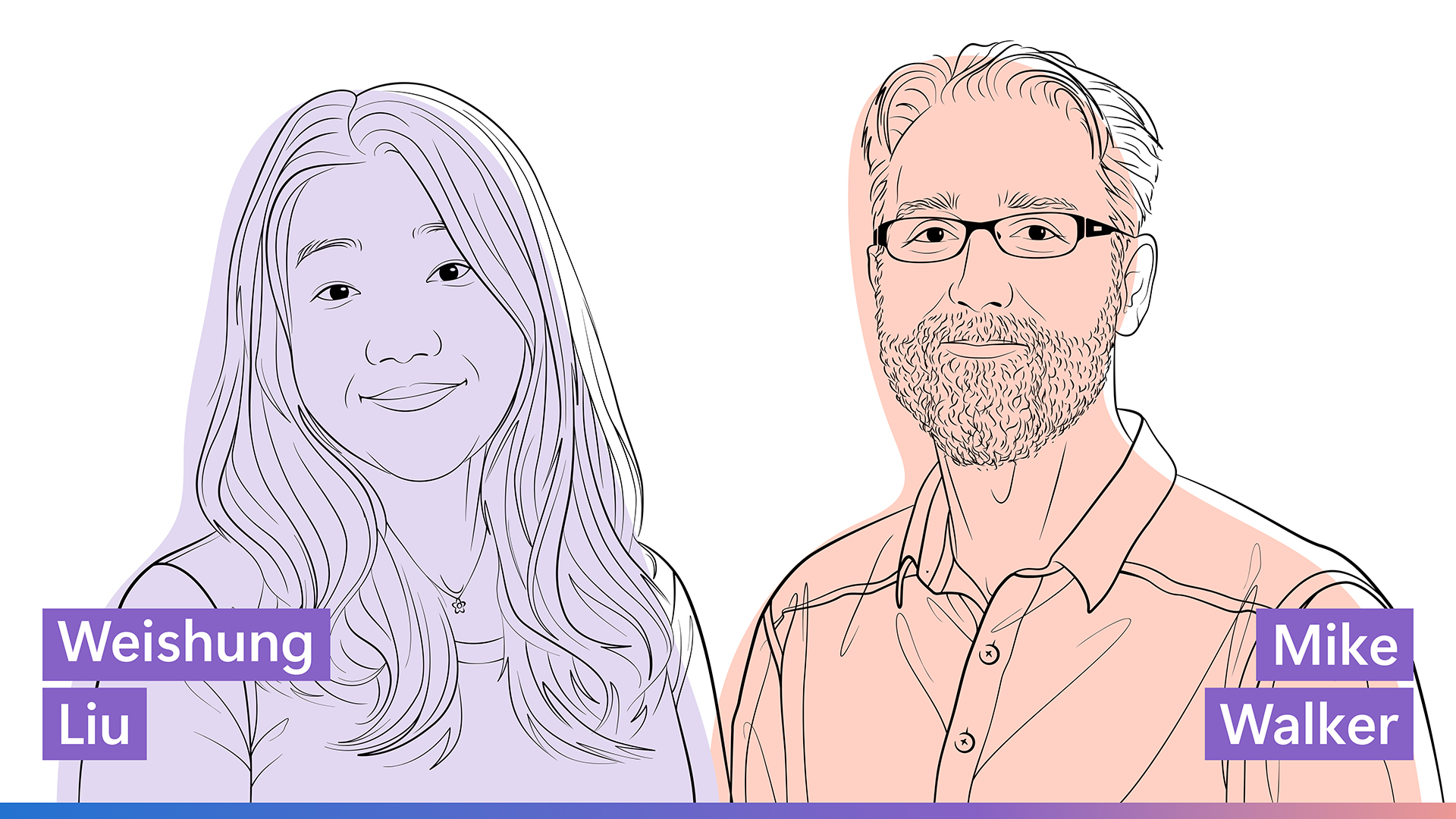
Research Manager Mike Walker reflects on a career spanning hacker culture, cybersecurity, and AI, sharing lessons about trust, teamwork, leadership, and why solving difficult problems requires curiosity, judgment, agility—and an understanding of the rules. The post Learn the rules: The hacker mindset appeared first on Microsoft Research.
Learn how Google Antigravity and our Cheminformatics Skills accelerate drug discovery workflows, search compounds, and propose novel rigidified macrocycles.
MIT News · Artificial Intelligence· news.mit.eduOct 28, 2026
Professor Paris Smaragdis develops computers with superhuman hearing for applications like speech recognition, music understanding, and environmental monitoring.
MIT News · Artificial Intelligence· news.mit.eduOct 27, 2026
Prabha Jha used her experience with MIT Open Learning’s program for senior executives to develop AI solutions for her employer, Verizon, and to write a book.