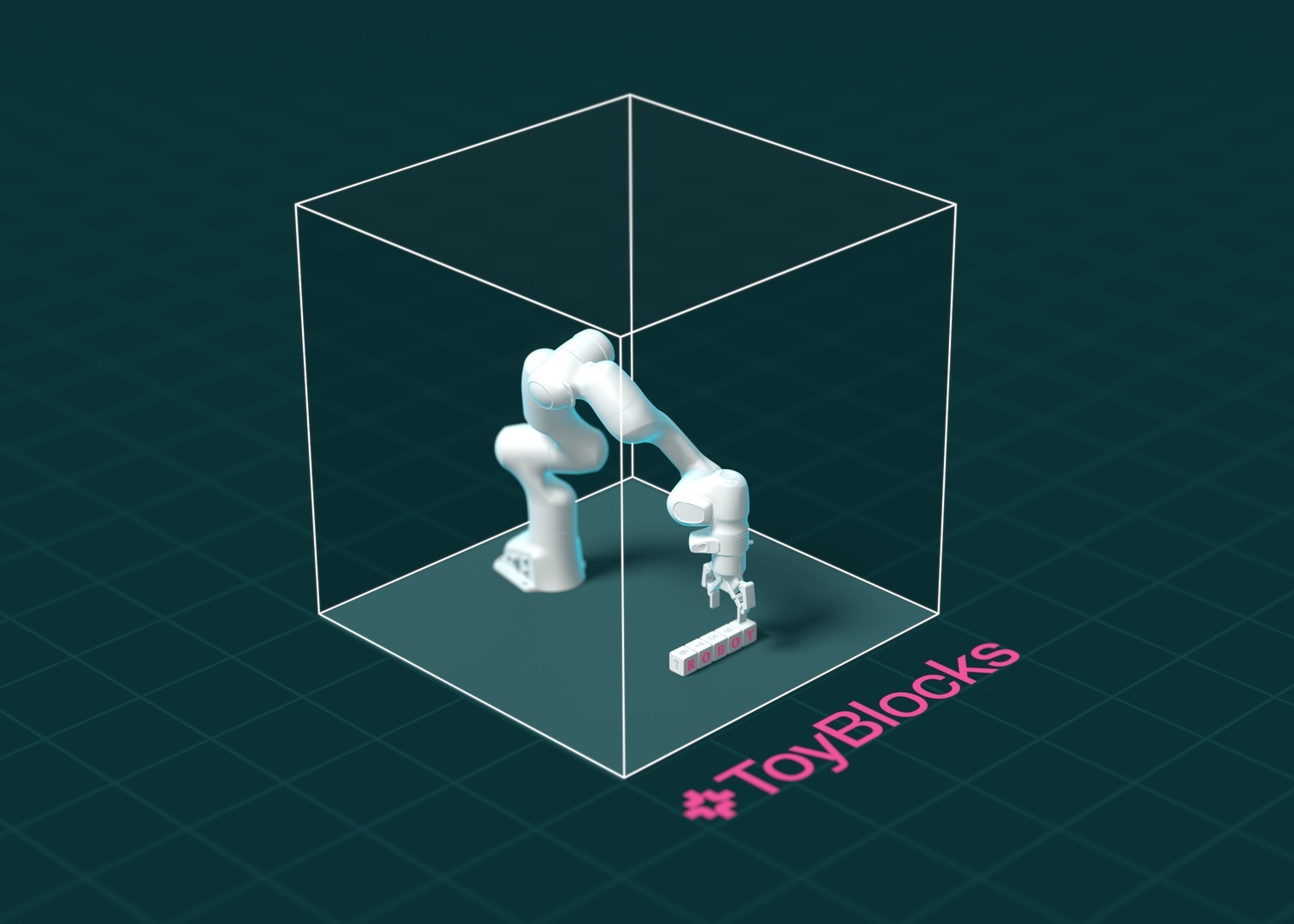
In this paper, we show that standard evaluations of high-resolution Model Inversion Attacks (MIAs) significantly underestimate training-data privacy leakage. State-of-the-art privacy defenses, standard training techniques such as MixUp and Adversarial Training, and undefended models all leak training images at rates 1....
Shailen Smith, Rasmus Torp, Adam Breuer· 0 citations
Research on transformer expressivity shows whether a transformer is capable of solving a given task, but gives little indication of whether the solution, if learned, is generalizable to longer input lengths. We study this question through normalized exact-solution volume (NESV): the fraction of a bounded parameter regi...
Electrocardiography (ECG) records the electrical activity of the heart, aiding diagnosis by detecting abnormalities in cardiac function. ECG foundation models have demonstrated promising results, but are limited by a reliance on ECG interpretation reports as their sole supervision. Because interpretation reports only c...
Robert A. Lewis, I-Min Chiu, Kyle Verrier et al.· 0 citations
On-policy distillation (OPD) has attracted growing attention as an effective way to transfer capabilities from teacher models to student models. Recent studies further explore OPD as a tool for improving large language model safety with promising results. However, these approaches typically assume that the teacher and...
Jian Luo, Ke-Han Qi, Qing-Qiao Hu et al.· 0 citations
Reach audiences
Advertise in front of researchers, engineers, and readers.
Out-of-distribution (OOD) generalization remains challenging for graph neural networks (GNNs), as graph distributions can vary substantially across time and domains. Supervised and self-supervised graph representation learning are guided by distinct objectives and offer different perspectives on graph representations....
Qing-Ying Hao, Zi-Kang Chen, Chu-Xuan Hu et al.· 0 citations
This work introduces Stateless Language Agents (SLAs), built on the principle of stateful search with stateless agents, and evaluates SLA against three recent frameworks on software engineering, kernel optimization, and algorithm design at budgets of up to one billion tokens.
Qizheng Zhang, Chang Ji, Isaac Sun et al.· 1 citation
Active Feature Acquisition (AFA) is a classification problem in which an agent decides which costly features to acquire before predicting each sample's label. Unlike batch AFA, which trains a fixed policy and classifier offline on fully observed data, online AFA updates its predictor from revealed labels as samples arr...
AbdAlRahman Odeh, Teng-Hui Huang, Hesham El Gamal· 0 citations
Semi-supervised learning typically assumes that labeled and unlabeled data share an identical class distribution and label space. However, this setting is often violated: unlabeled data may be imbalanced and contain unknown class samples, causing mismatches in both class distribution and label space. Such dual mismatch...
Li Yuan, Yaxin Hou, Jiawei Tang et al.· 0 citations
While AI weather models now rival operational forecasts, how they represent the atmosphere internally remains an open question: feature attribution reveals which input patterns matter, not what the model computes or how it combines information internally. We train sparse autoencoders (SAEs) on GraphCast to uncover its...
Madelyn Mathai, Timothy B. Higgins, Kevin M. Grise et al.· 0 citations
Complementary Feature Domains (CFD) theory characterizes predictive value as a context-indexed contribution system induced jointly by representations and their realization family. We show that Shannon-information preservation does not imply preservation of this contribution system: an invertible representation transfor...
Learning an ensemble of GFlowNets to sample from a discrete target distribution has become a common approach for achieving better state space exploration and convergence than that of a monolithic sampler. However, these methods often add a substantial runtime overhead to the base model, and their conceptual connection...
Recent progress in tabular foundation models suggests that training on synthetic tasks can substantially improve in-context learning capabilities, with overall performance largely depending on how well models can infer task-specific predictive relationships from the available context during inference. In this paper, we...
Zi-Jian Li, Xiang-Chen Song, Gong-Xu Luo et al.· 0 citations
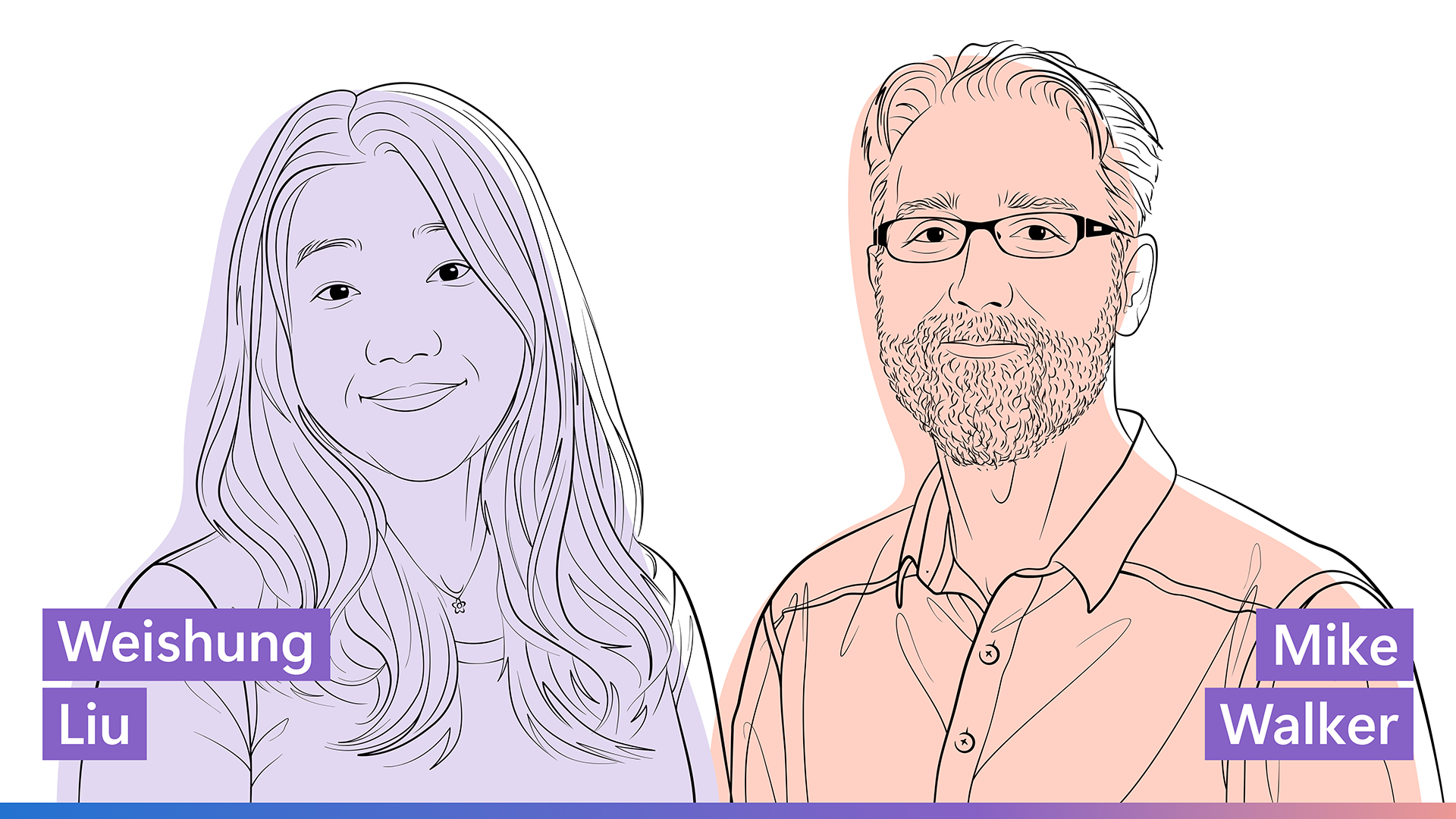
Research Manager Mike Walker reflects on a career spanning hacker culture, cybersecurity, and AI, sharing lessons about trust, teamwork, leadership, and why solving difficult problems requires curiosity, judgment, agility—and an understanding of the rules. The post Learn the rules: The hacker mindset appeared first on Microsoft Research.
Learn how Google Antigravity and our Cheminformatics Skills accelerate drug discovery workflows, search compounds, and propose novel rigidified macrocycles.
MIT News · Artificial Intelligence· news.mit.eduOct 28, 2026
Professor Paris Smaragdis develops computers with superhuman hearing for applications like speech recognition, music understanding, and environmental monitoring.
MIT News · Artificial Intelligence· news.mit.eduOct 27, 2026
Prabha Jha used her experience with MIT Open Learning’s program for senior executives to develop AI solutions for her employer, Verizon, and to write a book.