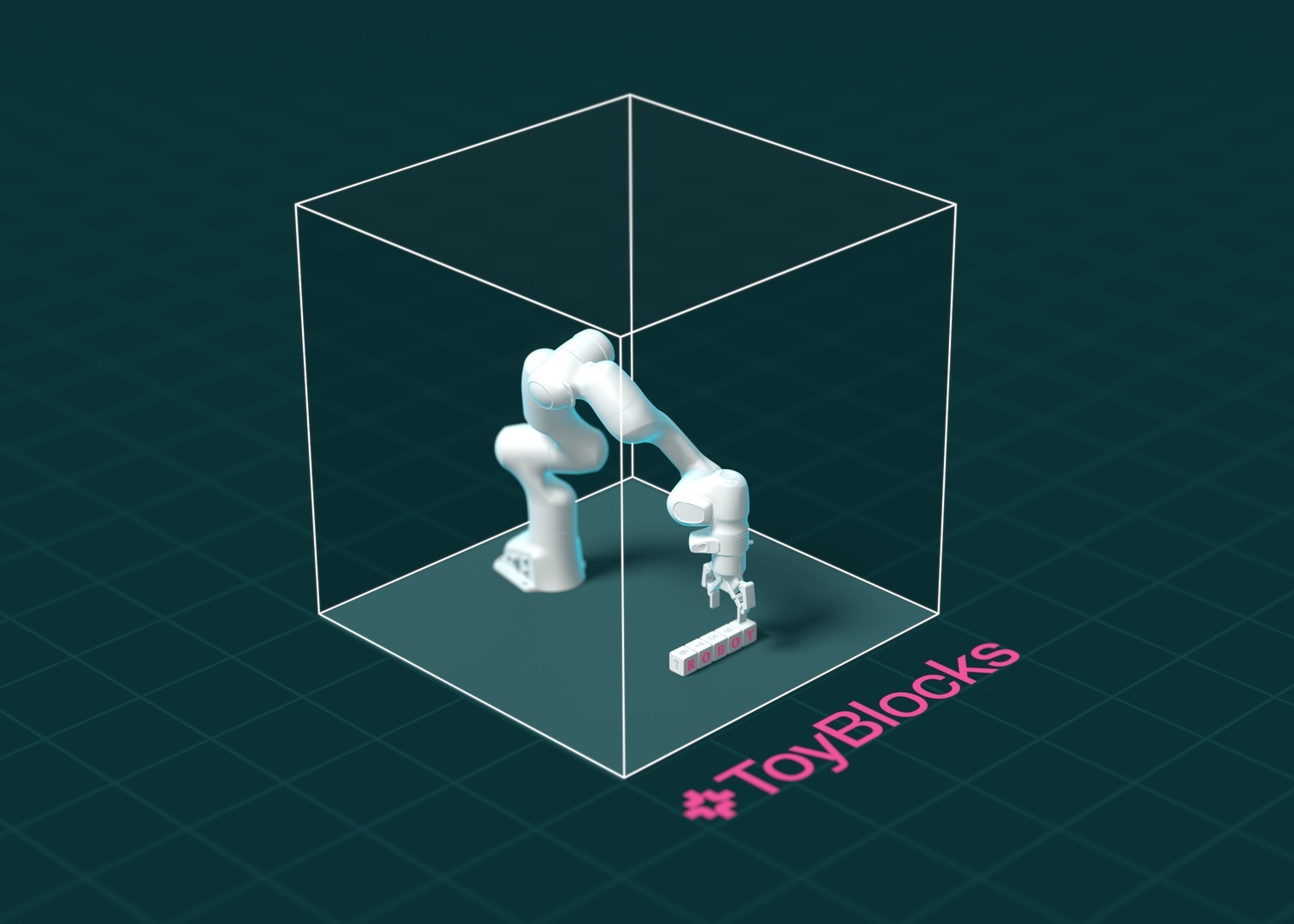
Large Language Models (LLMs) require substantial computational resources, limiting their deployment on resource-constrained hardware. Ternary LLMs mitigate these demands through weight quantization via ternary values, achieving significant compression often with 50-90% sparsity. However, existing approaches have limita...
Adeline Pittet, Shien Zhu, Val\'erie Verdan et al.· 0 citations
Multi-turn LLM agents often receive sparse task feedback across several interactions, while generating each response token by token. This creates two related credit-assignment questions: which responses helped achieve the outcome, and which generation decisions mattered within each response? Existing methods typically...
Jiaju Chen, Min Yang, Jinghua Piao et al.· 0 citations
Atom-JEPA is introduced, a self-supervised pretraining framework that learns latent representations from unlabeled 3D structures through complementary atom-level and substructure-level objectives inspired by joint-embedding predictive architectures that achieves state-of-the-art performance on molecular ADMET and quant...
Kasper Helverskov Petersen, Rasmus Tirsgaard, François Cornet et al.· 1 citation
In this work, we consider decision-focused learning (DFL) for a Markov decision process (MDP), where existing methods differentiate through the KKT conditions of the Bellman equation and require solving a linear system over all state-action pairs, limiting its scalability. We address this by reformulating the MDP as an...
Zi-Hao Zhao, Ashwath K. Karunakaram, A. Eshragh et al.· 0 citations
Reach audiences
Advertise in front of researchers, engineers, and readers.
Developing long-acting injectable formulations requires the simultaneous optimization of drug loading, release kinetics, viscosity, injectability, stability and other objectives. To navigate this multidimensional space, Corbion and Intrepid combined Corbion's diverse PURASORB bioresorbable polymer library with Intrepid...
Pauric Bannigan, Siddarth Chandrasekaran, Brigitte A. G. Lamers et al.· 0 citations
Several discrete design tasks, such as molecular discovery, require diverse collections of useful candidates at low computational cost. High validity alone does not guarantee a useful candidate library: repeatedly generating the same valid structures leaves few distinct alternatives. Training for both feasibility and d...
Marcus Vukojevic, Erik Nielsen, Veronica Lachi et al.· 0 citations
Flow-matching models start from an isotropic Gaussian source, the standard choice when the correlation structure of the data is unknown in advance. For multi-channel brain recordings, however, part of this structure is known in advance. Electrodes sit at fixed positions on the head, and volume conduction through the sk...
While graph neural networks (GNNs) have shown substantial promise in connectome-based diagnostic classification, deterministic models inevitably suppress pipeline-induced noise and model ambiguities, yielding overconfident predictions. Although uncertainty quantification (UQ) is widely adopted in voxel-level segmentati...
Selective forecasting abstains on high-risk test windows under a retained-coverage budget. Existing gates such as TEM (Brusokas et al., 2025) score each forecast as a whole; for multivariate outputs, trajectories can look plausible while violating dependencies among variables. We treat instance-level plausibility and r...
Generative models have the potential to accelerate inorganic materials discovery by enabling inverse design, but generating experimentally realisable crystals remains challenging. Oxidation states are widely used to assess the compositional validity of crystals and guide inorganic materials discovery. While existing ge...
Dylan John, Kim E. Jelfs, Alex M. Ganose et al.· 0 citations
Understanding the structural relationships among attributes in tabular data is fundamental to machine learning and pattern recognition. While functional dependency (FD) discovery has been extensively studied, scalable discovery of logical dependencies (LDs), particularly as the number of attributes and dependency order...
Chaithra Umesh (Institute of Computer Science, University of Rostock, Germany) et al.· 0 citations
Many social applications of machine learning exhibit performative effects: population behavior changes in response to deployed models. Performative prediction studies this interaction through a distribution map that relates each model to the population distribution it induces. One of the main results in this framework...
Research Manager Mike Walker reflects on a career spanning hacker culture, cybersecurity, and AI, sharing lessons about trust, teamwork, leadership, and why solving difficult problems requires curiosity, judgment, agility—and an understanding of the rules. The post Learn the rules: The hacker mindset appeared first on Microsoft Research.
Learn how Google Antigravity and our Cheminformatics Skills accelerate drug discovery workflows, search compounds, and propose novel rigidified macrocycles.
MIT News · Artificial Intelligence· news.mit.eduOct 28, 2026
Professor Paris Smaragdis develops computers with superhuman hearing for applications like speech recognition, music understanding, and environmental monitoring.
MIT News · Artificial Intelligence· news.mit.eduOct 27, 2026
Prabha Jha used her experience with MIT Open Learning’s program for senior executives to develop AI solutions for her employer, Verizon, and to write a book.