Modern recommendation is shifting from platform-centric personalization toward user-governed personalization, where a personal LLM agent can act on the user's behalf across services. We formalize this emerging paradigm as Personal-Agent Mediated Recommendation: a platform recommender ranks a candidate set using platfor...
Yu Xia, Jiang-Fan Zhang, Jun Xiao et al.· 0 citations
We propose a scalable roto-reflection-group-equivariant vision transformer based on windowed group-convolutional self-attention and a hierarchical feature architecture. We demonstrate that our approach can be scaled to group-equivariant vision transformers (ViTs) with millions of parameters and large datasets with prac...
Sheir A. Zaheer, Jihwan Moon, Chan Y. Park· 0 citations
Cassini synthetic aperture radar (SAR) images reveal the dunes, plains, and lake basins of Titan, providing an instance of representations learned from Earth imagery for planetary terrain classification. Cross-domain Evaluation of Earth-to-Titan Transfer Using SAR (CETUS) compares features from DINOv2, DOFA and CROMA w...
In-context learning (ICL) adapts frozen large multimodal models (LMMs) to new tasks from a few demonstrations (demos), but re-encodes them at every query, where each demo image adds up to hundreds of visual tokens. Demo-free methods remove this cost with a compact task state. However, they add it at locations searched...
Vision-Language-Action (VLA) models have become a major paradigm for Vision-and-Language Navigation (VLN). However, in safety-critical facilities, invisible risks such as radiation or temperature spikes cannot be detected by an RGB camera, and handling each risk is expensive, requiring a new encoder, new data, and mode...
Learning Gaussian mixture models (GMMs) using the Expectation-Maximization (EM) algorithm and its gradient-based variants is a fundamental problem in machine learning. It is known that randomly initialized (gradient) EM fails to learn multi-component GMMs in the exact-parameterized setting, where the number of componen...
Yiran Zhang, Mo Zhou, Weihang Xu et al.· 0 citations
Audio language models must handle dozens of distinct skills, from pitch comparison and speaker counting to musical tempo estimation and emotion recognition. Joint training on all skills at once causes interference: gains on one skill often come at the cost of another. We propose \textbf{SkillFormer}, which decomposes a...
Lee Seung-woo, Bowen Qi, Kim Min-jun et al.· 0 citations
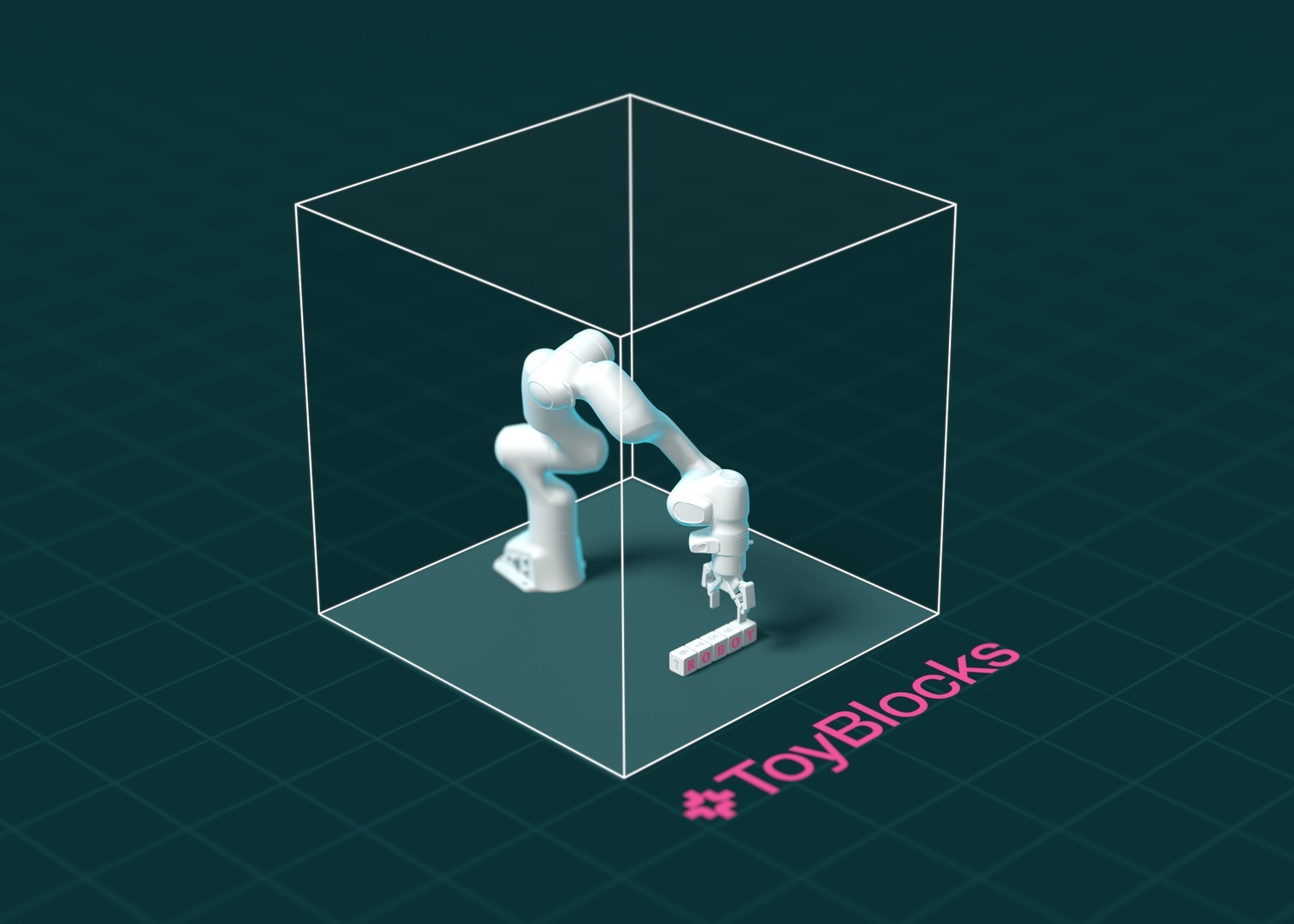
Mobile manipulators such as humanoid robots are increasingly deployed in dynamic, unstructured environments to perform dexterous manipulation tasks. However, end-to-end manipulation policies trained to imitate demonstration data collected from a single robot pose are brittle: even centimeter-scale deviations in robot p...
Suzannah Wistreich, Stephen Tian, Isabella Huang et al.· 0 citations
Two populations of graphs often have to be compared without any correspondence between their vertices, for instance when networks come from different communities, or when a graph generative model is evaluated against held-out graphs. We study how many graphs such an unaligned two-sample test needs, and which graph stat...
Muon combines current and past gradients into matrix momentum. For $M=U\Sigma V^\top$, the idealized polar update $Q=UV^\top$ gives every singular direction the same weight. We refer to this as the flat profile. Several recent optimizers replace this flat profile with fine-grained spectral maps that give each direction...
Meher Chaitanya, Tian-Yi Zhou, A. Gionis· 0 citations
The combination of increasing connectivity to the outside world and the lack of inbuilt security mechanisms has made legacy intra-vehicular networks extremely vulnerable to cyberattacks. Consequently, significant research has been devoted to analysing the impact of potential attacks, yielding datasets crucial for devel...
Shashwat Khandelwal, Shreejith Shanker· ACM Transactions on Embedded...· 0 citations
Artifact removal routinely precedes the classification of electrodermal activity (EDA), on the assumption that a cleaner signal supports a better decision. We tested this assumption in a virtual-reality (VR) balance-disturbance task. A residual gating network was trained on a benchmark with expert-corrected EDA, frozen...
Haochen Chai, Qixu Zhu, Siyao Li et al.· 0 citations
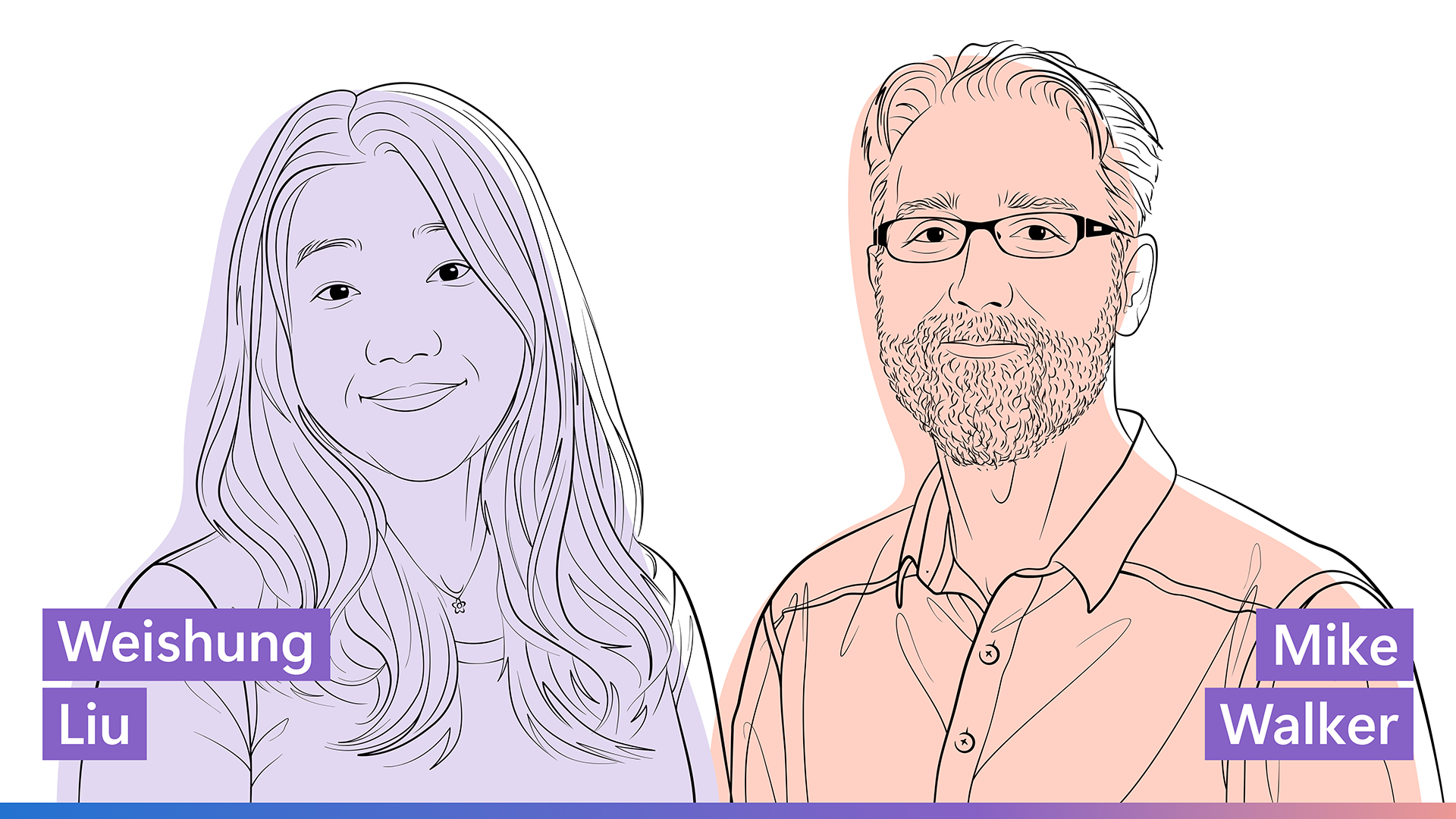
Research Manager Mike Walker reflects on a career spanning hacker culture, cybersecurity, and AI, sharing lessons about trust, teamwork, leadership, and why solving difficult problems requires curiosity, judgment, agility—and an understanding of the rules. The post Learn the rules: The hacker mindset appeared first on Microsoft Research.
Learn how Google Antigravity and our Cheminformatics Skills accelerate drug discovery workflows, search compounds, and propose novel rigidified macrocycles.
MIT News · Artificial Intelligence· news.mit.eduOct 28, 2026
Professor Paris Smaragdis develops computers with superhuman hearing for applications like speech recognition, music understanding, and environmental monitoring.
MIT News · Artificial Intelligence· news.mit.eduOct 27, 2026
Prabha Jha used her experience with MIT Open Learning’s program for senior executives to develop AI solutions for her employer, Verizon, and to write a book.