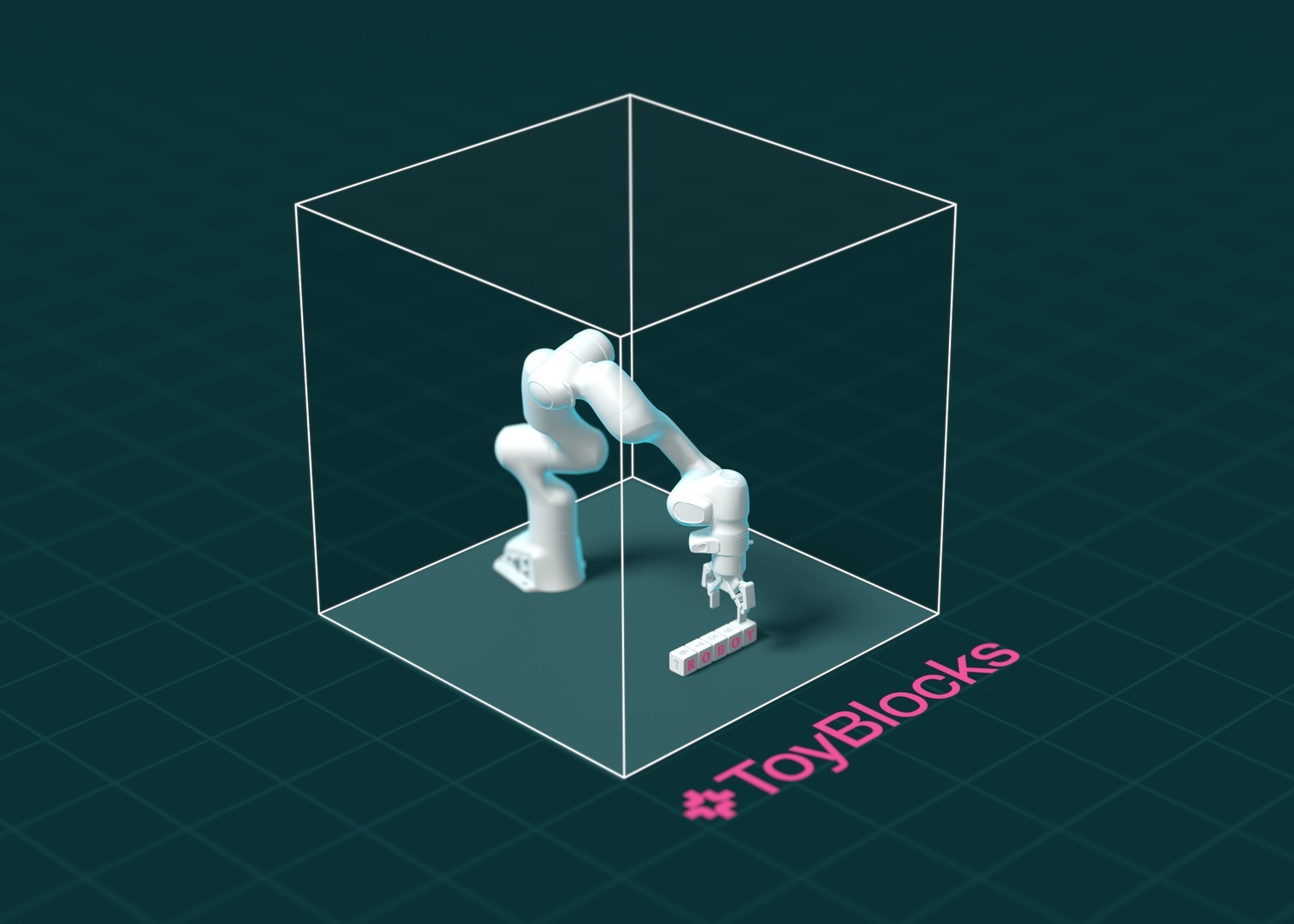
We introduce PuzzleJAX, a GPU-accelerated puzzle game engine and description language designed to support rapid benchmarking of tree search, reinforcement learning, and LLM reasoning abilities. Unlike existing GPU-accelerated learning environments that provide hard-coded implementations of fixed sets of games, PuzzleJA...
Sam Earle, Graham Todd, Yuchen Li et al.· 0 citations
In many real-world applications, ensuring the robustness and stability of deep neural networks (DNNs) is crucial, particularly for image classification tasks that encounter various input perturbations. While Mixup-based data augmentation techniques have been widely adopted to enhance the resilience of trained models ag...
Jiaming Hu, Yeping Jin, Debarghya Mukherjee et al.· 0 citations
The large language model (LLM) is typically integrated into the mainstream optimization protocol. However, it remains underexplored whether maintaining the model integrity is \textit{indispensable} for promising performance. In this work, we introduce Mask Fine-Tuning (MFT), a novel LLM fine-tuning paradigm demonstrati...
Mingyuan Zhang, Yue Bai, Huan Wang et al.· 0 citations
Cryptocurrencies are widely used, yet current methods for analyzing transactions often rely on opaque, black-box models. While these models may achieve high performance, their outputs are usually difficult to interpret and adapt, making it challenging to capture nuanced behavioral patterns. Large language models (LLMs)...
Yuchen Lei, Yuexin Xiang, Rafael Dowsley et al.· 0 citations
Reach audiences
Advertise in front of researchers, engineers, and readers.
The identifiability analysis of linear Ordinary Differential Equation (ODE) systems is a necessary prerequisite for making reliable causal inferences about these systems. While identifiability has been well studied in scenarios where the system is fully observable, the conditions for identifiability remain unexplored w...
Yuanyuan Wang, Biwei Huang, Wei Huang et al.· 0 citations
A framework for applying uncertainty-aware explanation policies to a fixed set of generated explanations that allows applications to compare and prioritise explanations according to their intended use is presented.
Helena Löfström, Tuwe Löfström, Johan Hallberg Szabadváry· 2 citations
Public data do not identify high-frequency trading (HFT), and standard proxies do not separate liquidity-supplying from liquidity-demanding strategies. We overcome this measurement challenge by training machine learning models on proprietary Nasdaq data to map observed HFT activity to public intraday variables. Applyin...
G. Ibikunle, B. Moews, D. Muravyev et al.· 0 citations
This paper proposes a framework for constructing a classifier as a safeguard layer, and for developing a complementary diagnostic that identifies which of the classifier's confident decisions can be trusted. This framework, the Latent Diagnostic Taxonomy, consists of (i) constructing a dimensionality-optimized classifi...
Graph neural networks (GNNs) are routinely employed for spatiotemporal forecasting, yet their performance across widely used benchmark datasets is inconsistent. Here, we perform an audit of dataset properties and baseline models to assess the quality of the benchmarks, and the robustness of the conclusions drawn from t...
Kenneth Martin, Simon Heilig, Asja Fischer et al.· 0 citations
This study systematically evaluates TabPFN-TS and Chronos-2 for probabilistic heat load forecasting in two German district heating networks and compares them with trained baselines, finding that both TSFMs outperform all trained baselines in deterministic accuracy in the full-year benchmarks.
Ben Spoek, Karim K. Ben Hicham, K. Derzsi et al.· 0 citations
Contemporary machine learning struggles to learn continually, reuse prior knowledge, and expose a comprehensible internal structure. A recently proposed developmental, gradient-free learning framework addresses these limitations by learning a discrete, topological model of its inputs through local variation and selecti...
Molecular property models are commonly evaluated by holding out Bemis-Murcko scaffolds, yet a scaffold identifier is only one notion of chemical unfamiliarity. We introduce a label-free structural-frontier split that reserves the sparsest and most physicochemically remote scaffold groups, and evaluate it on six public...
Jiacheng Zheng, Chang Guo, Zixuan Wang et al.· 0 citations
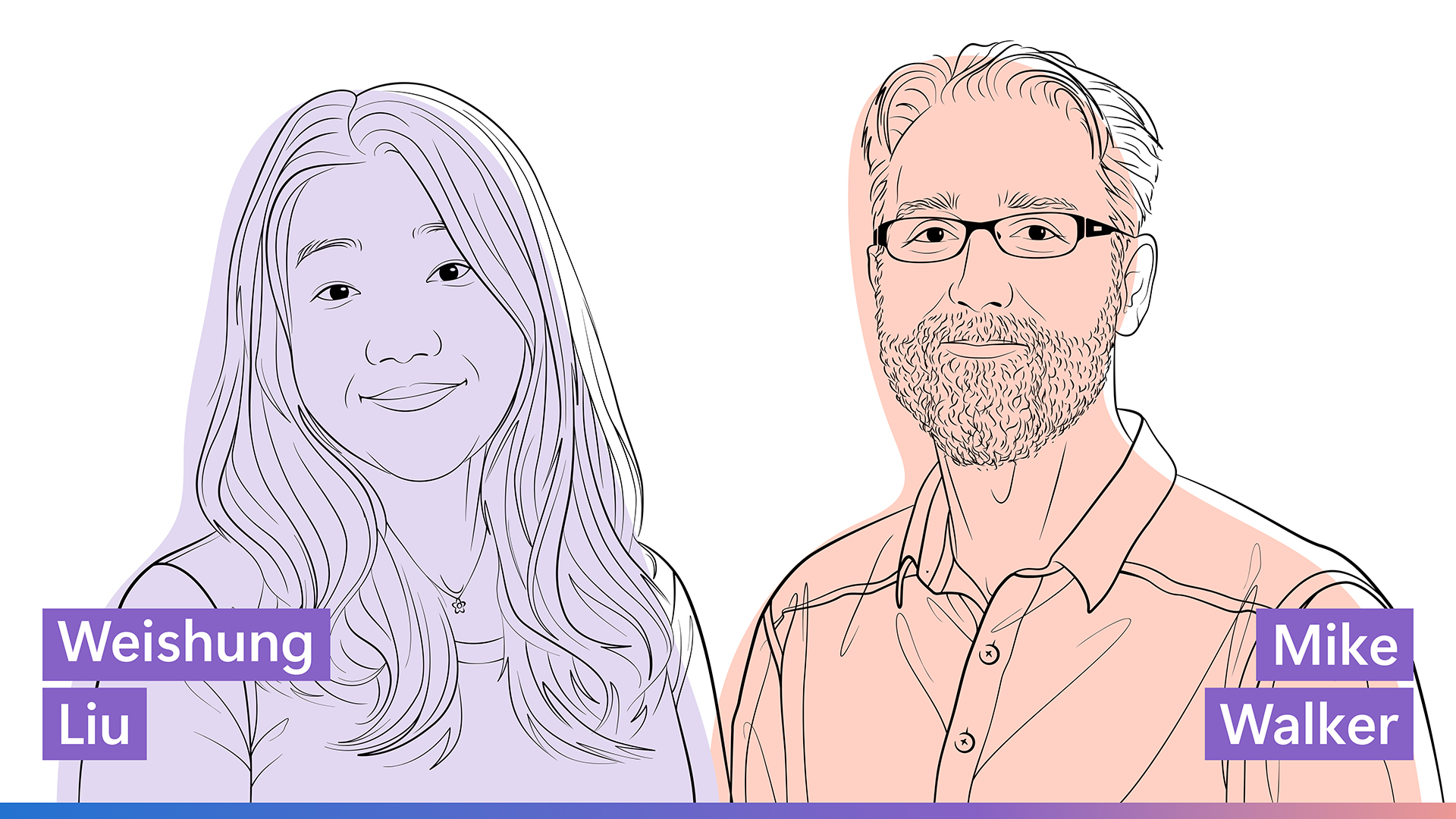
Research Manager Mike Walker reflects on a career spanning hacker culture, cybersecurity, and AI, sharing lessons about trust, teamwork, leadership, and why solving difficult problems requires curiosity, judgment, agility—and an understanding of the rules. The post Learn the rules: The hacker mindset appeared first on Microsoft Research.
Learn how Google Antigravity and our Cheminformatics Skills accelerate drug discovery workflows, search compounds, and propose novel rigidified macrocycles.
MIT News · Artificial Intelligence· news.mit.eduOct 28, 2026
Professor Paris Smaragdis develops computers with superhuman hearing for applications like speech recognition, music understanding, and environmental monitoring.
MIT News · Artificial Intelligence· news.mit.eduOct 27, 2026
Prabha Jha used her experience with MIT Open Learning’s program for senior executives to develop AI solutions for her employer, Verizon, and to write a book.