It is shown that static word embeddings of the same or matched stimuli of the same or matched stimuli support much of the same decoding, indicating that decodability alone cannot distinguish a representation of a property from information already available in fixed distributional associations.
Self-supervised speech models (S3Ms) are known to encode rich phonetic information, yet how this information is structured remains underexplored. We conduct a comprehensive study across 96 languages to analyze the underlying structure of S3M representations, with particular attention to phonological vectors. We first s...
Kwanghee Choi, Eunjung Yeo, Cheol Jun Cho et al.· 0 citations
We study a persistent failure mode in multi-objective alignment for large language models (LLMs), in which scalarized training improves only some objectives while the others degrade. We formalize this phenomenon as cross-objective interference and, to our knowledge, conduct the first systematic study of scalarization a...
Models with intractable normalizing constants are widely used in statistics and machine learning. Assessing the adequacy of such models poses significant challenges: obtaining samples from the fitted model often requires sophisticated sampling algorithms. Moreover, model fitting sometimes requires iterative numerical o...
Zhihan Huang, Ziang Niu· 0 citations
Reach audiences
Advertise in front of researchers, engineers, and readers.
In unsupervised learning, the training data for deep learning does not come with any labels, thus forcing the algorithm to discover hidden patterns in the data for discerning useful information. This, in principle, could be a powerful tool in identifying topological order since topology does not always manifest in obvi...
Jacob Taylor, Haining Pan, Sankar Das Sarma· 0 citations
State-space models (SSMs) are a widely used tool in time series analysis. In the complex systems that arise from real-world data, it is common to employ particle filtering (PF), an efficient Monte Carlo method for estimating the hidden state corresponding to a sequence of observations. Applying particle filtering requi...
John-Joseph Brady, Benjamin Cox, Yunpeng Li et al.· 0 citations
A growing class of machine-learning objects -- covariance and Gram matrices, kernel and attention matrices, MIMO channel matrices, density operators -- are naturally spectra rather than coordinate vectors. Building a denoising diffusion model for such data by corrupting eigenvalues coordinatewise is not merely elegant:...
For reliable large-scale quantum computation, quantum error correction (QEC) is essential to protect logical information distributed across multiple physical qubits. Taking advantage of recent advances in deep learning, neural network-based decoders have emerged as a promising approach to improve the reliability of QEC...
Seong-Joon Park, Hee-Youl Kwak, Yongjune Kim· 0 citations
When faced with new data, we often conduct a cluster analysis to obtain a better understanding of the data's structure and the archetypical samples present in the data. However, the increases in data complexity and dimensionality have made this step very tricky. The large proportion of noise in high-dimensional data bl...
Large language models (LLMs) increasingly serve as automated evaluators, yet they suffer from "self-preference bias": a tendency to favor their own outputs over those of other models. This bias undermines fairness and reliability in evaluation pipelines, particularly for tasks like preference tuning and model routing....
Dani Roytburg, Matthew Bozoukov, Matthew Nguyen et al.· 0 citations
Gradient inversion attacks are often presented as a serious privacy threat in federated learning, with recent work reporting increasingly strong reconstructions under favorable experimental settings. However, it remains unclear whether such attacks are feasible in modern, performance-optimized systems deployed in pract...
Viktor Valadi, Lucas Beerens, Mattias {\AA}kesson et al.· 0 citations
Deep learning training commonly runs on shared multi-tenant GPU servers, where exclusive allocation provides isolation but can leave resources underutilized and increase queueing time. Collocation can improve efficiency, but interference-agnostic placement may cause severe slowdowns, while inaccurate memory information...
Ehsan Yousefzadeh-Asl-Miandoab, B\"u\c{s}ra Karatay Demiray, Florina M. Ciorba et al.· 0 citations
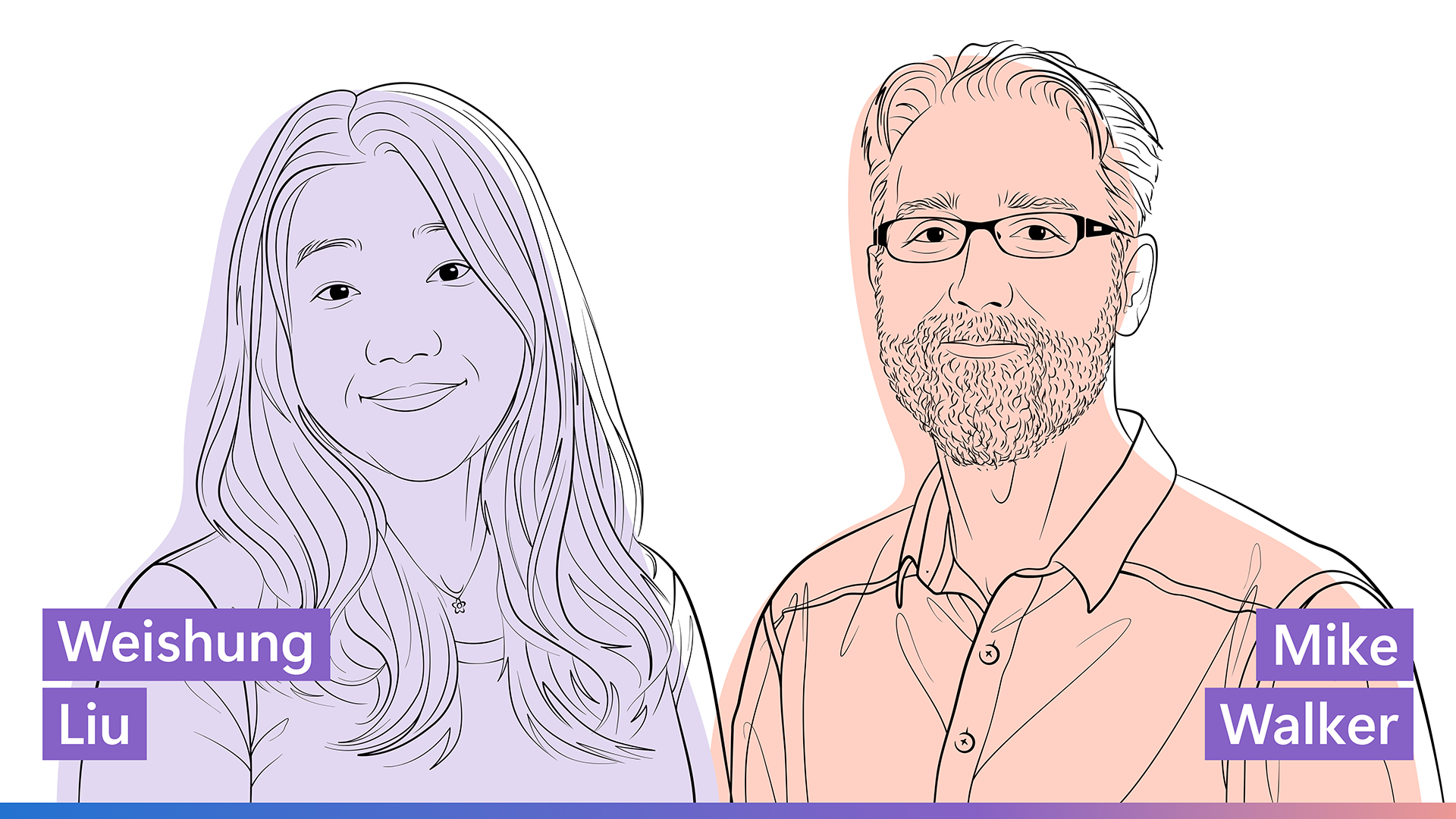
Research Manager Mike Walker reflects on a career spanning hacker culture, cybersecurity, and AI, sharing lessons about trust, teamwork, leadership, and why solving difficult problems requires curiosity, judgment, agility—and an understanding of the rules. The post Learn the rules: The hacker mindset appeared first on Microsoft Research.
Learn how Google Antigravity and our Cheminformatics Skills accelerate drug discovery workflows, search compounds, and propose novel rigidified macrocycles.
MIT News · Artificial Intelligence· news.mit.eduOct 28, 2026
Professor Paris Smaragdis develops computers with superhuman hearing for applications like speech recognition, music understanding, and environmental monitoring.
MIT News · Artificial Intelligence· news.mit.eduOct 27, 2026
Prabha Jha used her experience with MIT Open Learning’s program for senior executives to develop AI solutions for her employer, Verizon, and to write a book.