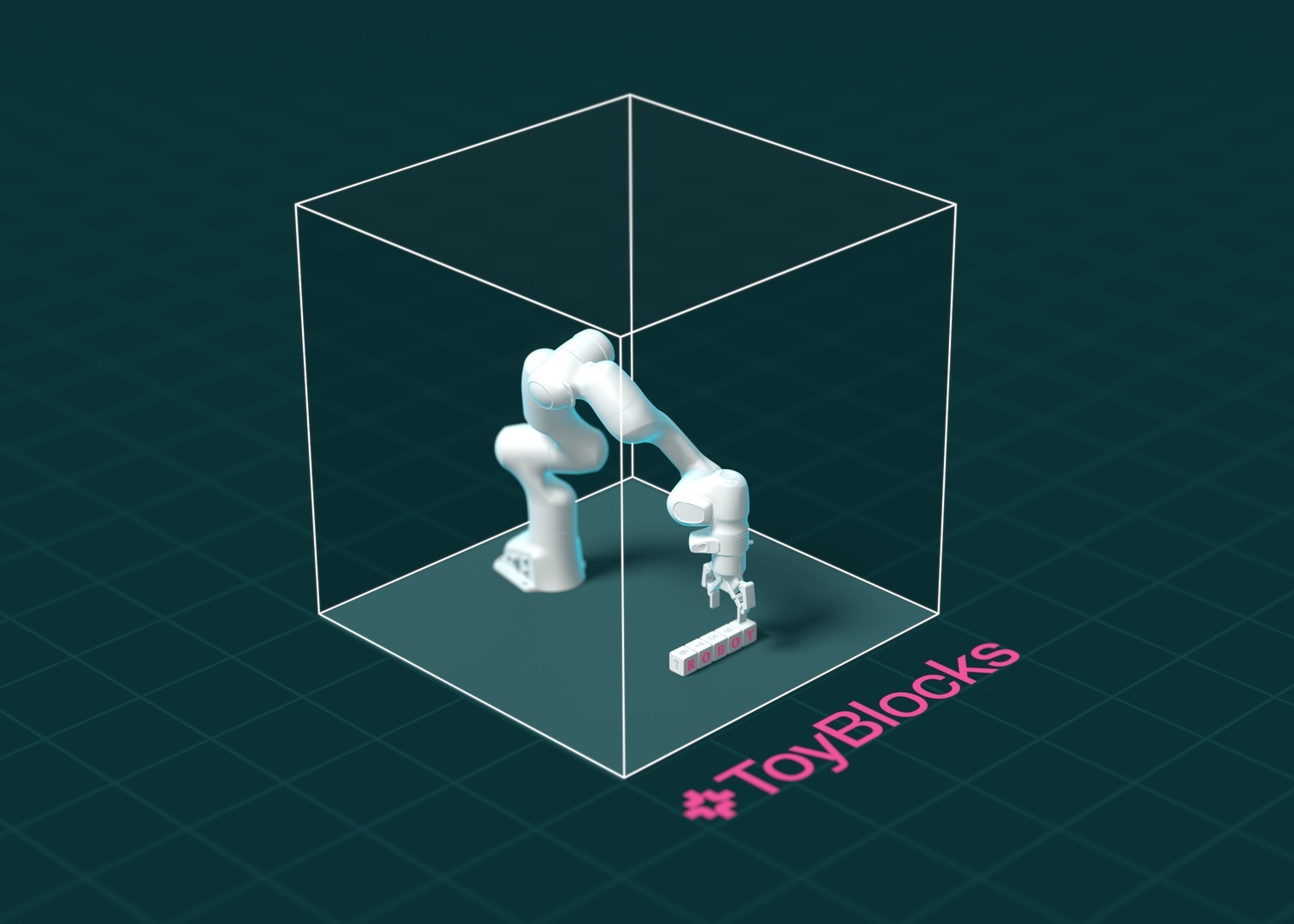
Tool calling, invoking external tools on demand, is central to agentic LLMs, yet the mechanism that decides whether a model calls a tool or responds directly remains poorly understood. Agentic prompts are long and heavily scaffolded, combining role instructions, tool schemas, format templates, and the user's request ac...
Xijie Gong, Tingxu Han, Jiahao Zhang et al.· 0 citations
Taxonomies are the symbolic representations through which AI systems organize evidence, aggregate patterns, and answer questions over large document collections. Over customer feedback, the category tree decides how every record is counted and routed, which problems get seen, and which team owns them. Agentic harnesses...
Prabhath Chellingi, G. Raviraja, Viraj Bagal· 0 citations
Autonomous unmanned aerial vehicle (UAV) object search involves a closed loop of perception, decision-making, and action under partial observability. Urban environments pose several challenges: large search areas and narrow egocentric views limit coverage, dense 3D geometry constrains safe motion, and open-world instru...
Ya-Tai Ji, Zheng-Qiu Zhu, Yong Zhao et al.· 0 citations
Rapid progress in AI agents has brought growing attention to agent safety, with extensive evaluation focused on digital environments. As agents move into the physical world, embodied safety becomes increasingly important: failures can cause human injury and costly hardware damage. Beyond selecting safe actions, embodie...
Tianruo Rose Xu, Jiawei Ren, Yichi Yang et al.· 0 citations
Reach audiences
Advertise in front of researchers, engineers, and readers.
Self-improving LLM systems propose changes to themselves and keep those that score better on a small evaluation set. We treat this keep-if-better step as selection under measurement noise, model the correlated errors of the candidates in a single decision, and study empirically what happens when the evaluation set is r...
Constraint-Margin DPO (CM-DPO), which replaces DPO's binary preference signal with a continuous margin derived from a deterministic symbolic verifier and scaled by violation severity, is introduced.
Extreme low-bit LLM compression is most challenging when weights, activations, and KV caches are quantized together: their distributions differ, and quantization errors interact throughout the network. We introduce CanonQ, a unified quantization-aware training framework that addresses these challenges by separating sou...
Kai Yi, Tarek Elgamal, Sruthikesh Surineni et al.· 0 citations
Agent evolvers automate the design of the prompts, skills and workflows around language model agents, yet the optimization process they follow is still designed by hand: a fixed search loop decides how candidates are evaluated, which are kept and when the search stops. We propose FREEEVOLVE, which automates this proces...
Lecheng Kong, Li-Ke Hui, Nikos Kanakaris et al.· 0 citations
Reconstructing an editable CAD model from a 3D shape remains a challenging engineering task. Existing methods can propose CAD operations, but no single source of proposals works equally well across different part geometries and stages of reconstruction. We introduce CADFather, an autonomous agentic system that coordina...
Gennadiy Savrasov, Maksim Elistratov, Nikita Gavrilov et al.· 0 citations
Steering an LLM agent means deciding whether to correct it, at which step, and with which mechanism. Uncertainty is often used to decide when to correct an agent, but whether it can guide these decisions remains unclear. We steer agent trajectories separately at every non-terminal step with each of four mechanisms and...
Han Li, Jinhao Duan, Guan-Hua Zhu et al.· 0 citations
Multi-agent path planning (MAPP) in continuous environments often relies on roadmaps to balance safety and search efficiency. However, traditional roadmap generation methods, such as lattice grids or standard sampling-based approaches, frequently face a trade-off between graph density and the likelihood of finding feas...
Brandon Ho, Nikola Rogers, Seung-Kyum Choi· 0 citations
As small language models (SLMs) are increasingly deployed on resource-constrained and on-device platforms, including as components of agentic systems, the integrity of locally stored model parameters becomes an important safety concern. We investigate whether safety-sensitive behavior in LLaMA-2-7B-Chat is concentrated...
Research Manager Mike Walker reflects on a career spanning hacker culture, cybersecurity, and AI, sharing lessons about trust, teamwork, leadership, and why solving difficult problems requires curiosity, judgment, agility—and an understanding of the rules. The post Learn the rules: The hacker mindset appeared first on Microsoft Research.
Learn how Google Antigravity and our Cheminformatics Skills accelerate drug discovery workflows, search compounds, and propose novel rigidified macrocycles.
MIT News · Artificial Intelligence· news.mit.eduOct 28, 2026
Professor Paris Smaragdis develops computers with superhuman hearing for applications like speech recognition, music understanding, and environmental monitoring.
MIT News · Artificial Intelligence· news.mit.eduOct 27, 2026
Prabha Jha used her experience with MIT Open Learning’s program for senior executives to develop AI solutions for her employer, Verizon, and to write a book.