Large language models (LLMs) often abandon a correct answer, or endorse a user's position, once the user pushes back. This behavior, called sycophancy, is usually reported as a single rate per model, which says little about when it happens or how a user can avoid it. We study the conditions that produce it with 103,939...
Guang Yang, Homa Hosseinmardi, Feng-Chen Liu et al.· 0 citations
Automatic Speech Recognition (ASR) systems often underperform for children and non-native speakers, while adapting adult ASR models to child speech can cause adult-speech forgetting. We study child ASR adaptation with adult retention across Arabic and English. We compare full fine-tuning, LoRA, and post-hoc weight-spac...
Rapid industrialization and urban growth are increasing pressure on water quality and wastewater treatment systems, while conventional treatment plants often rely on static monitoring and control strategies that cannot easily adapt to changing pollutant conditions. This paper presents HydroSphere, a governed, data-driv...
Spatio-temporal forecasting is a cornerstone of logistics, urban planning, and intelligent transportation systems. However, constrained by deployment costs and maintenance resources, sensor networks often lack comprehensive spatial coverage, rendering Forecast Unobserved Node States (FUNS) a critical yet formidable cha...
Shu-Hao Li, Wei-Dong Yang, Chang'an Liu et al.· 0 citations
Reach audiences
Advertise in front of researchers, engineers, and readers.
As context windows scale to tens or hundreds of thousands of tokens, KV cache compression has become essential for efficient LLM inference. Existing methods fall into three families: score-based eviction, summary compensation, and offload-and-recall. Yet all three decide what to keep or recall by content relevance to t...
Fine-tuned geospatial foundation models (GeoFMs) pretrained on large satellite archives have been shown to improve crop classification accuracy and geographic transferability. However, their operational performance beyond the training distribution remains poorly characterized. We evaluated the out-of-distribution perfo...
V. Kolluru, Rajat C. Shinde, Abdelhak Marouane et al.· 0 citations
Depression severity among patients with chronic or acute medical conditions is influenced by a complex interaction of baseline psychological state, demographic characteristics, clinical context, and engagement with behavioral interventions. This paper presents an interpretable machine-learning analysis of a multi-cente...
Muhammad Jawad Chowdhury, S. Salehin, Akib Jayed Islam· 0 citations
The SciExam for ENSO can evaluate agent research where no answer is known, and the results suggest that agents can already build competitive models whose structures bear on questions that scientists still debate.
Yin-Lin Zhang, Lang-Chen Liu, Dong-Bin Xiu et al.· 0 citations
As option markets grow and AI advances, agentic systems for option trading are gaining increasing attention. Language-model-based agents can reason over contextual information such as news, but option trading presents a particularly challenging decision problem: a single stock can have thousands of contracts, and the a...
In the wake of the increasingly public discussion about AI alignment, recent work has tried to propose specific AI architectures that behave safely. However, the proposed arguments that seemingly demonstrate proved alignment mostly neglect the environment the agent needs to act in. We discuss theoretical bounds for age...
Leo Zeitler, Jack Richings, Victoria Nockles· 0 citations
Joint spatial-geometric and analytic function reasoning requires translating a perceived spatial configuration into a symbolic function whose executed curve satisfies geometric constraints. We present GAGR-Lab, a framework for measuring this capability through Cartesian game scenes, explicit function semantics, and aut...
Diffusion models generate realistic images but often fail on visual reasoning tasks, such as filling in a Sudoku or drawing the path through a maze. When a discrete symbolic representation is available, recursive methods such as the Tiny Recursive Model (TRM) solve even hard instances of these puzzles. We ask how such...
Pawe{\l} Skier\'s, Ma{\l}gorzata Grzanka, Wojciech Masarczyk et al.· 0 citations
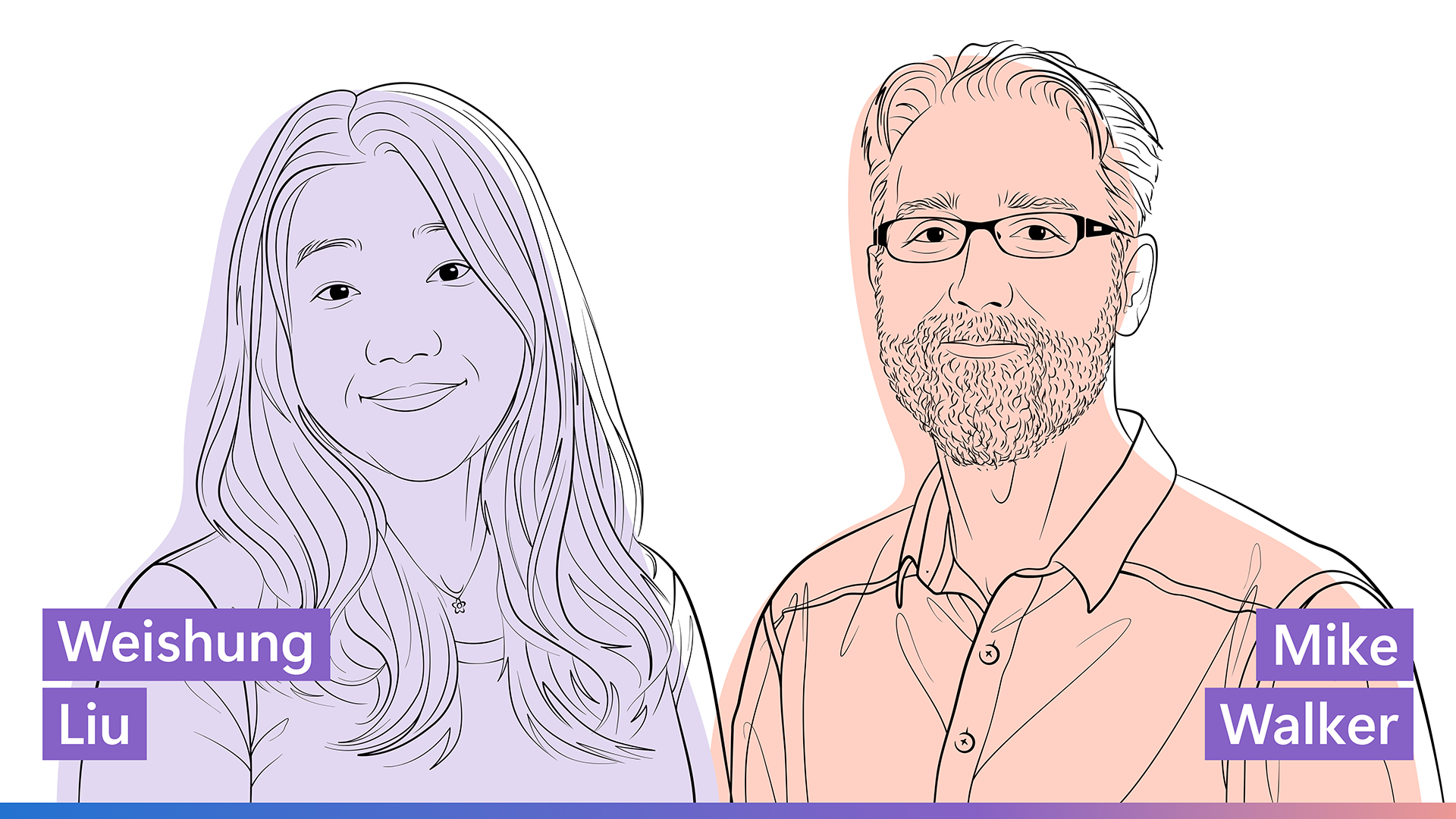
Research Manager Mike Walker reflects on a career spanning hacker culture, cybersecurity, and AI, sharing lessons about trust, teamwork, leadership, and why solving difficult problems requires curiosity, judgment, agility—and an understanding of the rules. The post Learn the rules: The hacker mindset appeared first on Microsoft Research.
Learn how Google Antigravity and our Cheminformatics Skills accelerate drug discovery workflows, search compounds, and propose novel rigidified macrocycles.
MIT News · Artificial Intelligence· news.mit.eduOct 28, 2026
Professor Paris Smaragdis develops computers with superhuman hearing for applications like speech recognition, music understanding, and environmental monitoring.
MIT News · Artificial Intelligence· news.mit.eduOct 27, 2026
Prabha Jha used her experience with MIT Open Learning’s program for senior executives to develop AI solutions for her employer, Verizon, and to write a book.